How Painful Is Subcision? Explaining Anesthesia Options and the Post-Treatment Course

Language:
Language:



BLOG
Subcision is considered an effective treatment for improving acne scars, but there are also many people who say that it was “ineffective” or “unsuccessful.” In fact, Subcision can be highly effective when performed following an appropriate diagnosis and treatment plan. So why do some people feel that it has failed?
This article provides a detailed explanation of why people may feel that Subcision was unsuccessful and the key points for achieving a successful treatment outcome. If you are considering Subcision, please use this article as a reference.







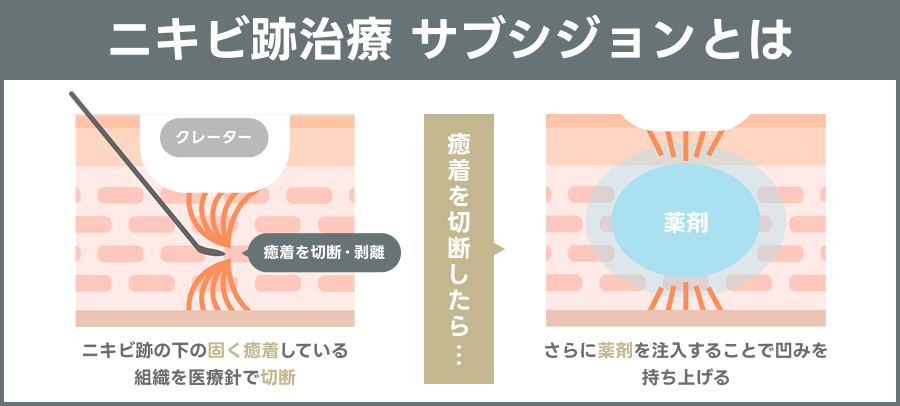
Subcision is a treatment that uses a specialized medical needle to physically separate scar tissue that causes acne scars. By releasing adhesions between the dermis and fascia deep within the skin, it improves depressed, crater-like scars.
Developed in 1995, this treatment has become an established technique now used in cosmetic dermatology clinics worldwide. It has been shown to be particularly effective from a medical perspective for rolling acne scars, which have a wave-like appearance. The ability to directly address adhesions deep within the skin that are difficult to reach with laser treatment can be considered Subcision’s greatest characteristic.
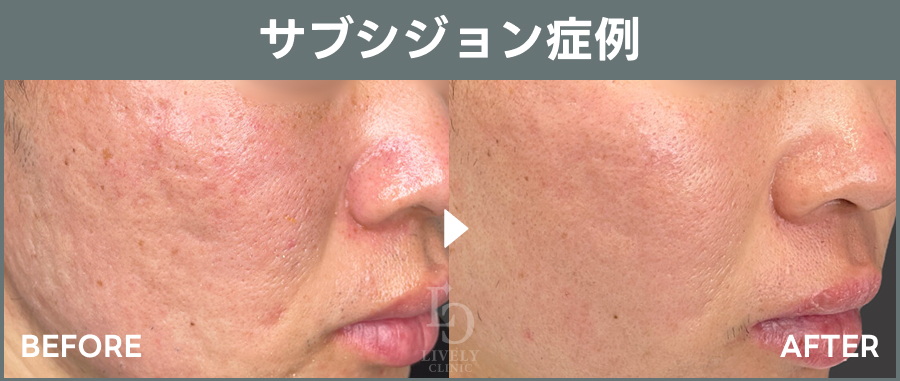
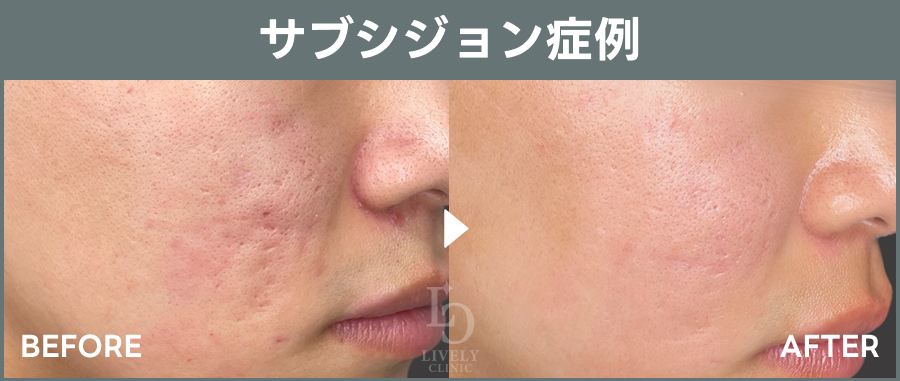
If you do not achieve the results you expected from Subcision, the following three causes may be involved.
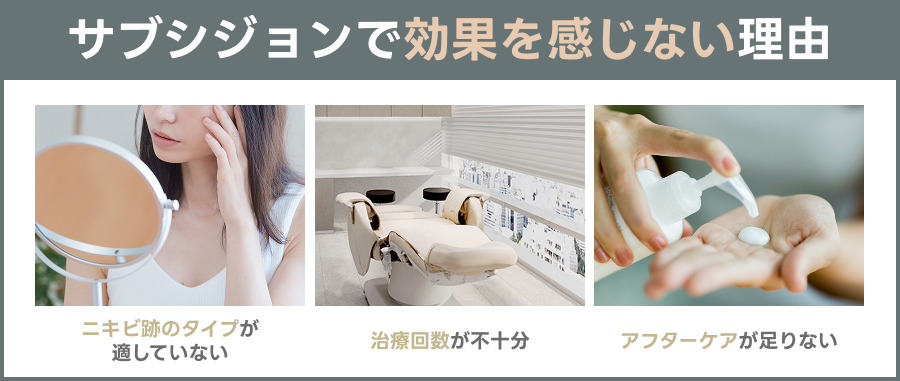
If you are considering treatment, it is important to understand these factors. Let’s examine each one in detail.
Subcision is not effective for every type of acne scar. It is most effective for rolling acne scars, in which the skin is depressed in a wave-like pattern. On the other hand, Subcision alone may not provide sufficient results for ice-pick scars, which appear as narrow, deep holes, or boxcar scars, which are vertically depressed.
The first step toward successful treatment is to have your acne scar type accurately diagnosed during a consultation before treatment. An experienced physician can appropriately determine whether Subcision is suitable based on the type of acne scars and whether it needs to be combined with other treatments.
Subcision is a treatment in which many people can notice results after just one procedure. However, deep crater-like scars or acne scars covering a wide area generally require multiple treatments. Many clinics recommend approximately 3–5 treatments, usually performed at intervals of 2–3 months.
Expecting dramatic improvement after one treatment may lead you to feel that it was “ineffective.” Medical evidence also indicates that the effects of Subcision appear cumulatively as treatments are repeated. Proceeding patiently and according to a plan is an important point for achieving satisfactory results.
Appropriate aftercare following Subcision is another important factor that can affect the success of treatment. Bruising and swelling are likely to occur after the procedure, and if these symptoms persist, the risk of hyperpigmentation may also increase. Protection from ultraviolet rays and moisturizing care are particularly important, and delicate skin after treatment requires sufficient attention.
In addition to applying sunscreen thoroughly and keeping the skin well moisturized, it is important to avoid strenuous exercise and alcohol immediately after treatment and minimize irritation to the skin. If you do not follow the aftercare instructions provided by your physician or neglect care based on your own judgment, the treatment may not produce its full effects.
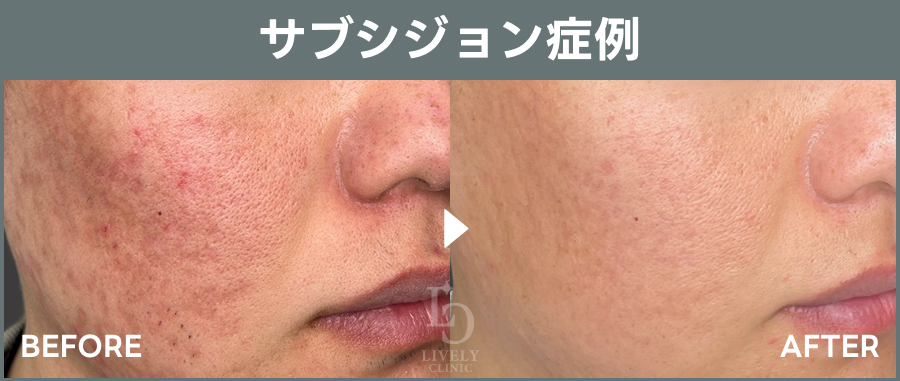
Although the time when the effects of Subcision appear varies from person to person, many people begin to notice changes approximately 1–2 weeks after treatment. However, bruising and swelling may still remain during this period, and it is common for the full effects to become noticeable from around one month after treatment.
Immediately after treatment, temporary swelling occurs in the separated areas, so the unevenness may temporarily appear more noticeable. As the swelling subsides, however, you may gradually notice that the skin’s surface is becoming smoother.
In addition, Subcision promotes collagen regeneration, so improvement continues over a period of 3–6 months. Please understand that it is necessary to wait at least approximately three months before assessing the final results.
Subcision is an established treatment with a high level of safety. However, as with any medical procedure, certain risks and side effects exist. These include the following:
Understanding these points in advance will help you prepare appropriately and know what to expect, which may help prevent problems. Each point is explained below.
Bruising occurs in almost all cases after Subcision. It usually disappears naturally within approximately 1–2 weeks, but many people may be concerned about their appearance during this period. If you have an important event coming up, we recommend scheduling treatment with sufficient time beforehand.
Swelling generally peaks 2–3 days after treatment and settles within approximately one week. Cooling the area may help reduce symptoms, but be careful because excessive cooling may interfere with blood circulation.
Makeup can be applied from the following day. However, when covering bruising with concealer or similar products, it is important to do so gently to avoid placing stress on the skin.
Subcision is a treatment in which the physician’s skill and experience have a significant impact on the results. Because delicate techniques are required, including the angle of needle insertion and the depth and extent of separation, having treatment performed by an experienced physician is key to success.
If the procedure is performed by a physician with insufficient technical skill, the adhesions may not be adequately separated, resulting in insufficient improvement. Conversely, excessive separation may worsen unevenness. There is also a possibility, although not zero, of damaging nerves or blood vessels.
When choosing a clinic, it is important to check the number of Subcision cases performed, the physician’s professional history, and actual case photographs, and to select a medical institution you can trust.
Subcision is a relatively safe treatment, but complications may rarely occur. The risk of infection requires particular attention. After treatment, you must keep the area clean and follow appropriate care instructions from your physician.
Very rarely, a lump may also form. In many cases, it improves naturally over time, but if concerning symptoms persist, it is important to consult a physician promptly. Hyperpigmentation also tends to occur more easily in Japanese skin types, so thorough protection from ultraviolet rays may help prevent it.

Combining Subcision with other treatments can be effective for further enhancing its results. In particular, combining it with hyaluronic acid injections has attracted attention. After adhesions are separated with Subcision, injecting hyaluronic acid into the resulting space can immediately lift depressed areas.
Hyaluronic acid is absorbed by the body over time, but during this period it promotes collagen production, which may lead to long-term improvement. It has been reported that this combination treatment is particularly effective for deep crater-like scars.
In the 2022 medical paper “A combined approach of subcision with either cross-linked hyaluronic acid or threads in the treatment of atrophic acne scars.” by Ebrahim HM et al., 40 patients were divided into a group that received both hyaluronic acid injections and Subcision at the same time and a group that received Subcision alone. The paper states that 94.1% of patients showed clear improvement in acne scars with the combined hyaluronic acid and Subcision treatment. In contrast, it also reported that only 67.3% experienced improvement with Subcision alone without hyaluronic acid injections. This suggests that combining Subcision with hyaluronic acid injections is important in Subcision treatment.”
Source: A combined approach of subcision with either cross-linked hyaluronic acid or threads in the treatment of atrophic acne scars
Combining Subcision with treatments such as Derma Pen or Potenza may also provide more comprehensive improvement in skin quality. Derma Pen creates microscopic openings in the skin with ultra-fine needles and promotes collagen production by harnessing the skin’s natural healing ability. It is effective for improving the superficial skin quality that is difficult to address with Subcision.
As a newer treatment approach, growth factors or PRP (platelet-rich plasma) may also be injected after Subcision. PRP is made by concentrating platelets extracted from the patient’s own blood and contains abundant growth factors. Because the patient’s own blood is used, there is almost no risk of an allergic reaction, and PRP is attracting attention as a highly safe treatment.
For other treatments that can be combined with Subcision, please refer to the following article.
The success of Subcision begins with choosing the right clinic. Treatment by a highly skilled physician and a well-developed support system can help minimize risks while achieving favorable results. Specifically, choose a clinic based on the following three points.
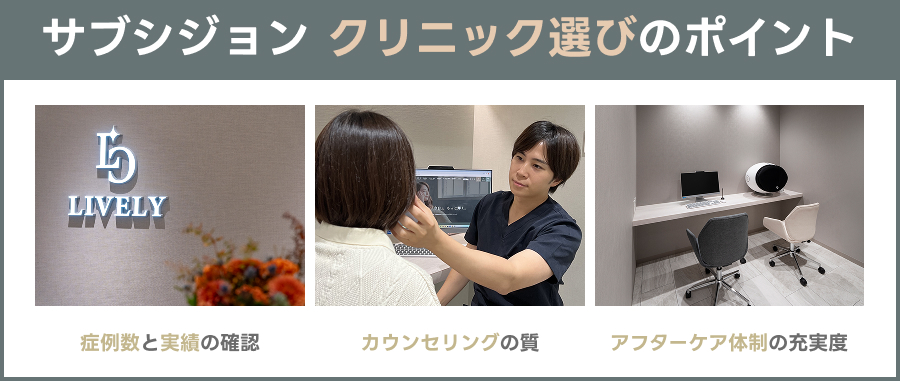
Each point is explained in detail below.
A physician’s experience and skill have a significant impact on the success of Subcision. When choosing a clinic, first check the number of Subcision cases performed. It is important to ask for specific figures, such as how many procedures the clinic performs per year and the total number of cases since it opened.
It is also important to ask to see actual case photographs. If before-and-after photographs allow you to see how much similar acne scars have improved, it will be easier to envision the potential results of treatment. A physician who belongs to the Japanese Society of Aesthetic Dermatology or the Japanese Society of Aesthetic Plastic Surgery may also provide a certain level of reassurance.
The initial consultation is an important opportunity to assess the quality of a clinic. Check whether a physician conducts the consultation directly and carefully examines your skin condition.
During a high-quality consultation, the physician accurately diagnoses your acne scar type and clearly explains why Subcision is or is not suitable. A physician who is also open about the expected results, the number of treatments required, and the risks is someone you can trust.
Conversely, it is wise to avoid clinics that recommend expensive treatments after only a superficial examination or that avoid explaining the risks.
Aftercare following Subcision is key to successful treatment. It is important to choose a clinic with a well-developed follow-up system. Specifically, check in advance how often follow-up examinations are provided, how problems are handled, and whether additional charges apply.
A clinic with an emergency contact available 24 hours a day can provide reassurance in case of an unexpected problem. Choosing a clinic that offers attentive support, such as aftercare medications or cosmetics and guidance on precautions for daily life, may lead to better results.
We have compiled frequently asked questions about Subcision. Please check them before undergoing treatment.
Local anesthesia is administered before treatment, so there is almost no pain during the procedure. You may feel a slight prick when the anesthetic is injected. Dull pain or discomfort may continue for several days after treatment, but it is generally manageable with pain medication.
If you are sensitive to pain, consulting your physician in advance may allow them to adjust the anesthesia method. Some clinics can also combine treatment with nitrous oxide sedation, so please ask if you are concerned.
It is generally recommended to leave an interval of approximately 2–3 months between Subcision treatments. Having treatment too frequently does not necessarily increase its effectiveness and may instead place additional stress on the skin, so caution is required.
The average number of treatments is approximately 3–5, but this varies from person to person depending on the condition of the acne scars. Some people are satisfied after one treatment, while others may require more than 10 treatments. It is important to create a treatment plan that suits you in consultation with your physician.
Because bruising and swelling occur after Subcision, people who work in customer-facing positions are advised to take several days to one week off. If you have a desk job, you can return to work from the following day.
Makeup can be applied from the following day, so bruising can be covered with concealer or similar products. However, it may be difficult to conceal it completely, so it may be better to avoid treatment around the time of important plans. If your workplace is understanding, another option is to inform them in advance that you will be undergoing treatment.
Subcision may also be effective for chickenpox scars. This is because, like acne scars, chickenpox scars are often caused by adhesions deep within the skin.
However, chickenpox scars are often deeper than typical acne scars, so more treatments may be necessary. It is important to be examined by a physician to determine whether Subcision is suitable for you. Depending on the case, combining it with other treatments may also be recommended.
Subcision is a treatment that can be expected to produce significant results when performed appropriately. Many reports of it being “ineffective” or “unsuccessful” are caused by factors such as an unsuitable type of acne scar, an insufficient number of treatments, or inadequate aftercare.
The keys to success are an accurate diagnosis and appropriate treatment by an experienced physician, along with sufficient aftercare. Carefully choose a clinic, and be sure to resolve any questions during your consultation before undergoing treatment. Combining Subcision with other treatments may lead to further improvement. For acne scars that have been troubling you for years, Subcision may be one effective option.
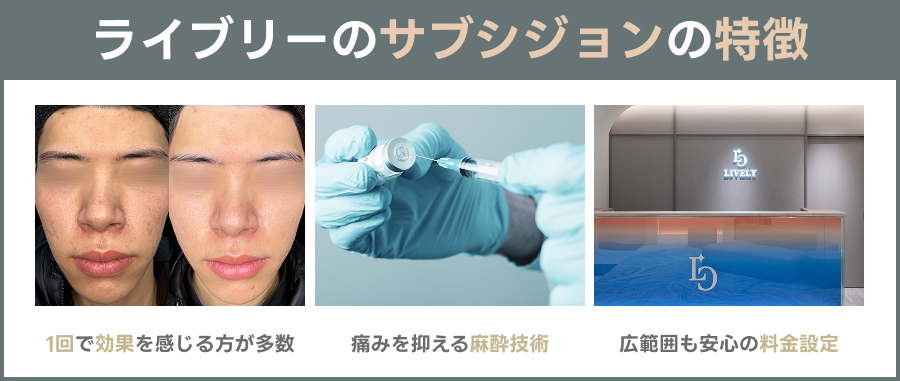
Subcision at LIVELY CLINIC is a treatment designed to improve acne scars and crater-like scars at their source and guide the skin toward a smoother appearance.
Many people notice a change after just one treatment, and the treatment is chosen by many patients for its three features.
Many people notice a change after their first treatment.
Subcision does not produce the same results regardless of which clinic you visit.
At our clinic, treatment is performed by physicians with extensive experience, so many people notice changes in their skin after just one treatment.
In addition, our physicians carefully examine each patient’s skin condition and propose an optimal treatment plan based on their skin type. This enables us to aim for faster improvement of crater-like scars than at other clinics.
Many people feel anxious about pain during treatment.
Our physicians are also highly skilled in administering anesthesia, allowing you to undergo treatment with almost no pain during the procedure.
Even people who are sensitive to pain or undergoing treatment for the first time can receive treatment with peace of mind.
When crater-like scars cover a wide area, the cost per treatment may be high depending on the treatment provided.
At our clinic, the maximum charge per treatment is set at 11万円, so you can receive treatment with peace of mind even for extensive crater-like scars.
Our pricing structure allows you to pursue meaningful improvement without having to worry about the cost.
The optimal treatment varies depending on the condition of your crater-like scars and your skin type.
At LIVELY CLINIC, our physicians provide a careful consultation and propose an optimal treatment plan tailored to your skin.
✅ Free consultation bookings are accepted 24 hours a day
✅ Direct examination and treatment planning by a physician
✅ No aggressive sales, so you can feel at ease
Please feel free to contact us first.
※For treatments other than the full-face treatment, a separate local anesthesia fee of 22,000 yen will be charged.
※Anesthetic cream (optional): ¥3,300
※Nitrous oxide anesthesia (optional): ¥8,800
※Sedation Pack / 3,300JPY
※Acne and comedone extraction / 3,300 JPY (1 area)