
Is Juvgen Dangerous? Does It Really Work? What Are the Drawbacks? Explained in Detail by a Certified Training Facility

Language:
Language:



BLOG

For those troubled by deep nasolabial folds, Juvgen (JUVGEN) is a treatment worth considering. It is regarded as an innovative approach that may provide semi-permanent effects for deep nasolabial folds that were difficult to improve with conventional methods.
In this article, from the perspective of a Juvgen-certified training facility, we explain in detail the effects, downtime, and pain associated with Juvgen.

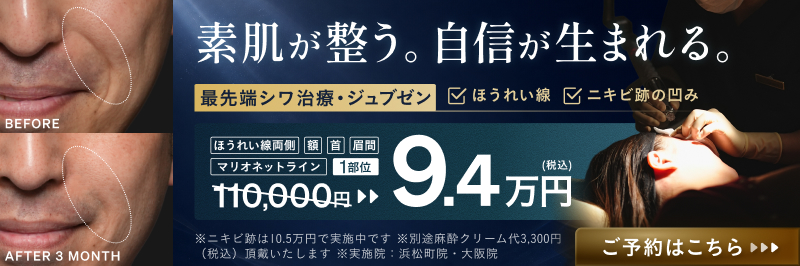







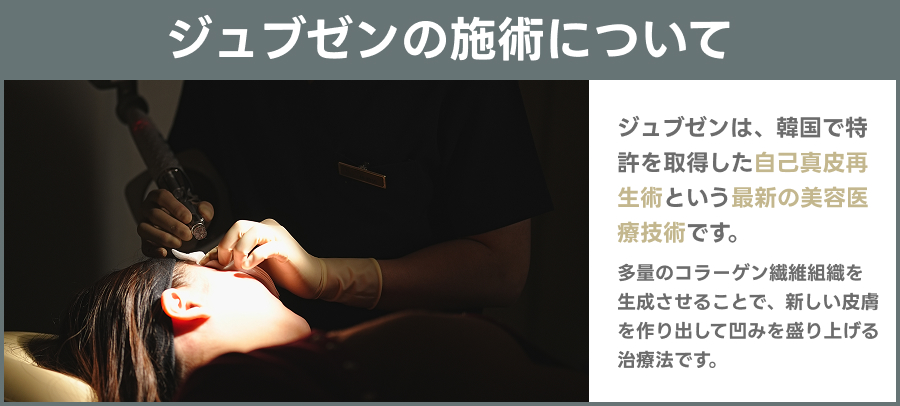
Juvgen is an advanced treatment for nasolabial folds developed in Korea. Its official name is “autologous dermal regeneration.” It is a treatment that promotes the skin’s own collagen production by precisely injecting medical-grade carbon dioxide gas and high-molecular-weight hyaluronic acid into the dermal layer.
The greatest feature of this treatment is that, rather than injecting a foreign substance from outside the body, it maximizes the regenerative ability of the patient’s own skin. Because the patient’s own dermal tissue is regenerated, the effects are considered to last semi-permanently. Its mechanism is fundamentally different from that of substances used in Hyaluronic Acid Injection, which are absorbed by the body, making it a treatment aimed at long-term improvement.
Improvement of nasolabial folds with Juvgen is achieved through three types of stimulation.
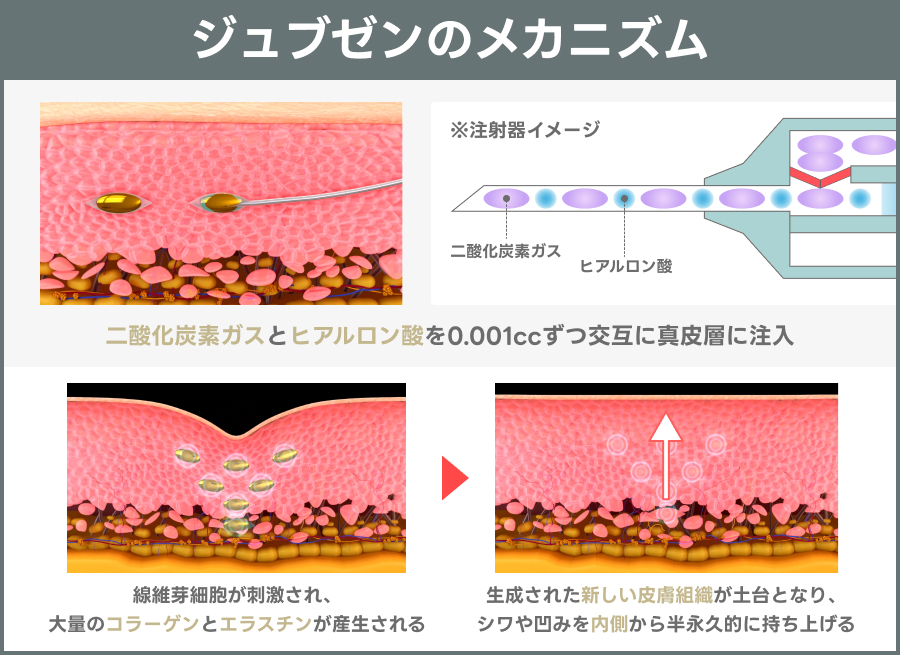
First, as physical stimulation, fine needles stimulate the dermal layer, initiating a wound-healing response. When the human body attempts to repair an injury, it naturally produces skin elasticity components such as collagen and elastin. Juvgen utilizes this natural response.
Next, as chemical stimulation, injecting medical-grade carbon dioxide gas into the dermal layer promotes blood flow in that area. Increased blood flow activates the supply of oxygen and nutrients to skin cells, allowing tissue regeneration to proceed more efficiently.
Finally, there is biological stimulation. High-molecular-weight hyaluronic acid acts as a scaffold in the dermal layer, encouraging new collagen fibers to form in an orderly manner. Although the hyaluronic acid itself is gradually absorbed by the body, the autologous dermal tissue produced during that time is maintained permanently.
When these three types of stimulation act together, the nasolabial folds are plumped and lifted from within, helping restore a naturally youthful appearance.
When considering a new treatment, downtime is one of the main concerns for many people. Juvgen is considered to involve relatively mild downtime, but results vary from person to person, so it is important to understand the expected symptoms and recovery process in detail. Let’s look at the recovery process and possible side effects.
The content in this section is also explained in the video below. Please take a look.
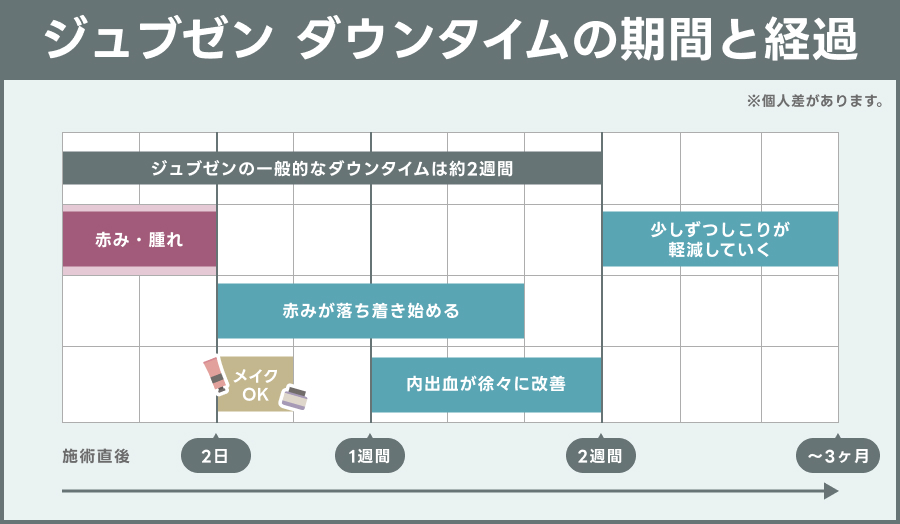
Typical Juvgen downtime lasts approximately 1 to 2 weeks. However, it varies depending on the treatment area and individual constitution.
On the day of the procedure through day 2, redness and mild swelling appear immediately after treatment. The needle insertion sites may become pinpoint red, and the entire treatment area may feel slightly swollen. To prevent infection, the physician recommends applying regenerative tape on the day of the procedure. This can be considered the period when downtime symptoms are most noticeable.
From day 3 to 1 week, redness gradually begins to settle and swelling subsides. Makeup can be applied from the second day after the procedure, so redness can be covered with foundation or concealer. If bruising is present, it also begins to take on a yellowish color during this period. As recovery progresses, there is less interference with daily life, and the area can generally be covered with makeup when going out.
Within 1 to 2 weeks, most symptoms improve and there is almost no interference with daily life. Any slight remaining redness can be completely covered with makeup.
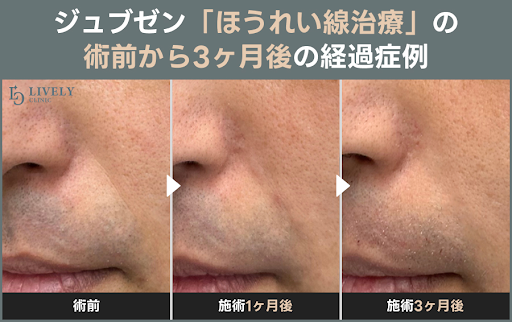
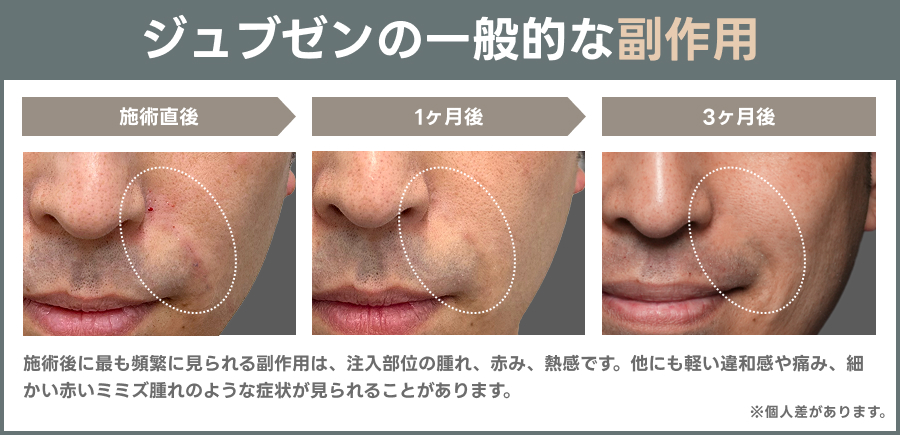
Several side effects may occur during Juvgen downtime. Specifically, they are as follows.
These are normal reactions during the healing process and improve over time, but knowing about them in advance may help reduce anxiety. We explain each one in detail below.
Swelling after the procedure is a temporary reaction caused by injection into the dermal layer. It is most noticeable on the day of the procedure and the following day, then gradually subsides. The degree of swelling varies from person to person, but in many cases it is mild to moderate and does not significantly interfere with daily life.
Applying a cooling pack moderately can help reduce swelling. However, placing a frozen ice pack directly on the skin may cause frostbite, so use it at an appropriate temperature by wrapping it in a towel, for example.
On the day of the procedure, avoiding activities that promote circulation, such as strenuous exercise, bathing, and alcohol consumption, can help prevent swelling from worsening. Puffiness usually subsides naturally within approximately 3 days to 1 week.
Redness caused by needle stimulation and an inflammatory response varies from person to person, but in many cases becomes less noticeable within approximately 1 week. Rather than widespread redness resembling a severe sunburn, it is characterized by pinpoint redness centered around the needle insertion sites. Because it can be covered with makeup from the second day after the procedure, concerns about going out may be reduced.
Because a fine 29G needle is used, the risk of bruising is relatively low, but bruising may occur depending on the location of blood vessels and individual constitution. If bruising occurs, it initially appears blue-purple, then generally disappears naturally within 1 to 2 weeks while changing from yellow to green.
Those taking blood-thinning medication or supplements may reduce the risk of bruising by consulting a physician in advance.
During downtime, you may feel a lump at the treatment site. It may feel hard and firm to the touch, which may cause some people concern. This is a temporary reaction to the injected substance and newly forming tissue.
In many cases, the lump naturally softens over several weeks to several months and blends into the surrounding tissue. As the dermal regeneration process progresses, the newly formed collagen tissue matures and changes to a natural texture. However, if a hard lump remains for an extended period, is accompanied by pain, or grows larger day by day, it is important to consult the clinic where you received treatment. You can receive advice about appropriate measures.
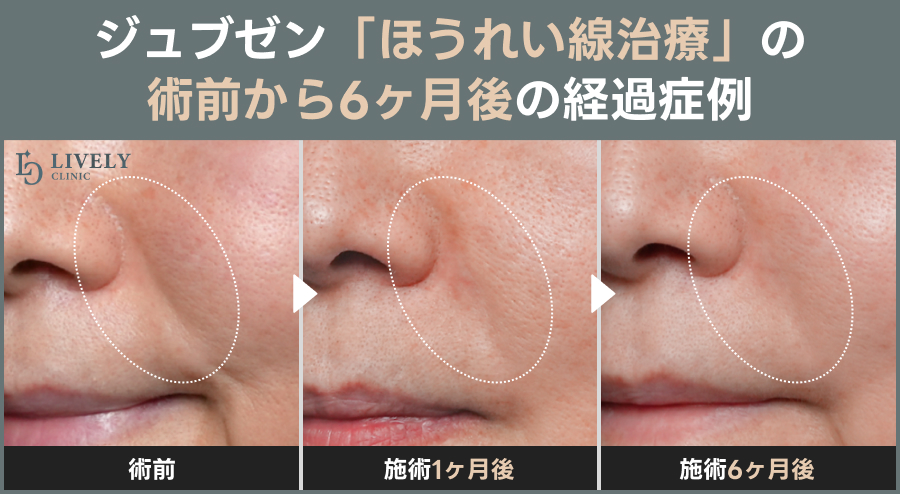
Juvgen is a treatment that can address various types of nasolabial folds. Here, we introduce cases based on different concerns. Use them as a reference for identifying your type of nasolabial folds and visualizing the potential treatment effects.
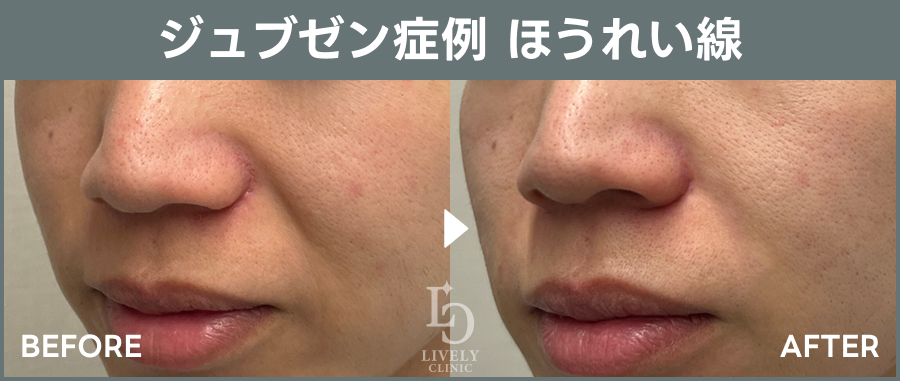
Deeply etched nasolabial folds are a condition in which the dermal layer has become significantly depressed due to aging and the use of facial muscles. For this type of nasolabial fold, Juvgen may help make it less noticeable by promoting dermal regeneration and restoring volume from within. For deep wrinkles, more satisfactory results are often obtained by undergoing 2 to 3 procedures.
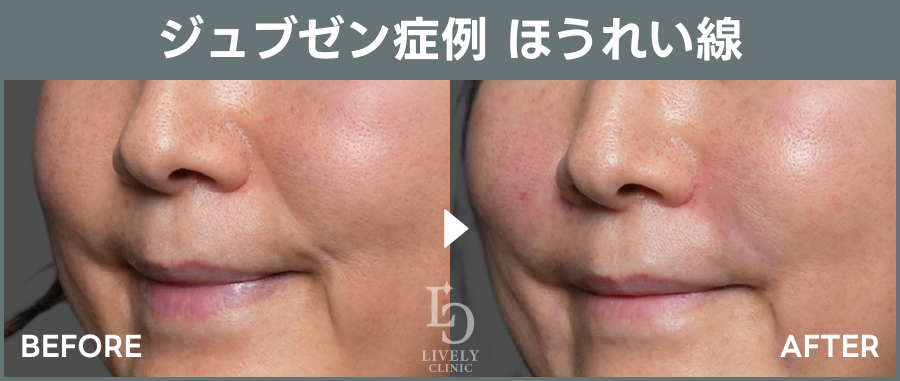
This type of nasolabial fold is not particularly deep, but the line itself is clearly and strongly defined. It forms due to reduced skin elasticity and facial muscle movement. As Juvgen increases collagen in the dermal layer, elasticity returns to the skin and the line becomes less noticeable. In many cases, effects can be experienced with a relatively small number of procedures.
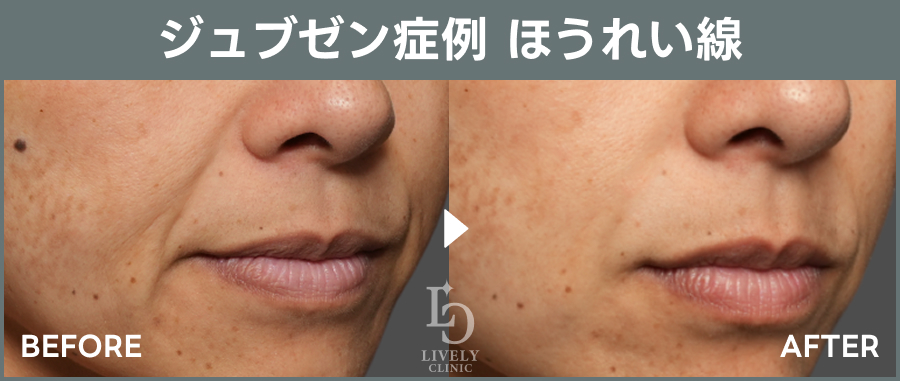
Combined-type nasolabial folds, which have both depth and strongly defined lines, can be considered the most difficult type to improve. However, the three types of stimulation provided by Juvgen—physical, chemical, and biological—act together, so substantial improvement may also be expected for these difficult-to-treat nasolabial folds. An approach involving multiple procedures at appropriate intervals is effective for gradual improvement.
Many people feel anxious about pain when undergoing aesthetic medical treatment. Specifically, pain is often felt during and after the procedure. We explain each aspect of pain associated with Juvgen in detail.
Because Juvgen uses an extremely fine 29G needle, pain when the needle is inserted is minimized. Many people describe it as “a slight prickling sensation” or “within a tolerable range.” Pain perception varies from person to person, but the procedure can basically be performed without anesthesia.
However, those who are sensitive to pain or require treatment over a wide area because of deep nasolabial folds may choose to use anesthetic cream. When anesthetic cream is used, it is applied 30 minutes to 1 hour before the procedure, and treatment begins after the topical anesthesia has had sufficient time to take effect.
After using anesthetic cream, most people can undergo the procedure with little to no pain. Rather than feeling pain during the procedure, most people feel only a slight “prick” when the needle is inserted and can undergo treatment with peace of mind.
Mild pain or discomfort may remain at the treatment site immediately after the procedure and for several days. It is commonly described as “a dull ache like muscle soreness” or “a heavy sensation when pressed.” It is closer to a heavy, sluggish sensation than sharp pain.
It is usually not severe enough to interfere with daily life, but if it is bothersome, it can be managed by taking prescribed pain medication. Over-the-counter pain medication is often sufficient, but if medication has been prescribed, prioritize that medication.
Pain naturally subsides over approximately 3 days to 1 week. If you experience severe pain after the procedure or pain that worsens day by day, complications such as infection may be possible. Contact the clinic where you received the procedure promptly.
There are various options for treating nasolabial folds, but why is Juvgen receiving particular attention? The reasons are as follows.
Here, we explain the main advantages of Juvgen.
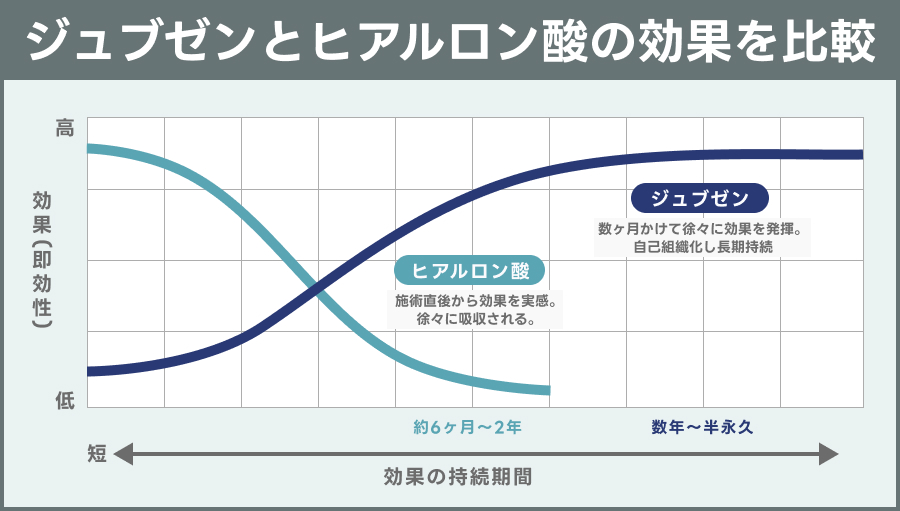
The greatest appeal of Juvgen is that its effects last semi-permanently. With Hyaluronic Acid Injection, the injected material is usually absorbed by the body within approximately 6 months to 1 year, requiring regular reinjection.
In contrast, the dermal tissue formed through Juvgen belongs to the patient, so although it is affected by age-related changes, it can basically be maintained permanently. From a long-term perspective, the financial burden may be lower than with treatments that require repeated procedures.
With treatments using hyaluronic acid or fillers, unnatural bulges may occur depending on the amount and location of injection. Some people also express concern that their facial expressions may become stiff when smiling.
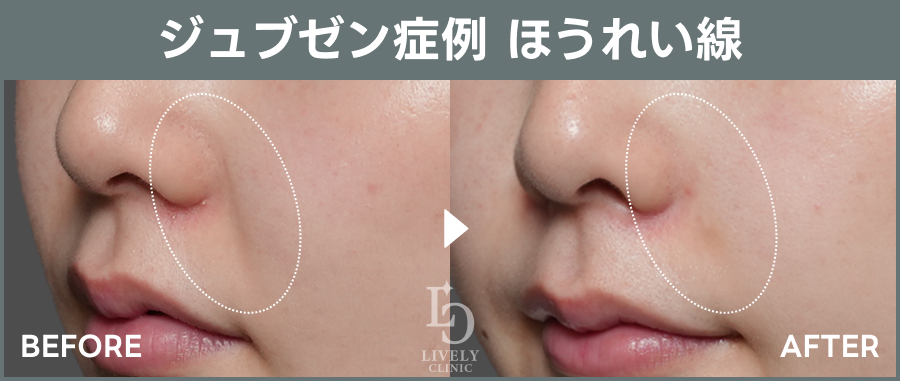
Because Juvgen promotes regeneration of the patient’s own dermis, the results look very natural. Rather than physically filling wrinkles with an injected substance, the skin itself is lifted and plumped from within, so facial expressions are not affected. It can provide natural-looking rejuvenation that is less likely to be noticed by others.
Juvgen can address various skin concerns in addition to nasolabial folds. It may be effective for a wide range of conditions caused by issues in the dermal layer, from expression lines such as horizontal forehead lines, vertical glabellar lines, and crow’s feet to acne scars and pitted scars, depressed scars, and depressions at the base of the nose.
Because one treatment can address multiple concerns, it offers the advantage of making it easier to develop a comprehensive aesthetic medical treatment plan. Treatment can be planned with the balance of the entire face in mind.
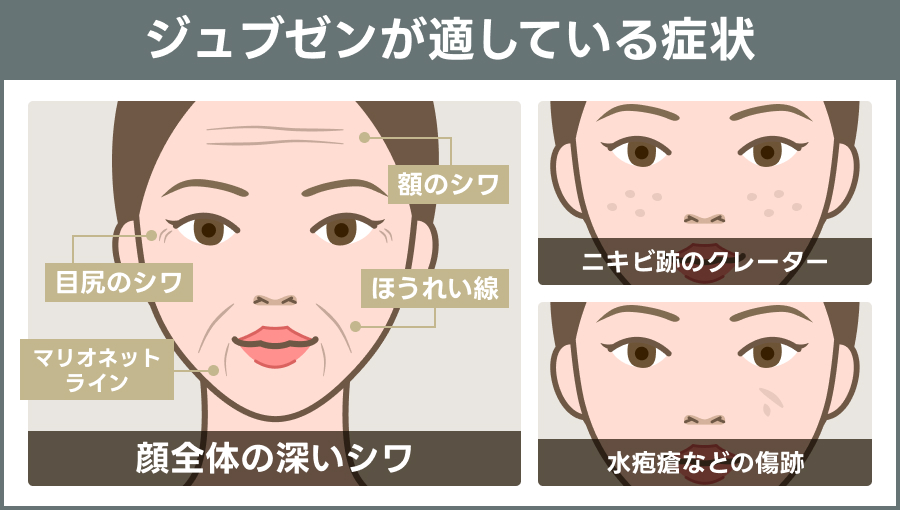
Compared with treatments such as laser therapy, which are based on multiple procedures, Juvgen is considered likely to produce satisfactory results with approximately 1 to 3 procedures. For shallow nasolabial folds, sufficient effects may be experienced after one procedure, while even deeply etched wrinkles may show substantial improvement after approximately three procedures.
Fewer procedures also means less burden from clinic visits and less cumulative downtime. This can be a major advantage for busy people or those who find it difficult to visit a clinic frequently.
When considering treatment for nasolabial folds, it is important to compare multiple options. Understand the differences between Juvgen and representative treatments, and choose the treatment that best suits you.
Hyaluronic Acid Injection is one of the most common treatments for nasolabial folds. Its advantages include immediate effects and short downtime.
However, it is important to understand that there are several differences. The recommended procedure varies depending on what each person is seeking. For details, please see this article.
Subcision is a method used to treat nasolabial folds and acne scars and is a technique for cutting subcutaneous fibrous adhesions. It physically cuts the adhesions beneath the skin with a needle and relies on collagen production during the wound-healing process. Juvgen, in addition to cutting adhesions, injects carbon dioxide gas and hyaluronic acid to promote more active dermal regeneration.
Subcision alone may not provide sufficient effects for deeply etched nasolabial folds in some cases. Juvgen combines three types of stimulation—physical, chemical, and biological—to achieve a more powerful regenerative effect. Juvgen may be expected to provide greater effects particularly for deep nasolabial folds and wrinkles caused by multiple factors.
Growth Factor Treatment is also known as a treatment that promotes collagen production. Growth Factor Treatment directly injects growth factors that promote cell growth and division. Juvgen uses carbon dioxide gas and hyaluronic acid to draw out the body’s inherent regenerative ability.
Effects of Growth Factor Treatment appear relatively early, but the risk of excessive tissue proliferation has also been noted. In contrast, because Juvgen utilizes the natural regenerative process, more predictable and safer results may be expected.
In addition, when excessive proliferation occurs with Growth Factor Treatment, correction may be difficult in some cases. Juvgen, on the other hand, regenerates the patient’s own tissue, offering the advantage of a lower risk of this type. The choice should be made after consulting with a physician.
We explain the steps involved in actually receiving Juvgen treatment. A consultation is always conducted before the procedure to learn about the patient’s concerns and preferences in detail. This is necessary to examine the depth of the nasolabial folds and the condition of the skin and determine whether Juvgen is an appropriate treatment.
At this stage, you will receive an explanation of the procedure details, expected effects, risks, downtime, fees, and other matters. If you have any concerns, we recommend asking about them at this point.
Symptoms during Juvgen downtime—swelling, redness, bruising, lumps, and mild pain—are common side effects that occur in many patients. These are normal reactions during the healing process and improve over time. In addition, although uncommon, the following complications may occur.
All of these require appropriate treatment by a physician. Do not try to resolve them yourself; consult the physician who treated you.
Those who meet any of the following conditions may be unable to receive Juvgen treatment or may require careful consideration.
It is also important to inform your physician in advance about any pre-existing conditions or medications you are taking. If you are taking blood-thinning medication, you must consult your primary physician about whether you can temporarily discontinue it, as the risk of bruising may increase.
In addition, those who have experienced problems with aesthetic medical treatment in the past or who have allergies can receive treatment more safely by providing the physician with detailed information.
Juvgen is a treatment that may provide semi-permanent improvement even for deep nasolabial folds through its innovative approach of promoting regeneration of the patient’s own dermis. Because regular reinjection is not required as it is with Hyaluronic Acid Injection, the financial burden may also be reduced over the long term. In addition, because the patient’s own dermal tissue is regenerated, the results look natural and do not affect facial expressions.
It is important to choose a clinic that offers procedures performed by a physician certified by the developer and has extensive case experience. Receive a thorough explanation during your consultation and develop a treatment plan suited to your concerns and preferences. For those troubled by deeply etched nasolabial folds, seeking a long-term solution, or prioritizing natural-looking results, Juvgen may be a treatment worth considering.
※Implementation Clinics: Osaka Clinic, Hamamatsucho Clinic
※Implementation Clinics: Osaka Clinic, Hamamatsucho Clinic
*An additional anesthetic cream fee of ¥3,300 will be charged.
*Additional areas: ¥88,000 (acne scars are not included in additional areas)
*Anesthetic options: Topical anesthesia / Nitrous oxide anesthesia