
A Thorough Comparison of Juvgen and Hyaluronic Acid Injection: Which Should You Choose?

Language:
Language:



BLOG

“Is Juvgen really safe?” “I heard it doesn’t work…” Many people may feel anxious about Juvgen, which has been attracting attention on social media.
Juvgen is an innovative aesthetic medical technology developed in Korea. When performed by a certified physician with the appropriate knowledge, it is a safe and effective treatment. However, it is also important to fully understand its potential drawbacks before undergoing treatment.
In this article, from the perspective of a Juvgen-certified training facility, we explain the safety, drawbacks, and actual effects of Juvgen based on scientific evidence. With the right knowledge, you can make a treatment choice that suits you.








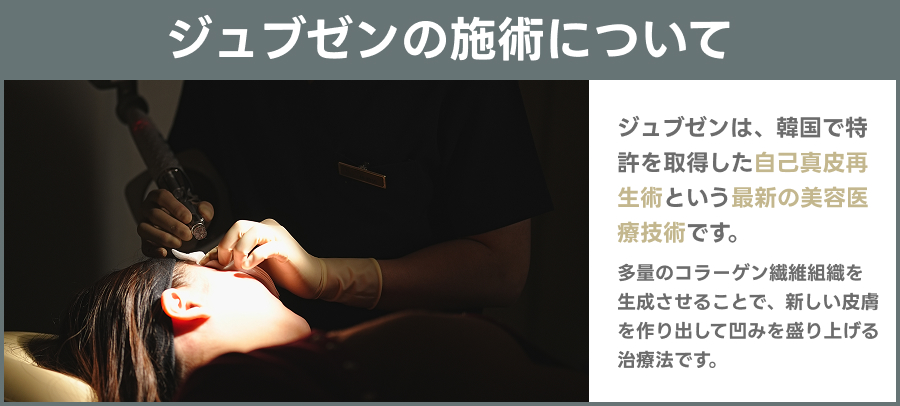
Juvgen is an advanced aesthetic medical technology known as autologous dermal regeneration, patented in Korea. Using an ultra-fine injection needle, carbon dioxide gas and hyaluronic acid are injected alternately into the dermal layer of depressed areas. This stimulates the production of abundant collagen fiber tissue, creating new skin and raising depressed areas.
While conventional Hyaluronic Acid Injection uses an approach of “adding a substance from outside,” Juvgen has a fundamentally different mechanism: “regenerating your own tissue.” As a result, more natural and longer-lasting effects can be expected.
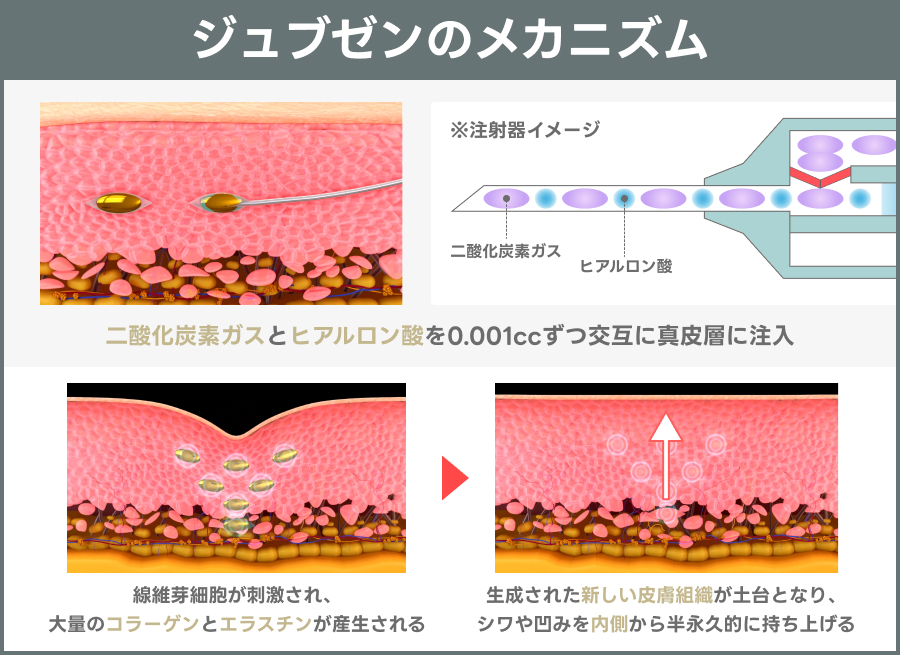
With Juvgen, carbon dioxide gas and hyaluronic acid are alternately injected into the dermal layer in 0.001cc increments using specialized equipment. This process provides the skin with three different types of stimulation.
First, as physical stimulation, the injection of a small amount of product into the dermal layer activates fibroblasts—the cells that produce collagen—without damaging them. Next, as chemical stimulation, the injected carbon dioxide gas reacts with water in the tissue to produce carbonic acid, temporarily lowering the pH (acidity) around the injection site.
This slight chemical change toward acidity dilates blood vessels and causes an increase in blood flow known as the Bohr effect. Increased blood flow delivers more oxygen and nutrients to the dermal layer, improving the cellular metabolism necessary for collagen production. Finally, as biological stimulation, activated fibroblasts produce collagen and elastin, and newly formed collagen fiber tissue pushes up the dermal layer from within, improving wrinkles and depressions.
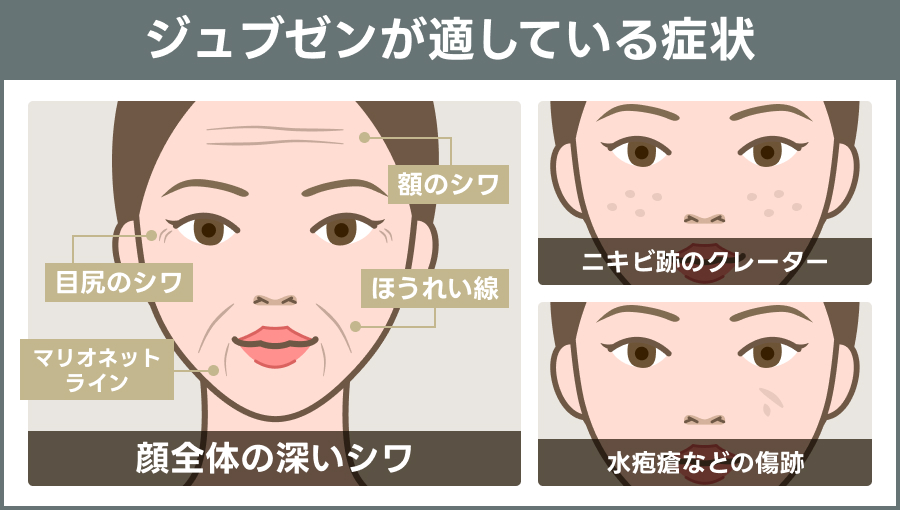
Juvgen is a versatile treatment that can address a variety of skin concerns.
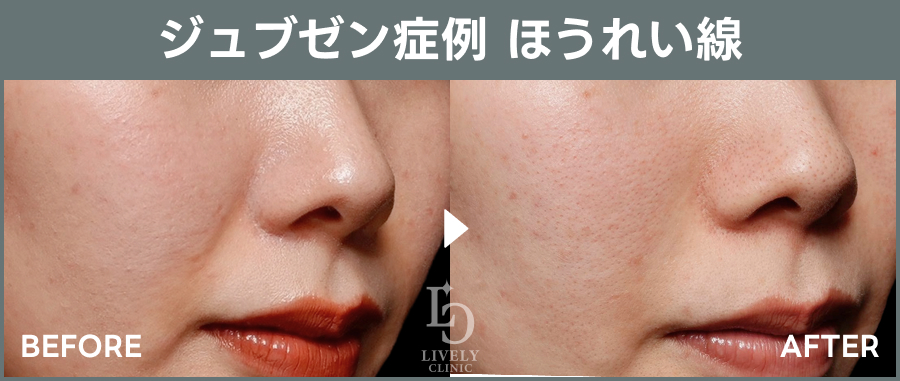
The most typical indication is nasolabial folds. Unlike conventional Hyaluronic Acid Injection, Juvgen provides a more natural and longer-lasting improvement for nasolabial folds that deepen with age. Hyaluronic acid is gradually absorbed by the body over time. However, the collagen tissue produced through Juvgen is maintained semi-permanently, making it possible to maintain a youthful appearance over the long term.
It also produces significant effects for acne-scar depressions. In particular, even severe ice-pick and boxcar acne-scar depressions that extend deep into the dermal layer and previously required 10 or more laser treatments may show clear improvement after just 1–2 Juvgen treatments in some cases.
Significant effects can also be expected in the correction of scars. For depressed scars caused by surgery or trauma (scar tissue), even scars previously considered difficult to treat may be improved to a less noticeable state by promoting regeneration from the dermal layer.
It is also effective for deep wrinkles throughout the face, including forehead wrinkles, marionette lines, and deep crow’s feet. Because these wrinkles form due to changes in the deeper structure of the skin, superficial treatments have limitations. Juvgen can address them fundamentally from the dermal layer.
You may encounter information online claiming that “Juvgen is dangerous,” but this perception is not necessarily accurate. In many cases, anxiety about a new treatment comes first, and inaccurate information spreads as a result. Here, we explain the basis for saying that Juvgen is not dangerous.
Juvgen is a technology patented in Korea, and its developer has more than 15 years of clinical experience and an extensive record of cases. The carbon dioxide gas and hyaluronic acid used in the procedure are both well-established, safe substances that have long been used in the medical field. Accordingly, Juvgen is designed with the utmost consideration for safety, and the risk of serious complications can be said to be extremely low.
Carbon dioxide gas is naturally metabolized in the body. After injection, it is rapidly broken down, absorbed into the bloodstream, and excreted from the body through respiration. It does not accumulate in the body or change into harmful substances during metabolism.
Hyaluronic acid is also a substance that naturally exists in the human body and is distributed throughout the skin, joints, eyes, and other areas. Therefore, the risk of an allergic reaction is extremely low, and rejection reactions are also very unlikely.
The most important point is that the injection volume is extremely small. Juvgen involves the gradual injection of an extremely small amount—0.001cc—so there is no risk of a large amount of product being injected at once. This design significantly reduces the risk of serious complications such as vascular occlusion compared with conventional Hyaluronic Acid Injection.
Established measures are also available if a problem occurs after treatment. If excessive fullness or an unnatural appearance is concerning within 2 weeks after treatment, the injected hyaluronic acid can be broken down and adjusted using hyaluronidase, a dissolving agent.
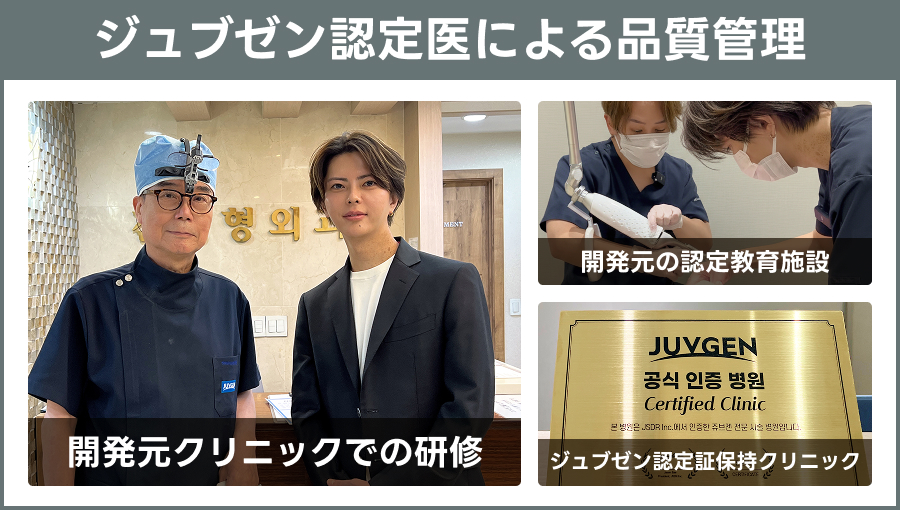
The certified physician system is an important factor ensuring the safety of Juvgen. The developer has established a certification system that permits only physicians with appropriate skills and knowledge to perform the procedure, strictly managing the quality of practitioners.
Certified physicians receive specialized training in anatomical knowledge, injection techniques, and the management of complications. Specifically, they are thoroughly familiar with the course of facial blood vessels, nerve distribution, and muscle structure, and accurately understand the safe injection layers and dangerous areas to avoid.
Treatment protocols are also standardized, achieving consistent treatment quality that does not depend on the skill of an individual physician. Detailed standards are established for injection depth, volume, and speed, and following these standards ensures a certain level of safety and effectiveness.
LIVELY CLINIC is an officially certified Juvgen training facility recognized by Chen Plastic Surgery, the developer of Juvgen. Our director physician traveled to Korea and acquired advanced techniques through training at the development clinic. We also received practical instruction in safety and have established a system that enables patients to undergo treatment with confidence. LIVELY CLINIC was among the earliest clinics in Japan to introduce Juvgen and has an extensive record of cases.

Every treatment has advantages and disadvantages. Juvgen also has several drawbacks that patients should understand. Specifically, there are the following four:
By explaining these points honestly, it becomes possible to make a more appropriate treatment choice. We explain each one in detail.
Regarding the “dramatic change immediately after treatment” that many people expect, Juvgen produces results on a different timeline from other treatments.
There is an immediate effect that can be felt right after treatment, but most of this is a temporary state in which swelling makes wrinkles and depressions less noticeable. In reality, many people begin to notice changes after about 1 week. This is due to the physical effects of the injected product and the beginning of early collagen production.
After that, the appearance gradually develops into a natural result over 3–6 months. Activated fibroblasts continuously produce collagen, and improvement gradually progresses as the new tissue matures. Results vary from person to person: some people notice clear changes from around 1 month, while for others the peak effect comes 5–6 months later.
This gradual improvement process is also advantageous because it avoids an unnatural appearance caused by sudden changes and can achieve natural rejuvenation without others noticing. It can be considered more suitable for people who want to achieve a natural result over time than for those who want results immediately.
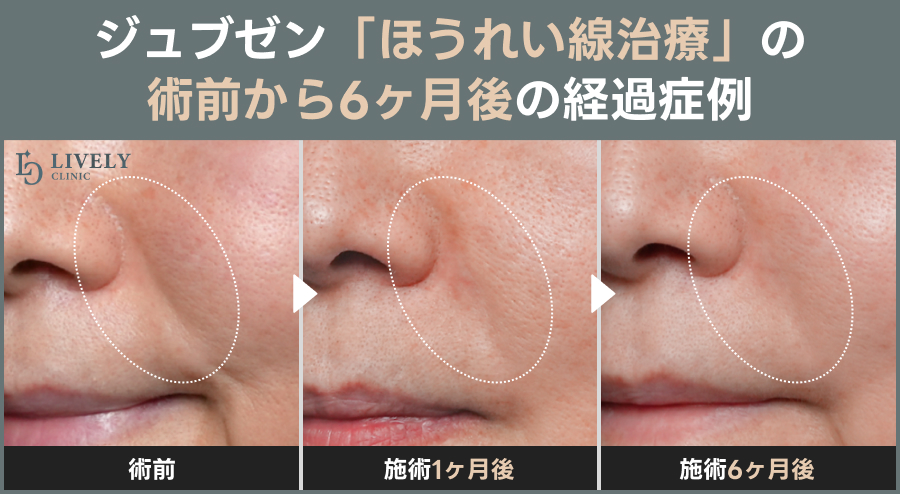
In many cases, one Juvgen treatment is sufficient to achieve satisfactory effects. However, depending on the severity of the condition and the depth of the depression, 2–3 treatments may be necessary. This does not mean that the treatment failed; rather, it is a strategic approach to achieving a more natural and reliable result.
Staged treatment is particularly recommended for deep nasolabial folds that have developed over many years or severe acne-scar craters that extend into the dermal layer. Attempting to produce an excessive amount of collagen in a single treatment may increase the risk of unnatural fullness or asymmetry.
Individual differences also have a significant influence. The number of treatments required varies depending on factors such as age, skin type, collagen-producing ability, and lifestyle. After observing the progress following the initial treatment, the physician determines whether additional treatment is necessary and proposes an optimal treatment plan.
An interval of approximately 2–3 months is usually required between treatments. Better results can be achieved by performing the next treatment after the collagen produced in the previous treatment has sufficiently matured and the effects have stabilized.
The cost of Juvgen treatment varies depending on the treatment area and severity of the condition, but the general market price is approximately 100,000 yen–150,000 yen per treatment.
Treatment limited to the nasolabial folds is relatively affordable, but treating multiple areas at the same time, such as forehead wrinkles, marionette lines, and acne scars, tends to be more expensive. In severe cases involving deep, widespread depressions, the cost also tends to be higher. In addition, if multiple treatments are necessary, as described above, the burden of additional costs increases.
The initial cost is higher compared with Hyaluronic Acid Injection. Hyaluronic Acid Injection can be received for approximately 30,000 yen–50,000 yen per treatment, making Juvgen a greater initial financial burden.
However, from a long-term perspective, it cannot necessarily be considered expensive. Because Hyaluronic Acid Injection requires additional injections every 6 months–1 year, 6–9 treatments would be required over 3 years, resulting in a total cost of approximately 180,000 yen–450,000 yen. In contrast, the collagen tissue produced through Juvgen is basically maintained semi-permanently, so it can also be considered economical over the long term.
Many clinics also offer installment payments or medical loans. If paying the full amount at once is difficult, we recommend discussing your options with the clinic.
The collagen produced through Juvgen becomes part of your own tissue. While this is a major advantage in terms of long-term effects, it also means that it can be difficult to return to your original state if you are dissatisfied with the result.
With hyaluronic acid, it is possible to return to the original state within several hours to several days by injecting hyaluronidase, a dissolving agent. However, there is currently no method for selectively dissolving your own collagen tissue.
However, adjustment is possible using hyaluronidase within 2 weeks after treatment. During this period, some of the injected hyaluronic acid remains, and dissolving it can allow for a certain degree of correction.
After 2 weeks, the newly produced collagen begins to settle as your own tissue, making correction technically difficult. For this reason, choosing the clinic where you undergo treatment is extremely important. It is essential to choose a clinic with certified physicians and an extensive record of cases.
It is also important to take sufficient time during the consultation to share your desired result with the physician. By aligning your expectations while looking at case photos and beginning with a conservative result, you can minimize the risk of regret.
As a medical procedure, Juvgen also involves side effects and risks. By understanding these correctly and responding appropriately, you can undergo treatment safely. We explain them in detail.
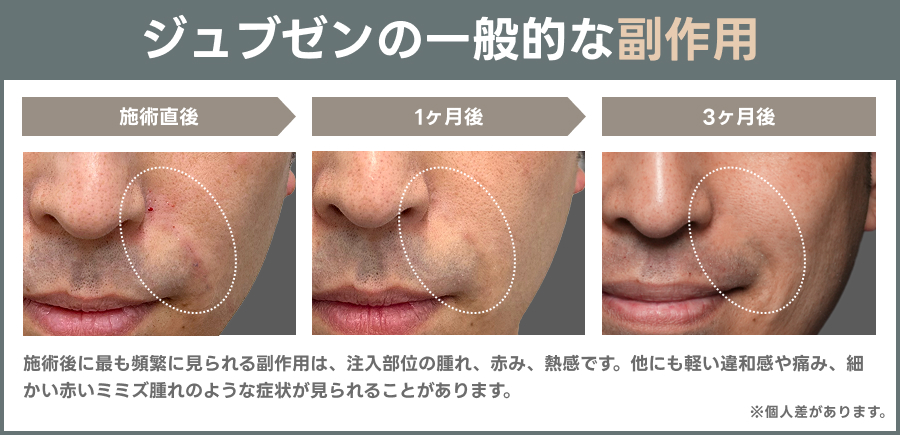
The most frequent side effects after treatment are swelling, redness, and warmth at the injection site. These are normal biological reactions to the injection of the product and can also be considered part of the treatment response. In many cases, they naturally subside within several days to about 1 week.
Bruising is also a relatively common side effect. It occurs when the injection needle comes into contact with a small blood vessel and may appear as a bluish-purple bruise. Results vary from person to person, but if noticeable bruising occurs, it may take approximately 1–2 weeks to resolve. However, it can often be covered with makeup, and its impact on daily life is generally limited.
Other symptoms may include mild discomfort or pain and small, red, raised marks resembling thin worm-like welts. These common side effects can be reduced through icing immediately after treatment, appropriate moisturizing care, and protection from ultraviolet rays.
Although rare, the following complications may occur.
However, because Juvgen involves the gradual injection of an extremely small amount (0.001cc), this risk is significantly reduced compared with conventional Hyaluronic Acid Injection, in which 0.1–1.0cc is injected at once. Certified physicians are also thoroughly familiar with the course of blood vessels and have the skills to inject accurately while avoiding dangerous areas.
If you experience any abnormalities during or after treatment, such as severe pain, a sudden decline in vision, or changes in skin color (turning white or bluish-purple), contact the clinic promptly and receive an appropriate diagnosis and treatment. Early response can significantly affect the prognosis.
Not everyone can undergo Juvgen treatment. From a safety perspective, people who meet any of the following conditions need to refrain from treatment.
If any of these conditions apply to you, or if you have an existing medical condition or regularly take medication, be sure to inform the physician during your consultation. Concealing this information may lead to unexpected problems.

Comparing Juvgen with other options is useful in determining whether it is the right treatment for you. Understanding the characteristics of each option allows you to make a more appropriate choice.
For more details on the differences from other procedures, please also refer to the following column.
Hyaluronic Acid Injection is the most common treatment for nasolabial folds. Its greatest advantage is its immediate effect, allowing patients to feel the results right after treatment. It also offers reassurance because, if the result is not satisfactory, it can be dissolved with hyaluronidase.
On the other hand, its effects last only about 6 months–1 year, so regular additional injections are necessary. Over the long term, the accumulating cost can be considered a disadvantage. Repeated injections may also carry the risk of hardening tissue or causing unevenness.
Although Juvgen does not produce immediate results, it is characterized by the potential for long-term improvement using your own tissue. Hyaluronic acid is gradually absorbed by the body over time, whereas the collagen tissue produced through Juvgen is maintained semi-permanently. Therefore, because frequent maintenance is unnecessary, it can be considered convenient from a long-term perspective.
Growth Factor Treatment is also a long-term treatment that promotes collagen production. By injecting growth factors, it has a mechanism of action similar to Juvgen, but there are several important differences.
The most important difference is that Growth Factor Treatment does not carry a risk of impaired blood flow. Because it does not use hyaluronic acid, there is no theoretical risk of skin necrosis or visual impairment caused by vascular occlusion. In this respect, it can be considered advantageous in terms of safety.
The way effects develop is similar for both treatments: effects gradually appear over 3–6 months. The duration is also long term, and although results vary from person to person, effects lasting several years have been reported.
Juvgen, on the other hand, provides additional stimulation from carbon dioxide gas, so it is characterized by the potential for more powerful collagen production. The synergistic action of three types of stimulation—physical, chemical, and biological—may produce greater effects than Growth Factor Treatment alone.
There are also slight differences in the conditions they address. Juvgen is considered particularly effective for deep depressions and acne-scar craters, while Growth Factor Treatment may be suitable in some cases for relatively shallow wrinkles and improving skin quality. A physician can recommend the most appropriate treatment according to your condition.
Information claiming that “Juvgen is dangerous” is not necessarily accurate. The developer has more than 15 years of clinical experience, and when the procedure is performed by a certified physician with appropriate skills, safety is sufficiently ensured. Although it may not produce immediate results, multiple treatments may be necessary in some cases, and the cost may be high, these points do not in themselves mean that Juvgen is dangerous.
Choosing the right clinic is extremely important for successful Juvgen treatment. Evaluate factors such as confirmation of the physician’s certification, an extensive record of cases, thorough counseling, and a comprehensive aftercare system.
Juvgen is an excellent treatment, but it is not necessarily suitable for everyone. Choosing the treatment that best suits you through thorough consultation with a physician is the most direct path to satisfactory results.
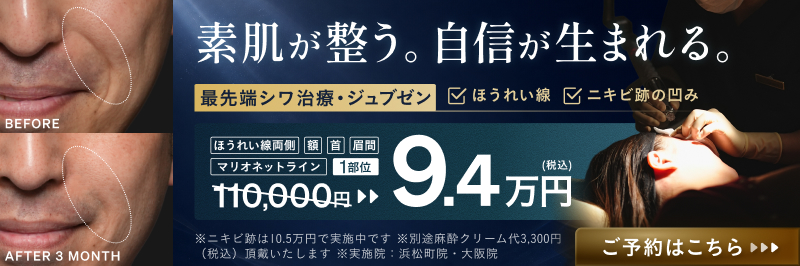
※Implementation Clinics: Osaka Clinic, Hamamatsucho Clinic
※Implementation Clinics: Osaka Clinic, Hamamatsucho Clinic
*An additional anesthetic cream fee of ¥3,300 will be charged.
*Additional areas: ¥88,000 (acne scars are not included in additional areas)
*Anesthetic options: Topical anesthesia / Nitrous oxide anesthesia