


A Thorough Comparison of Alltite and Other Treatments | How to Choose Between ONDA Lift, InMode, and HIFU

Language:
Language:



BLOG
Many people are interested in the new sagging treatment called Alltite but are unsure how it differs from ONDA Lift, InMode, and HIFU.
This article explains in detail the differences between Alltite, ONDA Lift, InMode, HIFU, Ulthera, and Thermage. Understand the strengths and purposes of each treatment and use this information as a guide to choosing the treatment that is right for you.



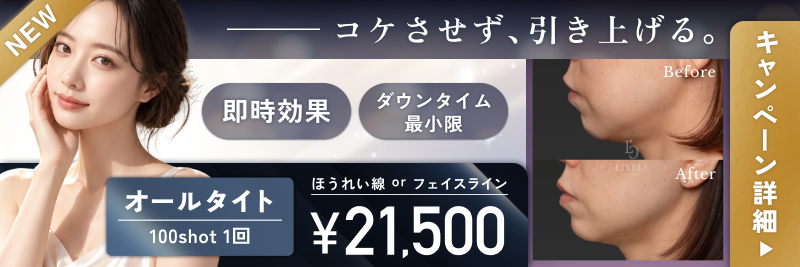



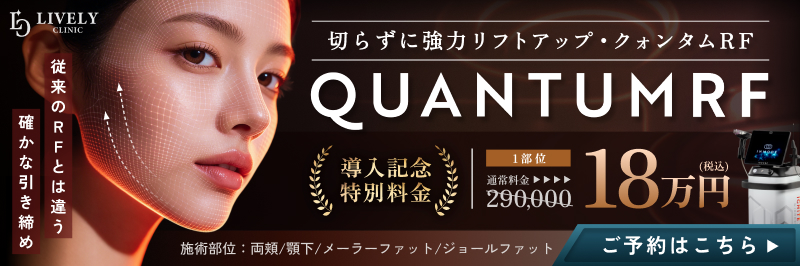


Alltite is an advanced device for treating sagging skin, developed by South Korea’s Innoxus. Its patented DLTD® (Dermis Layer Target Dielectric Heating System) technology enables simultaneous treatment of the dermal and SMAS layers, which was difficult to achieve with conventional HIFU or RF treatments alone. In particular, Alltite is attracting attention in aesthetic medicine as a treatment that can provide both lifting and improved skin firmness without incisions.
The following article provides more details about Alltite. Please refer to it for further information.
DLTD® technology is an innovative energy-delivery system that combines the advantages of RF (radiofrequency) and HIFU (ultrasound). With conventional treatments, RF and HIFU approached the dermal layer and SMAS layer, respectively, as separate treatments. DLTD® technology delivers thermal energy three-dimensionally from the superficial to the deeper layers of the skin by applying both energies simultaneously.
In addition, its design helps suppress increases in epidermal temperature, allowing for milder heat delivery compared with HIFU alone. For those who associate HIFU with heat and pain, Alltite may offer a new option.
The following effects may be expected from Alltite treatment.
In addition to providing aesthetic treatment without incisions, Alltite is characterized by its potential to improve skin firmness and elasticity through collagen regeneration, as well as its tightening effect. All of these effects may be enhanced through repeated treatments.

Alltite uses DLTD® technology, which combines the advantages of RF (radiofrequency) and HIFU (ultrasound), giving it different characteristics from conventional treatments that use a single type of energy. Here, we explain in detail how it differs from the following treatments.
Understand the characteristics of each treatment and consider which one may be right for you.

Both Alltite and ONDA Lift are attracting attention as non-surgical treatments for sagging skin, but they differ in the energy used and the layers they target.
Alltite uses DLTD® technology, which combines the advantages of RF (radiofrequency) and HIFU (ultrasound), to deliver energy simultaneously to both the dermal and SMAS layers. It is a treatment that provides both lifting and improved skin firmness.
ONDA Lift, on the other hand, uses microwaves (2.45 GHz) and is characterized by its selective approach to fat cells. The microwaves are absorbed by water molecules within fat cells, promoting collagen production while dissolving and eliminating fat.
Regarding downtime, although Alltite uses DLTD® technology to reduce the burden on the epidermis, some people report that it feels “quite hot” because the energy reaches the SMAS layer. Redness or a flushed sensation may also occur after treatment, and downtime is characteristically somewhat longer than with ONDA Lift.
With ONDA Lift, the microwaves act selectively on the fat layer, resulting in relatively little stimulation at the skin’s surface. It is suitable for those who want to minimize pain and downtime.
Both are effective treatments, but Alltite is suitable for those seeking “lifting and improved skin firmness,” while ONDA Lift is suitable for those seeking “a more defined facial contour while reducing fat.”
For more information about ONDA Lift and other treatment options, please also refer to the following article.

InMode is a treatment device for sagging skin that primarily uses RF (radiofrequency). It differs from Alltite in the type of energy used and the layers targeted, and each treatment has different strengths.
InMode primarily uses RF (radiofrequency) to deliver thermal energy to the dermal and fat layers. By combining multiple handpieces, including Forma and FX, it can address overall facial tightening and fat reduction.
Alltite uses hybrid energy that combines the advantages of RF (radiofrequency) and HIFU (ultrasound). Its characteristic feature is that it can approach not only the dermal layer but also the SMAS layer. Because it can deliver energy to deeper layers than InMode, a more substantial lifting effect may be expected.
InMode specializes in “facial slimming and tightening.” Its RF thermal energy contracts collagen in the dermal layer and works on the fat layer to tighten the entire face. Its low levels of pain and downtime are also appealing, making it easy to continue as regular maintenance.
Alltite specializes in “lifting and improved skin firmness.” Its ultrasound energy approaches the SMAS layer to provide lifting at the level of the fascia. It is suitable for those who want to raise the position of the cheeks or create a sharper facial contour.
Both are effective treatments, but InMode is recommended for those who want ongoing facial-slimming and tightening effects, while Alltite is recommended for those seeking a substantial lifting effect.

HIFU (high-intensity focused ultrasound) is widely known as a standard treatment for sagging skin. Alltite incorporates HIFU technology while evolving it by combining it with RF.
HIFU alone concentrates ultrasound energy on the SMAS layer, creating pinpoint thermal coagulation points. Although it can provide a powerful lifting effect, many people report that it feels quite hot and painful.
Alltite combines the advantages of RF (radiofrequency) and HIFU (ultrasound) through DLTD® technology. It is designed to deliver heat more mildly to both the dermal and SMAS layers simultaneously, allowing results to be achieved with less pain than HIFU alone.
HIFU alone may provide a substantial lifting effect through pinpoint treatment of the SMAS layer, but its approach to the dermal layer is limited. Alltite can approach both the dermal and SMAS layers in a single treatment, providing both lifting and skin-quality improvement.
HIFU may be suitable for those seeking a clear lifting effect through a powerful approach to the SMAS layer, while Alltite may be suitable for those who want both lifting and improved skin firmness while minimizing discomfort.
Ulthera is known as the “gold standard for lifting treatments,” with a high level of recognition and an established track record among HIFU devices. It has received FDA approval and is widely used around the world.
Ulthera delivers ultrasound energy to the SMAS layer in a pinpoint manner, creating thermal coagulation points that contract the fascia. Because treatment can be performed while checking cross-sectional images of the skin in real time, it is possible to approach the precise depth. Effects last approximately 1–2 years, and a substantial lifting effect may be expected from a single treatment. However, it is also known for causing significant pain, and anesthesia cream or nitrous oxide sedation is often used during treatment.
Ulthera provides substantial lifting through a powerful approach to the SMAS layer, while Alltite provides comprehensive anti-aging care that also includes the dermal layer in a single treatment. Ulthera may be an option for those who want a powerful lifting effect in one treatment, while Alltite may be an option for those seeking results while minimizing discomfort.
Thermage is a representative device for treating sagging skin using RF (radiofrequency). Since receiving FDA approval in 2002, it has been used in several million treatments worldwide.
Thermage uses monopolar RF to deliver thermal energy over a broad area from the dermal layer to the subcutaneous fat layer. It may promote collagen fiber contraction and new collagen production, helping tighten the overall skin and improve firmness. The latest Thermage FLX is designed to reduce pain and improve results, allowing for a more comfortable treatment than earlier models.
While Thermage primarily provides a tightening effect from the dermal layer to the subcutaneous fat layer, Alltite can provide a more substantial lifting effect through its approach to the SMAS layer. Thermage is suitable for those who want to tighten the overall skin and improve firmness, while Alltite is suitable for those who want to lift sagging skin.
We have summarized the differences between the treatments discussed above in the following table. Use it as a guide when choosing a treatment suited to your concerns and goals.


There are many options for treating sagging skin, and many people may be unsure which one to choose. Here, we explain suitable treatments based on individual concerns and goals.
For those who prioritize lifting—such as raising the position of the cheeks or creating a sharper facial contour—treatments that can approach the SMAS layer are recommended.
Alltite is a hybrid treatment that combines the advantages of RF (radiofrequency) and HIFU (ultrasound), providing both lifting and skin-quality improvement. It is suitable for those who want a milder treatment than HIFU alone or who want to approach both the dermal and SMAS layers.
HIFU and Ulthera, on the other hand, may provide a substantial lifting effect through pinpoint treatment of the SMAS layer. They are suitable for those who tolerate pain and seek a clearly defined effect.
ONDA Lift is recommended for those concerned about a double chin or fat in the cheeks. Its microwave-induced fat-dissolving effect can create a more defined facial contour while also improving skin quality through collagen production.
Its low levels of discomfort and downtime are also appealing, making it a treatment that can be readily incorporated by people with busy schedules.
Treatments using RF (radiofrequency) are suitable for those concerned about an overall sagging or heavy appearance of the face.
InMode can provide both a tightening effect from RF and a facial-slimming effect. With little pain and downtime, it may be easy to continue as regular maintenance.
Thermage has a long track record as a standard RF treatment. It provides a tightening effect over a broad area from the dermal layer to the subcutaneous fat layer and can improve overall skin firmness.
Alltite may be one solution for those with multiple needs, such as wanting both lifting and improved skin firmness. Because it can approach both the dermal and SMAS layers in a single treatment, it is not necessary to combine multiple treatments.
Some clinics may also offer customized treatments, such as combining ONDA Lift and InMode or using HIFU together with an RF treatment. Clearly communicate your concerns during your consultation and discuss the optimal combination for you.
Alltite may be recommended for people who meet the following conditions.
Because it can approach both the dermal and SMAS layers, Alltite may provide both lifting and improved skin quality. However, depending on the amount of fat and the condition of the sagging, other treatments such as ONDA Lift or InMode may be more suitable. First, clearly communicate your concerns and wishes during a consultation, and choose the treatment that is right for you in consultation with a physician.
Alltite is a next-generation lifting treatment that uses DLTD® technology, combining the advantages of RF (radiofrequency) and HIFU (ultrasound) to approach both the dermal and SMAS layers simultaneously. The treatment that is right for you depends on the condition of your sagging, the amount of fat, and the effects you seek. We recommend clarifying your goal—whether you want lifting, fat reduction, or tightening—and consulting a physician during your consultation.
At LIVELY CLINIC, we offer multiple treatments for sagging skin, including Alltite, ONDA Lift, and InMode. We recommend suitable treatments based on each individual’s concerns and skin condition, so please feel free to visit us for a consultation.


