


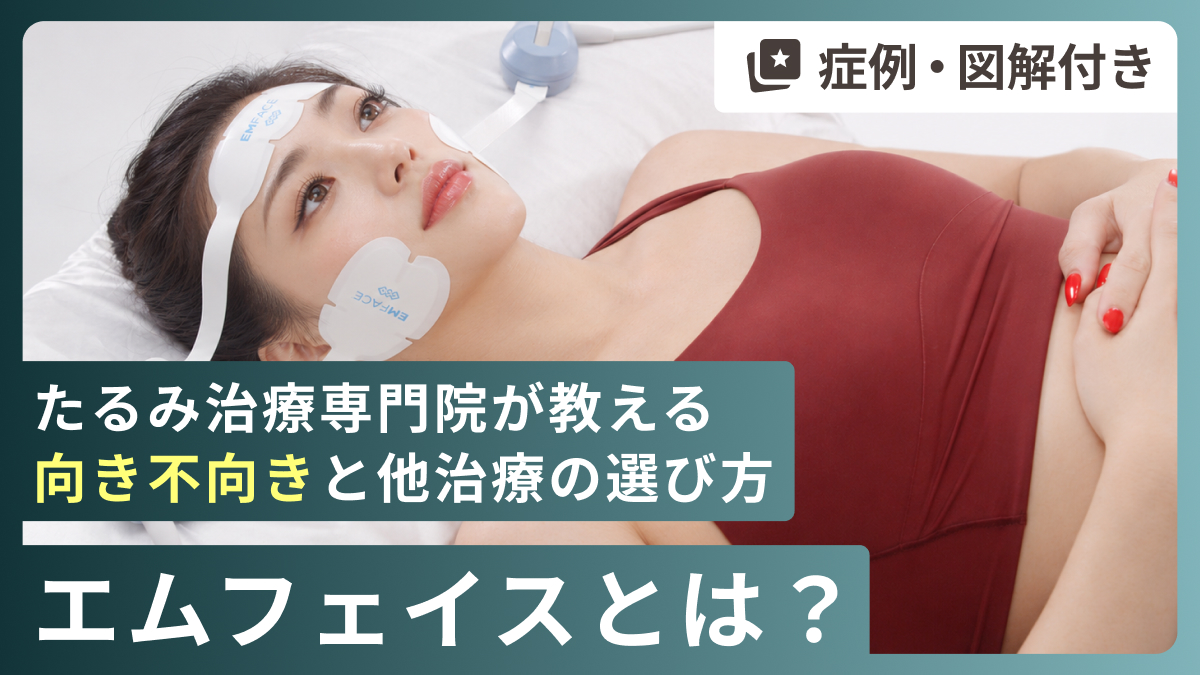
What Is EMFACE? A Toning Specialist Clinic Explains Who It Suits and How to Choose Other Treatments

Language:
Language:



BLOG
MFACE is known as a treatment that uses neither incisions nor needles and allows makeup immediately after treatment. However, it is an unapproved medical device in Japan that has not received approval under the Pharmaceuticals and Medical Devices Act. At LIVELY CLINIC, the device is introduced and used under the individual responsibility and supervision of a physician.
This article organizes, in order, the disadvantages you should know before signing a contract, from pain and costs to the conditions that may prevent treatment. The limitations to confirm mainly concern costs, the number of clinic visits, how results appear, and the conditions for receiving treatment.











The five disadvantages of MFACE are pain and heat during treatment, redness and muscle soreness afterward, the costs and visits required for four sessions, individual differences in results, and its status as unapproved in Japan. The main physical effects are pain and redness; the other three are conditions that can be assessed in advance to plan ahead.
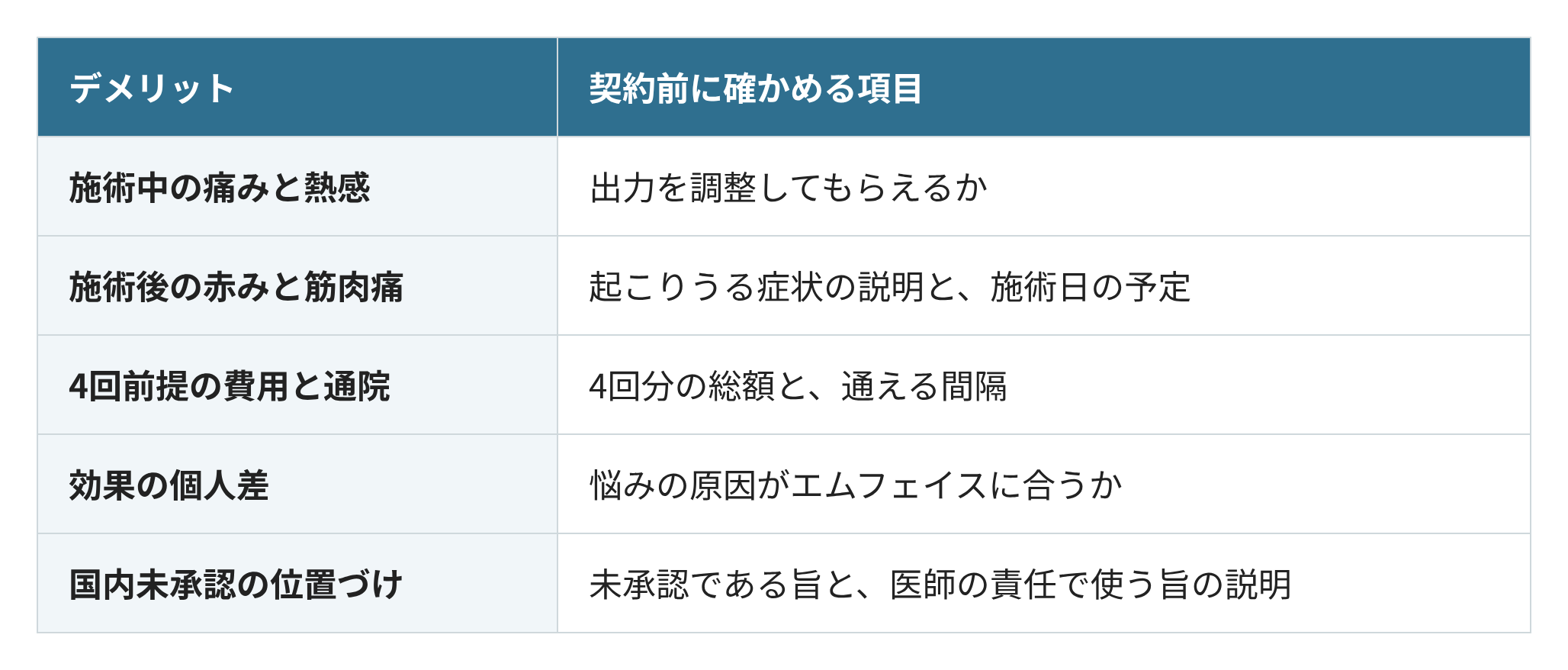
During MFACE treatment, what you may feel is less a sharp pain than a sensation of involuntary facial-muscle contractions and mild warmth on the skin. The device simultaneously delivers electrical stimulation that moves the facial muscles (HIFES) and radiofrequency (RF) that warms the skin, which is why the contraction sensation and mild warmth overlap.
When applied to the cheeks or chin, some people may feel a sensation that resonates into their teeth. If you have sensitive teeth, tell the clinic in advance. If you are concerned about the intensity, do not endure it silently; consult the physician or nurse.
Redness or warmth in the treated area and discomfort similar to muscle soreness are common after treatment. Much of the redness and warmth subsides within 24 hours, while muscle-soreness-like discomfort may continue for several days. Dryness or swelling may also occur. Rare symptoms include the following.
Some clinics allow face washing and makeup from the day of treatment, while guidance on bathing and exercise varies by clinic. If blisters or severe pain occur, contact the clinic where you received treatment promptly.
MFACE is often planned on the assumption that patients will visit the clinic four times at intervals of one to two weeks, making the cost and burden of clinic visits central disadvantages. Published price examples from multiple clinics range from around ¥30,000 to ¥50,000 per area per session, while some four-session courses for two areas cost in the ¥400,000 range. Prices vary depending on the timing and campaigns.
If you apply based only on the initial price, you may learn the total cost later. For reassurance, confirm the total cost for four sessions and whether your schedule allows the visits in advance. The total also varies depending on how many areas you select from the forehead, eye area, cheeks, and under the chin, as well as whether an introductory price is available. Some clinics recommend maintenance once every three to six months after four sessions. If maintenance is performed two to four times per year, using one clinic’s price of 9万9千円 for the second and subsequent sessions for two areas as an example, the annual cost would be approximately ¥200,000 to ¥400,000.
Results from MFACE vary from person to person. Even when people receive the same number of sessions, the degree of change differs. A major reason for this difference is the cause of sagging. If the cheeks are significantly hollow, or if there is substantial excess skin or sagging fat, the change may be limited.
Because this treatment does not produce the same changes for everyone, tell the physician during the consultation what changes you expect and first confirm whether MFACE is suitable for your concerns.
MFACE has not received approval under the Pharmaceuticals and Medical Devices Act in Japan, so its status differs from that of an approved medical device that has undergone government review for efficacy and safety. It may be obtained through a domestic distributor or imported personally by a physician.
Some clinics explain that the device is not covered by relief systems for serious adverse effects. Before signing a contract, confirm whether you can receive an explanation of whom to contact and how adverse effects will be handled. Being unapproved does not itself mean that the device is dangerous; the decision should be made after you understand and accept the explanation.
The following are three situations in which it may be difficult to notice results from MFACE.
MFACE works on the facial muscles rather than adding volume, and how the change appears depends on the cause of sagging. For this reason, an assessment before signing a contract is essential.
It may be difficult to notice results when judging them after only one session because you are reaching a conclusion partway through the four sessions generally used as a guideline for evaluation.
Even if you cannot see a difference after the first session, wait until all four sessions are complete before making a judgment. The progress after the second and third sessions can also provide information about the direction of change. Telling the physician after each session how the redness and muscle soreness develop can help with consultations about subsequent treatment.
If the cheeks are significantly hollow or the temples are deeply sunken, you may find it difficult to notice sufficient change with MFACE alone. This is because MFACE does not add volume. If insufficient volume is the primary cause, injections such as hyaluronic acid may be suitable in some cases. Whether to combine treatments should be decided in consultation with the physician.
If you have previously received injections, tell the physician the treatment area and date during the consultation. Because it is difficult to determine for yourself whether an area is sagging or sunken, point out the areas of concern with your finger during the consultation.
If there is substantial excess skin or sagging fat, the change from MFACE is more likely to be limited, and another sagging treatment may be more suitable. The same applies when structural sagging is pronounced.
The physician will assess which cause is the greatest during the consultation. If you sign a contract without asking about the cause, the results may differ from what you expected. It is also reassuring to confirm during the consultation whether alternative options can be suggested if MFACE is judged unsuitable.

The conditions that may prevent MFACE treatment can be divided into two categories: conditions under which treatment cannot be performed and conditions for which physicians may reach different judgments. Because the treatment uses electrical stimulation and heat, particular caution is required for people with electronic devices or metal inside the body.
The criteria vary depending on the device instructions and each clinic’s protocols, so be sure to disclose any medical conditions and implanted metal during the consultation.
The following four conditions prevent MFACE treatment.
Clinics differ in how they handle pregnancy, and some also include the period after childbirth or during breastfeeding. Some clinics may also postpone treatment if you have received an injection, laser treatment, or hair removal in the treatment area within the past two weeks.
The following situations may be treated as contraindications at some clinics and left to the physician’s judgment at others.
The decision on whether treatment can be performed, as well as the required waiting period, is determined by each clinic according to the condition involved.
Because treatment eligibility is assessed during the consultation, make a note of your medical conditions and current medications, whether you have metal or threads inside your body, and the dates of any recent treatments, and bring it to your consultation at LIVELY CLINIC.
The MFACE process varies by clinic, but generally proceeds in the order of consultation, face washing, pad application and treatment, and post-treatment instructions. The treatment itself takes approximately 20 minutes. Anesthetic is considered unnecessary, and there are no incisions or needle insertions. Let us take a closer look.
Before treatment, the physician confirms your areas of concern, medical conditions, current medications, and whether you have metal or threads inside your body, as well as the dates of previous treatments, to determine whether treatment can be performed. Some clinics require a consultation for first-time patients. During this time, you can also discuss the treatment areas and expected number of sessions.
The information you provide is used to assess contraindications, so disclose any medical conditions or previous treatments you recall, even if they seem minor. It is also reassuring to confirm the total cost and interval between visits at this stage.
Face washing removes makeup and sunscreen to leave the skin clean. Some clinics instruct patients to do this before treatment. You can apply makeup immediately afterward and return home.
Because the consultation and face washing take additional time apart from the treatment itself, allow for preparation time in addition to the approximately 20-minute treatment when making your appointment. If you schedule it before work or another appointment, allow extra time.
During pad application and treatment, adhesive pads are placed on areas such as the forehead and both cheeks, and treatment is performed for approximately 20 minutes. You can select areas from the forehead, eye area, cheeks, and under the chin. The pads remain in place while treatment proceeds, so the practitioner does not need to continue holding the device against the skin by hand.
Anesthetic is unnecessary. Although many people are initially surprised by the sensation of vibration when the muscles move, they are said to get used to it quickly. If the heat, pain, or sensation resonating into your teeth feels strong during treatment, tell the practitioner immediately.
During the post-treatment explanation, you will receive information about redness and muscle-soreness-like discomfort and precautions for the rest of the day before returning home. It is also reassuring to confirm at this time whom to contact if blisters or severe pain occur.
Guidance on bathing and exercise varies by clinic, so write down the instructions you receive to avoid forgetting them. Some clinics also advise patients to moisturize sufficiently and protect the skin from ultraviolet rays after treatment.
The difference between MFACE and other sagging treatments lies in the tissues they target and whether they add volume. Rather than choosing based on which is superior, the treatment should be selected according to whether it suits the cause of sagging.
Whether multiple treatments should be combined on the same day depends on the physician’s assessment of your skin condition. Let us take a closer look.
HIFU is a treatment that applies heat using ultrasound and acts from deeper layers, including the SMAS (the fascia in the deep layers of the face), through to the dermis. MFACE acts on the facial muscles and skin, whereas HIFU acts on deeper layers.
Disadvantages include pain during treatment and temporary redness or swelling; in rare cases, burns or nerve numbness may occur. The fact that makeup is considered possible immediately after treatment is common to both HIFU and MFACE.
Radiofrequency (RF) is a treatment that uses heat to warm the dermis mainly and promote the production of collagen and other substances. MFACE also uses radiofrequency, but differs from RF-only treatments in that it simultaneously applies electrical stimulation (HIFES) to move the facial muscles.
Because it is a heat-based treatment, warmth during treatment and temporary redness may occur, and burns are possible. Which treatment is suitable is determined after the physician examines the cause of sagging.
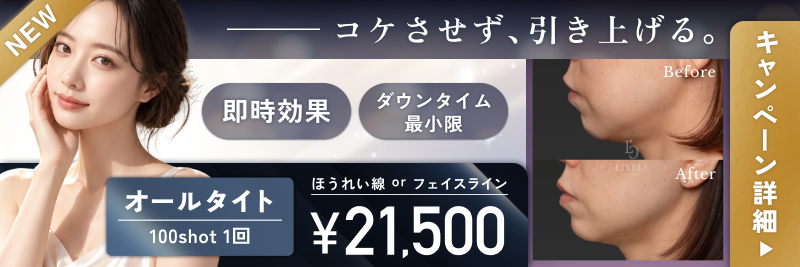
Hyaluronic acid is injected into sunken areas to add volume, whereas MFACE works on the facial muscles and skin to improve the facial contour. For people with significantly hollow cheeks or sunken temples, it may be difficult to notice change with MFACE alone, and hyaluronic acid may be suitable.
On the other hand, injecting more than necessary may make the face look larger or the expression look heavy, so the indication and amount are determined during the consultation.

MFACE may be suitable for people concerned about issues involving the facial muscles who can plan for the required visits and costs. The conditions can be divided into four categories.
Of these four conditions, you can plan the visit frequency and costs yourself. The cause of sagging can only be determined during a consultation, so it is reassuring to tell the physician in advance which areas concern you and when you first began noticing them.
Conversely, if your main concerns are hollow cheeks, sunken temples, or excess skin, you may find it easier to make a decision by discussing other treatments as well.
MFACE results are easier to assess if you standardize the conditions under which comparison photos are taken and narrow the area in which you observe changes to one location. Results vary from person to person, and comparing them with your memory can make them more difficult to judge accurately.
One point that is particularly easy to overlook is that if you undergo other treatments, such as Botox or injections, during the same period, it may become impossible to tell which treatment caused the change. Some clinics advise leaving an interval of approximately two weeks after injections or laser treatment. If the change is limited after four sessions, consult the physician about whether another treatment may be suitable before adding the same course.
These three questions address the handling of costs, which can be difficult to assess before signing a contract, and compatibility with other treatments and dental procedures.
MFACE is elective treatment, so public health insurance cannot be used and the full cost must be paid out of pocket. Before applying, confirm the following three points in the contract documents and explanation.
There is a period immediately after a Thread lift or surgery during which MFACE cannot be performed. Some clinics consider the period within two months after a Thread lift or surgery a contraindication, and treatment cannot be performed in areas containing gold threads.
The required interval varies depending on the type of thread and the clinic. Tell the physician the date of treatment and type of thread so they can make the decision.
Whether MFACE can be performed with dental fillings or implants is determined by the physician based on the location and type of metal. Treatment cannot be performed if there is metal beneath the skin in the facial treatment area, while how dental metal is handled varies by clinic.
Some people feel a sensation resonating into their teeth during treatment, so it is advisable to tell the clinic during the medical interview if you have sensitive teeth or are currently receiving dental treatment.
The disadvantages of MFACE are reflected less in physical burden than in its cost, number of clinic visits, individual differences in results, and status as an unapproved device. All of these are conditions that can be planned for by confirming them before signing a contract.
The three points to ask about before signing are the total cost for four sessions, the criteria and timing for judging results, and the contact point for handling adverse effects.
Whether MFACE suits the cause of your sagging is determined during a consultation by examining the condition of your skin, fat, and muscles. It is fine to consult us even if you are still undecided. Tell us about the areas of concern and treatments you have previously received, and discuss them at LIVELY CLINIC along with the three questions above. It is not too late to decide whether to proceed after hearing an explanation you are satisfied with.
※Implementation Clinics: Osaka Clinic, 札幌院
*Please note that simultaneous treatment of the eye area and cheeks may not be possible.
※Implementation Clinics: Osaka Clinic, 札幌院
Please note that simultaneous treatment of the eye area and cheeks may not be available when selecting two areas.
