


Alltite Disadvantages | Key Points to Check and Who It Is and Isn’t Suitable For

Language:
Language:



BLOG

Alltite, the latest Korean-developed treatment for sagging skin, is attracting attention as an innovative aesthetic medical device combining the advantages of RF and HIFU. One question many people have when considering treatment is, “How much downtime can I expect?”
This article provides a detailed explanation of the expected downtime after Alltite, possible post-treatment symptoms, effects on daily life, and comparisons with other treatments. We also summarize important precautions to know before treatment, so please use this article as a reference if you are considering Alltite.









Alltite is an aesthetic medical device developed by Innoxus of South Korea and equipped with the patented “DLTD® (Deep Layer Targeted Delivery)” technology. Conventional lifting treatments generally use either RF (radiofrequency) or HIFU (high-intensity focused ultrasound). A major feature of Alltite is that its DLTD® technology delivers energy simultaneously across a wide range of layers, from the deep dermis to the SMAS fascia layer.
While conventional RF devices use Joule heat, or heat generated by electrical resistance, Alltite uses dielectric heating. This method efficiently generates heat by vibrating water molecules in the dermis, allowing two to four times more energy to be delivered in the same amount of time than with conventional devices. It is also characterized by its rapid temperature increase.
During treatment, warmth is felt relatively quickly, and the skin rapidly reaches 40–60°C, the temperature at which dermal collagen denatures and contracts. With other devices, a gradual temperature increase may make it difficult to reach this denaturation temperature. Alltite rapidly delivers heat to encourage immediate collagen contraction and may also activate fibroblasts, inducing collagen remodeling.
Because it is designed to minimize energy distribution to the fat layer, the risk of cheek hollowing is considered low, and the treatment is expected to provide a natural-looking lift. As a result, an increasing number of clinics in Japan are introducing it.
DLTD® stands for “Deep Layer Targeted Delivery” and refers to technology that delivers energy precisely to the targeted depth. With conventional RF devices, energy tends to spread from the skin’s surface, creating challenges in efficiently reaching deeper layers. DLTD® precisely controls the penetration depth of RF energy, allowing a stepwise approach to the entire dermis, FSN (fibrous septa), and SMAS. LTD® technology also causes less pain than HIFU, which is another feature distinguishing it from conventional HIFU.
One reason it is highly regarded by many clinics is that a single treatment may provide both lifting and tightening effects.
Alltite may provide the following three main effects.

When energy reaches the SMAS fascia layer and retaining ligaments, it may help lift sagging along the facial contours and cheeks. Not a few people notice a change immediately after treatment.
Heating the deep dermis promotes skin tightening and the restoration of firmness, and many people undergo treatment with the aim of improving looseness under the chin and a double chin. In addition, thermal stimulation activates the production of collagen and elastin, so the treatment may provide long-term skin-enhancing effects over several weeks to several months after treatment.

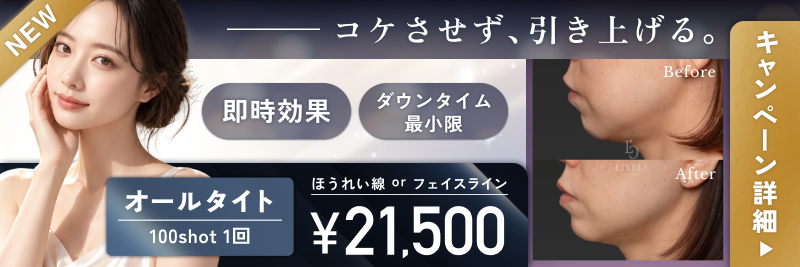
In conclusion, Alltite is generally considered to involve “almost no downtime.” In most cases, makeup application and face washing are possible from the day of treatment. Let’s take a closer look.

Immediately after treatment, you may notice mild redness or warmth in the treated areas. However, significant swelling or bruising is rare, and in many cases the skin naturally settles within several hours. Since most clinics allow makeup application from the day of treatment, it is not unusual for people to go out immediately afterward.
Even when redness is noticeable, it generally settles to a level that can be covered with foundation. You can wash your face and carry out your usual skincare routine, but take care not to rub the treated areas strongly.

From the following day onward, redness decreases further, and most people can return to their normal routines. Some people may experience mild swelling or a sensation of discomfort when the area is touched, but these symptoms are generally not severe enough to interfere with daily life.
Around one week after treatment, some people may begin to notice tighter skin and changes in their facial contours. Collagen regeneration is said to progress in earnest approximately 2 weeks to 1 month after treatment, and it is also characteristic of the treatment that the effects may become easier to notice over time.
Many clinics advertise Alltite as a treatment that can be received without anesthesia. During treatment, most people feel only gentle warmth, and strong pain is considered uncommon. However, pain sensitivity varies from person to person, and some stimulation may be felt around the zygomatic arch, or outer cheek, and the mandible, around the jawline.
If you are concerned, discussing this with your physician during the consultation may provide reassurance. The output can also be adjusted during treatment, so we recommend telling the staff if you feel uncomfortable rather than pushing through it.

Although Alltite involves little downtime, it is important to understand in advance the possible side effects and points requiring attention after treatment.
The main symptoms reported after treatment include mild redness, warmth, swelling, and temporary periosteal pain. These are all temporary and generally resolve naturally within several hours to several days. Small bruises may rarely occur, but in most cases they disappear within approximately 1–2 weeks.
Reports of serious side effects are extremely rare, and the treatment is considered to have a relatively high level of safety. However, if you notice anything unusual after treatment, contact the clinic promptly.
Although downtime is short, it is important to minimize stress on the skin for a while after treatment. Avoid saunas, prolonged bathing, strenuous exercise, and consuming large amounts of alcohol on the day of treatment. It is also best to avoid strongly rubbing or massaging the treatment area.
Damage caused by sun exposure can interfere with recovery, so thorough UV protection is recommended. Moisturize diligently and protect the skin barrier, as this is important for maintaining the effects.
Many clinics state that using a sauna is not a problem from the following day. Some clinics also allow light exercise from the following day, but it is generally recommended to avoid strenuous workouts that cause heavy sweating for several days.
Alcohol should also be avoided on the day of treatment, and it is considered preferable to resume drinking in small amounts from the following day. Because the specific restriction period varies by clinic, confirming this during your consultation can provide reassurance.
When considering treatment for sagging skin, differences in downtime compared with other treatments are also important. Below, we compare Alltite with several representative treatments.
Let’s take a closer look at each.

HIFU, such as Ulthera, directly delivers ultrasound energy to the SMAS layer and is well regarded for its lifting effects. However, treatment may be somewhat painful, and symptoms such as redness, swelling, or muscle-ache-like discomfort may continue for several days to approximately one week after treatment in some cases.
Like HIFU, Alltite approaches the SMAS layer, while its pain and downtime are considered reduced. Alltite may be suitable for people who are sensitive to pain, want to minimize the impact on daily life, or have experienced cheek hollowing after HIFU. Some clinics offer treatment plans combining both procedures, so it may be worthwhile to compare them.

Thermacool, a representative RF treatment, heats the dermal layer with radiofrequency energy to achieve a tightening effect. Although downtime is relatively mild, some people may experience a prickling sensation during treatment, and redness or warmth may remain for approximately half a day to one day afterward.
In addition to the tightening effect of RF, Alltite may provide a lifting effect. Many reports also indicate that its pain level is comparable to or lower than that of RF treatment alone. For those seeking both tightening and lifting in a single treatment, Alltite may be an efficient option.

InMode Lift is an RF-based treatment that primarily heats the dermis and fat layers. It is popular for its tightening effects and minimal downtime.
The difference between it and Alltite lies in the depth reached by the energy. While Alltite reaches the SMAS fascia layer, InMode Lift primarily targets the dermis to fat layers, which is also a characteristic that allows it to address fat. InMode minifx may cause purple bruising in some people. One possible distinction is to choose Alltite when lifting is the priority and InMode Lift when fat reduction is the priority.
Both treatments involve little downtime, so discuss which treatment best suits your concerns during your consultation.
Knowing the treatment process in advance may make it easier to approach the day of treatment in a relaxed manner. The general process is as follows.
1. Consultation
2. Preparation before treatment
3. Treatment
4. Post-treatment aftercare
We explain each step in detail below.
First, a physician will examine you and conduct a consultation. After asking about the condition of your sagging skin and your skin concerns, the physician will suggest a plan for the treatment areas and number of shots. Be sure to ask about any questions you have regarding downtime or side effects at this stage.
Proceeding after resolving all your questions about the treatment can help you feel comfortable. Most clinics conduct the consultation on the day of treatment, although some may offer a consultation on a separate day beforehand. Be sure to disclose any previous treatments or allergies.
Makeup is removed from the treatment areas, and the skin is cleansed. Cleansing is generally performed at the clinic. Anesthesia is usually unnecessary, but some clinics may offer an anesthetic cream if you are concerned about pain.
After cleansing, the treatment area is marked and a special oil is applied before treatment begins. Allow approximately 10–15 minutes for preparation. Removing accessories beforehand can help the process go smoothly.
A specialized handpiece is placed against the skin and energy is delivered. Treatment time varies depending on the treatment area, but approximately 20 minutes is a general guideline for both cheeks, under the chin, and the neck. During treatment, most people feel only gentle warmth, and strong pain is generally uncommon.
Heat may feel stronger in areas close to bone, but the output can be adjusted. If you feel uncomfortable, do not hesitate to tell the staff. Most people can remain relaxed during treatment.
The condition of your skin will be checked after treatment. No special procedures are generally required, and you can usually apply makeup and return home immediately afterward. Moisturize thoroughly, protect your skin from UV rays, and care for it gently.
Avoid prolonged bathing, saunas, and strenuous exercise on the day of treatment, and continue to avoid rubbing your skin from the following day onward. Post-treatment self-care can significantly affect how long the effects last and help prevent skin problems, so be sure to follow the clinic’s instructions carefully.

The effects of Alltite include an immediate lifting effect after treatment, followed by gradual improvement as collagen regeneration progresses. Let’s take a closer look.
Many people feel a lifting and tightening change immediately after treatment, and the effects continue to increase over the following 1–2 weeks as collagen regeneration progresses. Although the duration varies from person to person, it is generally said to be approximately six months to one year.
Because new sagging associated with aging may also progress, regular maintenance is recommended to maintain the effects. Since the duration varies depending on lifestyle and skin type, it is advisable to have your condition checked regularly at the clinic.
To maintain and improve the effects, continuous treatment at a frequency of approximately once a month for about 3 treatments is recommended. Thereafter, repeating treatment once every six months can activate collagen production within the skin and may lead to longer-lasting lifting effects and improved firmness.
Rather than seeking a dramatic change from the first treatment, an approach of gradually moving toward your ideal facial contours through repeated treatments may be effective. Consider your budget and clinic visit frequency when discussing a plan with your physician.
Alltite is suitable for a wide range of age groups, but it is particularly appropriate for people concerned about sagging along the facial contours or a double chin, as well as those beginning to notice a loss of skin firmness. It may also be a strong option for people who are sensitive to pain and prefer treatment without anesthesia, or who want to minimize downtime due to work or other commitments. In addition, for those who have experienced cheek hollowing after HIFU, Alltite’s design, which limits the effect on the fat layer, may provide reassurance.
Alltite is attracting attention as a latest treatment for sagging skin involving almost no downtime. DLTD® technology allows treatment across a wide range of layers, from the entire dermis to the SMAS fascia layer, and may provide both lifting and tightening effects.
Redness and warmth after treatment are also generally mild, and makeup application and face washing are possible from the day of treatment. For those who value a balance between minimal downtime and treatment effects, it may be a particularly appealing option.


