A Thorough Image-Based Comparison of Sofwave and XERF (With Case Studies) | How to Choose and Who They Suit

Language:
Language:



BLOG
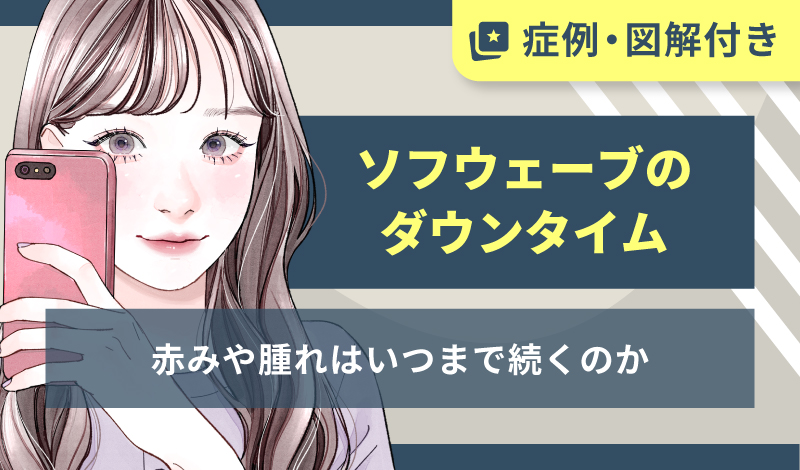
Many people are interested in Sofwave but feel anxious about questions such as, “What if I swell after the treatment and can’t go out?” or “What if it affects me even though I have work scheduled?” In conclusion, Sofwave downtime is among the shortest in medical aesthetics, and many people are able to lead an almost normal life from the day of treatment. However, whether there are “no symptoms at all” varies from person to person.
In this article, we explain the possible post-treatment symptoms, their duration, and their impact on daily life, starting with how the device works.








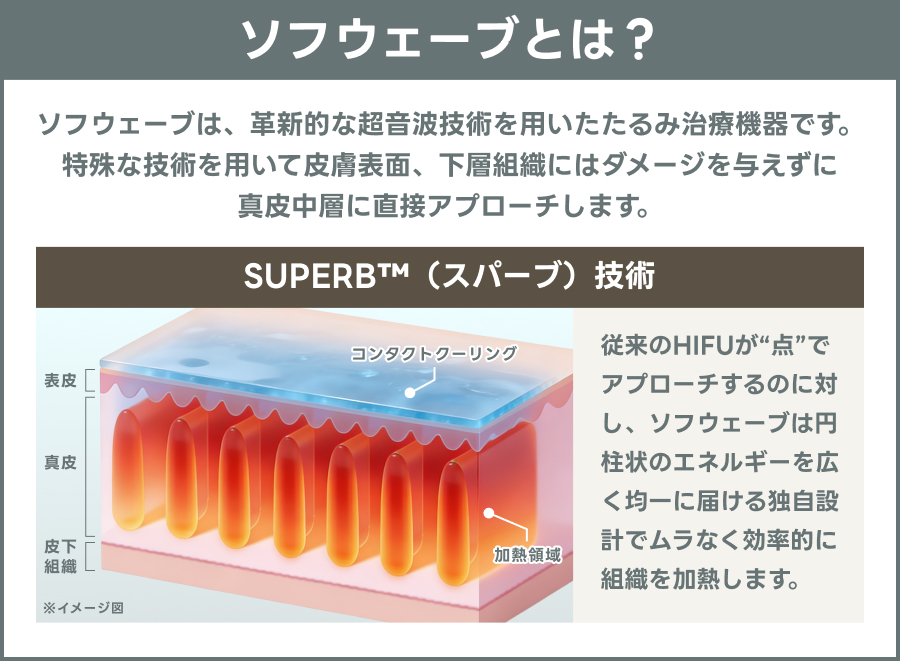
Sofwave is a sagging treatment device that uses innovative ultrasound technology. It is also referred to as “the new sagging treatment of the century” and directly targets the mid-dermis, which has been difficult to address with conventional treatments. Its key feature is that this pinpoint action allows effective lifting and improvement in skin quality at the same time while minimizing damage to the skin’s surface.
It has also received clearance from the U.S. FDA, and its safety and efficacy have been scientifically demonstrated. In particular, it has been officially approved for “improving facial and neck wrinkles” and “lifting the eyebrows,” which also demonstrates its reliability.
Its proprietary SUPERB™ technology delivers ultrasound energy precisely to the mid-dermis, at a depth of approximately 1.5 mm, while simultaneously cooling the skin’s surface. By promoting the production of collagen and elastin, it may help improve sagging and wrinkles as well as the overall quality of the skin. One major difference from conventional HIFU is that it may be suitable even for people with little facial fat or a tendency for their cheeks to look hollow. Treatment for the entire face generally takes approximately 30–45 minutes.
The following article provides more detailed information about Sofwave. Please use it as a reference.
The short downtime associated with Sofwave is related to the characteristics of its device design. SUPERB™ technology concentrates ultrasound energy in the mid-dermis while cooling the skin’s surface at the same time as treatment. This cooling function does more than relieve discomfort; it also structurally suppresses thermal damage to the epidermis. While conventional HIFU reaches the fascial layer (SMAS), Sofwave causes minimal interference with the epidermis, making redness and swelling less likely and allowing for faster recovery.
With conventional Ulthera and Thermacool treatments, it was not uncommon for swelling or redness to remain on the day after treatment. However, with Sofwave, many people are almost unnoticeable by the following day.
Downtime is not necessarily zero. Specifically, the following symptoms may occur.
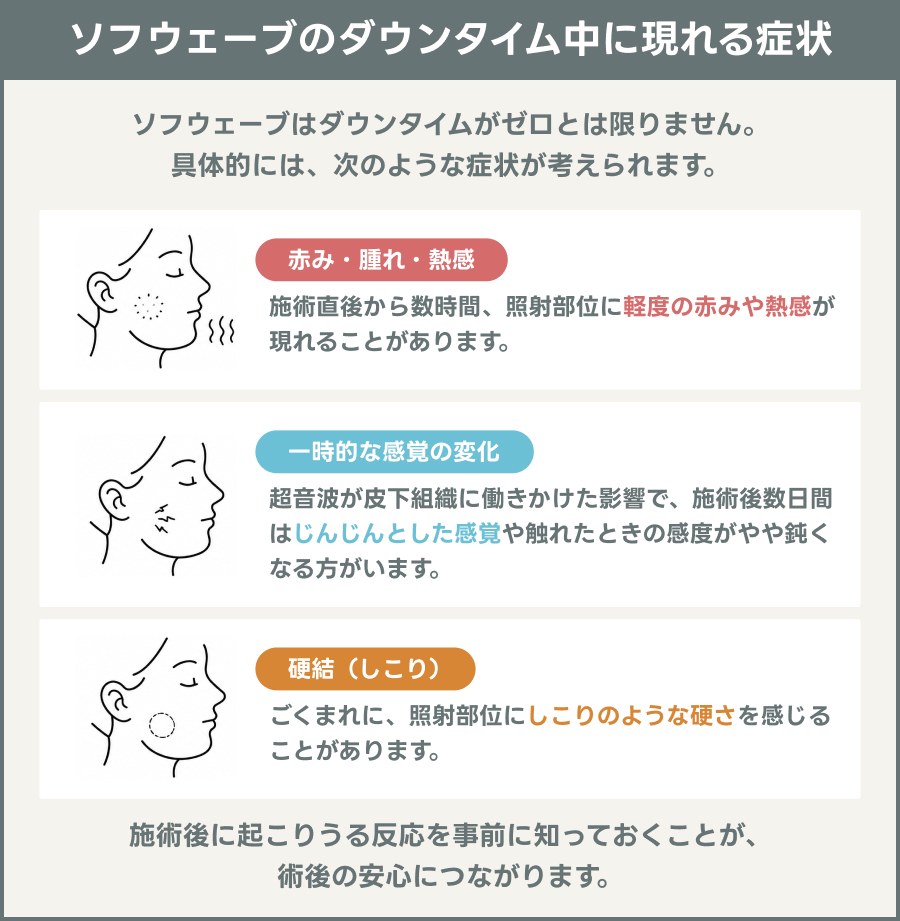
Knowing in advance about the reactions that may occur after treatment can help you feel more reassured during recovery.
Mild redness or warmth may appear in the treated area immediately after treatment or for several hours afterward. In many cases, it naturally subsides within a few hours. The area may also feel slightly swollen when touched, but only a small number of people experience swelling that is visible in a mirror.
Gently cooling the area with an ice pack may help reduce these symptoms, so follow the clinic’s aftercare instructions after treatment. In most cases, any bothersome redness can be covered with foundation, so the impact on going out is generally minimal.
Because the ultrasound affects the tissue beneath the skin, some people experience a tingling sensation or slightly reduced sensitivity to touch for several days after treatment. This is a temporary effect on the nerves and usually returns to normal within 1–2 weeks. It is not a strong adverse reaction such as being unable to move the face, and in most cases it does not interfere with normal facial expressions.
Reduced sensation tends to occur more easily in specific areas, such as the outer cheekbone area and around the temples, and is said to be more likely when these areas receive a higher amount of treatment. If symptoms continue for more than two weeks, we recommend consulting your doctor rather than making your own judgment.
In very rare cases, the treated area may feel hard, like a lump. This is a reaction that occurs when collagen production becomes locally concentrated, and in most cases it will naturally resolve within several weeks. Its incidence is low, and it is classified as a relatively rare adverse reaction. We understand the desire to touch the area to check it, but vigorous massage may make it worse.
In addition, when the dermal layer is heated by thermal energy, a thermal inflammatory reaction may occur. In people who develop redness or swelling, this too usually resolves within several hours to several days.
The time required for induration to disappear varies from person to person. It may resolve within 1–2 weeks in some people, while it may take approximately one month depending on the individual. If there is no improvement or pain occurs, prioritize consulting the clinic rather than making your own judgment.
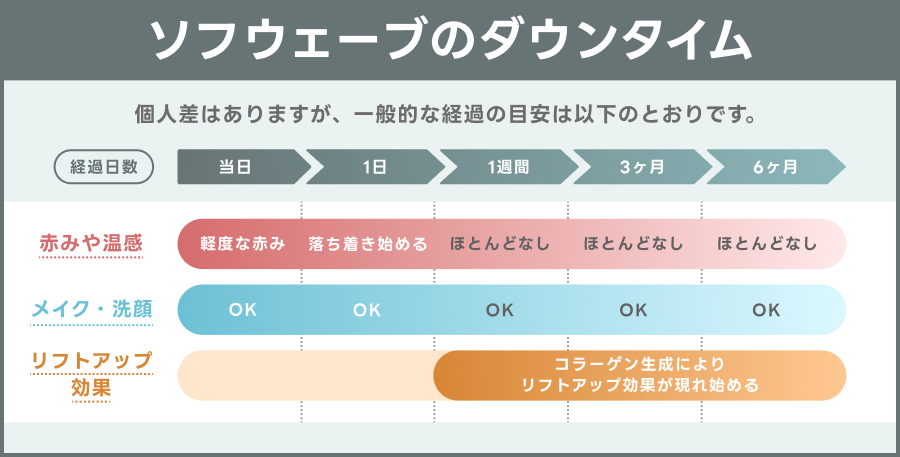
The course of downtime varies from person to person, but it can be organized chronologically as a general guide. We explain each stage in detail below.
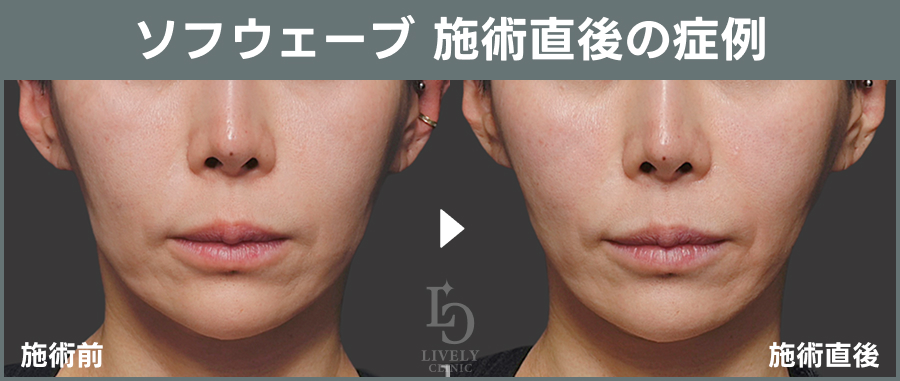
Redness and warmth peak during this period. However, only a small number of people experience a reaction so strong that they cannot go out, and many clinics permit makeup from the day of treatment. The warmth after treatment can be eased by applying cooling gel or an ice pack.
Immediately after treatment, the skin is sensitive, so it is advisable to use gentle skincare, care for the skin, and minimize how often you touch your face. It is not unusual for people to receive treatment during a break from work and then return directly to their workplace.
For most people, redness and warmth will have subsided, and they will return to a condition that does not interfere with daily life. Some people may still feel tingling, but the impact on work is minor. It is still advisable to avoid bathing, exercise, and alcohol, and to keep skincare simple and focused on moisturizing.
Some people begin to feel a slight tightening effect from the treatment during this period. However, this is before collagen production becomes fully active, and the full effect appears later. It is important to continue your care without rushing.
Changes in sensation will have almost completely resolved, and any induration that developed will also begin to subside. At this stage, it is often safe to return to your usual skincare routine, but confirm your doctor’s instructions as a precaution. Symptoms associated with downtime generally resolve by this time.
If sensitivity remains, do not rush to resume irritating ingredients such as retinol. We recommend gradually reintroducing them while monitoring your skin’s condition. If bothersome symptoms remain, this is a suitable time to consult the clinic.
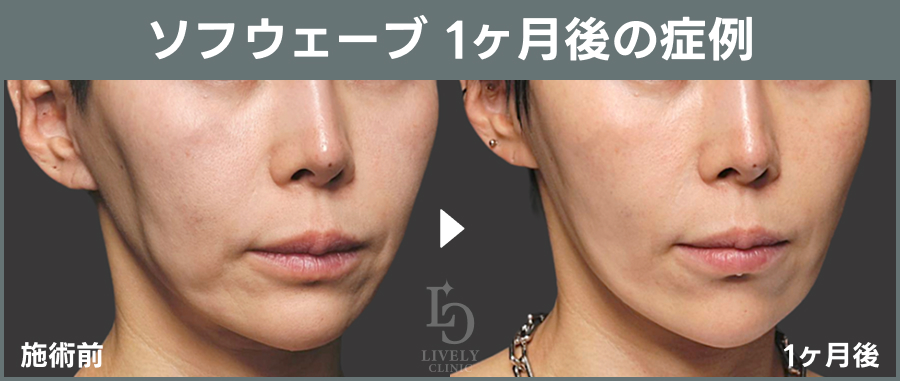
Separate from downtime, the lifting effect begins to appear during this period. Since collagen production continues after treatment, people generally begin to feel that their skin is “gradually becoming firmer” 1–3 months after treatment. Sofwave is characterized by short downtime and natural-looking results, as it is not a treatment intended to produce immediate changes.
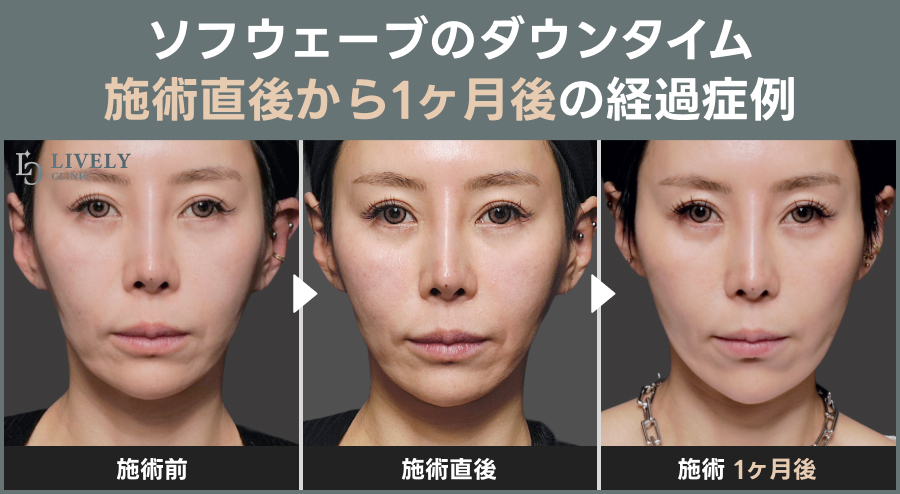
For those who do not want their workplace or family to notice that they have had treatment, the visible effects of downtime are a serious concern. Sofwave is regarded as a treatment with virtually no downtime, and only a small number of people experience changes noticeable to those around them the following day. Even when redness occurs, it is usually mild enough to cover with foundation, and it is not unusual for people to say that they went out immediately after treatment.
However, people with sensitive skin or a tendency to develop inflammation may experience a stronger reaction. Since it would be medically inappropriate to state that it will “never be noticed,” allowing extra time in your schedule before important plans is the best way to feel reassured. If you plan to be around other people immediately after treatment, consulting the clinic in advance may allow the clinic to advise you on measures such as adjusting the treatment intensity.
How you spend your time after treatment is important for getting through downtime as quickly as possible. In particular, caution is needed with the following activities.
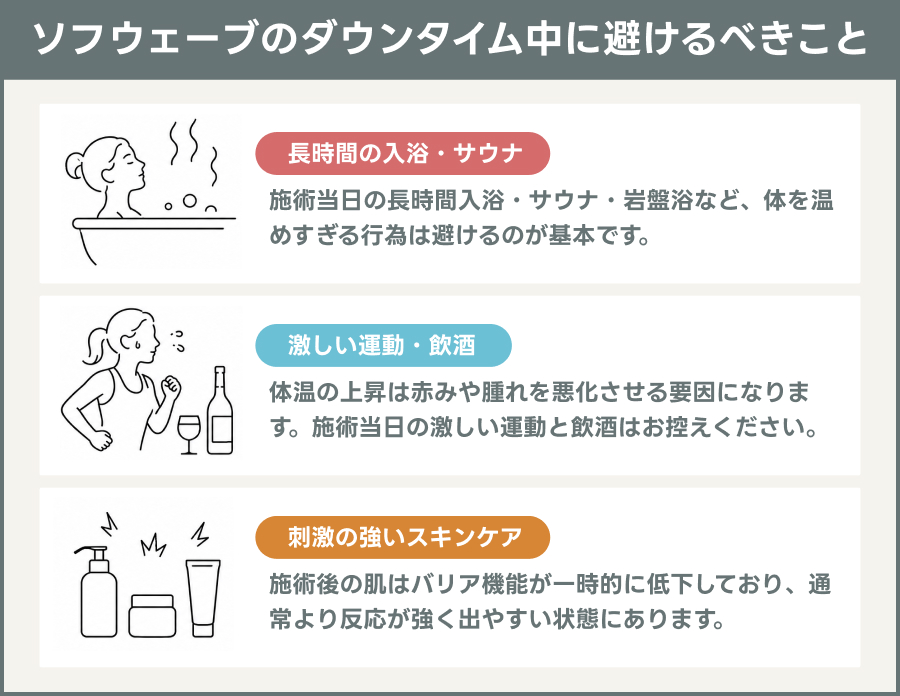
Your doctor will also explain these points, but understanding them in advance will help you take greater care during your recovery.
Long baths, saunas, and hot stone spas on the day of treatment may prolong inflammation because of the heat. Showers are fine, but as a general rule, avoid activities that overheat the body. Bathing in a tub can generally resume from the following day, but prioritize your doctor’s instructions.
Simply taking a bath “for less time than usual” may not feel sufficient, so the most reliable approach is to shower instead of bathing on the day of treatment. From the following day, when inflammation has begun to settle, it is often possible to resume normal bathing, but it is advisable to leave an interval of several days before using a sauna or hot stone spa.
An increase in body temperature can worsen redness and swelling. Avoid strenuous exercise and alcohol on the day of treatment, and resume them gradually from the following day while monitoring your condition. Because alcohol promotes blood circulation, we recommend limiting the amount while even slight inflammation remains.
Light exercise, such as walking, can often be resumed from the following day, but it is safer to wait approximately 3–5 days before gym workouts or strenuous aerobic exercise. If exercise is part of your routine, it is advisable to consult the clinic before treatment.
Avoid using ingredients that promote skin turnover, such as retinol and AHA (fruit acids), for several days after treatment. The skin’s barrier function is temporarily reduced after treatment, making it more likely to react strongly than usual.
During this period, focusing on moisturizing and sun protection and keeping your routine simple will support early recovery. When washing your face, minimize friction, and when drying with a towel, press it gently against the skin instead of rubbing.
For serums and peeling products that you normally use, consider resuming them after approximately one week while confirming that your skin has settled.
Even a single action after treatment can affect how quickly you recover. Specifically, the following measures are recommended.
We explain each point in detail below.
For several hours immediately after treatment, gently applying an ice pack wrapped in a clean towel to the treated area can help reduce redness and warmth. Always use it through a towel, as applying it directly to the skin carries a risk of frostbite. There is no need to press firmly; simply placing it on the area is sufficient. If the clinic provides cooling care immediately after treatment, follow its instructions.
If warmth remains after you return home, cooling the area for approximately 10–15 minutes in the same way may help it settle. Excessive cooling may interfere with circulation, so be mindful of limiting it to an appropriate length of time.
Because the skin’s barrier function is reduced after treatment, it is important to moisturize more carefully than usual. Continue gentle care centered on simple moisturizers containing hyaluronic acid or ceramides. Since dry skin can contribute to prolonged inflammation, frequent moisturization can support recovery.
Avoid toners and serums containing fragrance or alcohol for several days after treatment, and choose simple products after checking the ingredient list. Developing the habit of applying moisturizer immediately after washing your face can help prevent dryness and support recovery.
After treatment, the skin is more susceptible to the effects of UV radiation. When going outdoors, use sunscreen with a high SPF, and make use of hats and parasols to physically block UV rays. Sun exposure during downtime may worsen inflammation, so continue to take particular care with sun protection for several weeks after treatment.
Non-chemical sunscreen, which uses physical UV blockers, is suitable for post-treatment skin because it is less irritating. UVA can reach the skin through windows even indoors, so do not let your guard down even on days spent entirely inside.
Skin recovery is promoted during sleep. Ensuring adequate sleep for several days after treatment and avoiding excessive stress and an irregular lifestyle can improve the quality of recovery. Incorporating foods containing vitamin C, which is involved in collagen synthesis, and omega-3 fatty acids, which may have anti-inflammatory effects, is also considered useful for supporting recovery.
Before treatment, it is important to confirm whether you are a suitable candidate.
As a general rule, people with metal implants, such as plates or screws, in the treatment area are not candidates because of concerns about the effects of ultrasound energy. Treatment is also generally postponed from a safety perspective for people who are pregnant or breastfeeding, or who have active skin conditions, such as eczema or an infection, in the treatment area. People with a pacemaker or a history of malignant tumors must inform the doctor and undergo confirmation in advance.
In addition, because sunburn immediately before treatment may cause inflammation to last longer than usual, we recommend avoiding excessive UV exposure and preparing your skin condition from 2–4 weeks before treatment. These are not absolute prohibitions against treatment, but rather points to confirm in order to receive it safely.
To evaluate Sofwave downtime more accurately, we will organize the differences between it and representative sagging treatments.
Ulthera can provide a strong lifting effect by delivering ultrasound to the SMAS fascial layer, but it also tends to cause comparatively stronger pain during treatment and swelling and warmth afterward. Redness may remain the following day, and some people need to be prepared for several days of downtime.
Sofwave has less impact on daily life because it targets a shallower depth. The choice depends on whether you prioritize the strength of the lifting effect or the shortness of downtime.
Thermacool is a treatment that uses radiofrequency (RF) to heat the dermis and subcutaneous tissue, promoting collagen contraction. Downtime may be similar to that of Sofwave or may be somewhat longer in some cases. Sofwave’s cooling function is designed to further reduce the burden on the skin during and after treatment, which directly contributes to its short downtime.
We recommend confirming which treatment is suitable for you during a consultation.
We have compiled questions frequently asked by people considering Sofwave treatment.
Many clinics permit makeup from the day of treatment. However, the skin is sensitive immediately after treatment, so apply makeup carefully while avoiding friction, and choose a gentle cleanser.
When applying powder or foundation, use a brush or sponge to lightly place the product on the skin rather than rubbing firmly. Since instructions may differ between clinics, confirming them in advance will provide reassurance.
During treatment, many people experience warmth from the ultrasound and a sensation similar to sunbathing in intense sunlight. Only a small number of people describe the pain as unbearable, and some clinics can provide further relief with numbing cream. Post-treatment pain usually settles within several hours.
Pain perception varies from person to person, and the sensation may change from day to day even in the same area. If you are very concerned about pain, discussing it during your consultation may allow the clinic to consider measures such as adjusting the treatment intensity.
Sofwave is a treatment that may produce noticeable changes after a single session, but some people combine multiple treatments depending on their age and skin condition. Although the duration of the effect varies from person to person, many people consider repeat treatment after approximately 6–12 months. We recommend discussing the specific number of treatments and intervals during your consultation.
If redness or swelling continues for more than one week, induration does not resolve, or severe pain persists, contact the clinic promptly. Massage or the use of over-the-counter medication based on your own judgment may worsen the symptoms. The clinic where you received treatment is best positioned to make the appropriate assessment, so consulting it early is the best way to feel reassured.
For many people, Sofwave downtime is limited to redness and warmth on the day of treatment and the following day, with minimal impact on daily life. Its short downtime is supported by the cooling design of SUPERB™ technology, giving it an advantage in terms of fast recovery compared with other sagging treatments. At the same time, it is a fact that results vary from person to person depending on skin type and individual constitution.
If you are worried about how much redness may occur or want to confirm whether you are a suitable candidate, consulting your doctor during a consultation is the first step toward treatment you feel comfortable with. At LIVELY CLINIC, we provide careful guidance on lifting treatments, including Sofwave. Please feel free to contact us.
※Implementation Clinics: Osaka Clinic
※Implementation Clinics: Osaka Clinic