
How ADVATx-LASER Affects Sebum: Explained with Case Examples|How It Improves Enlarged Pores and Shine

Language:
Language:



BLOG
Enlarged pores, recurring shine, and acne that heals only to return again. Skin concerns related to sebum can be difficult to improve substantially through facial cleansing and skincare adjustments alone. One option attracting attention for addressing these concerns at the source of sebum production is ADVATx-LASER.
This article explains the key points to consider, from why ADVATx-LASER can help control sebum and how it works to its specific effects, differences from other treatments, and a guide to the number of sessions.
Please note that the ADVATx-LASER (ADVATx) introduced in this article is a medical device that has not received domestic pharmaceutical and medical device approval (PMDA approval). We explain the details with this in mind.









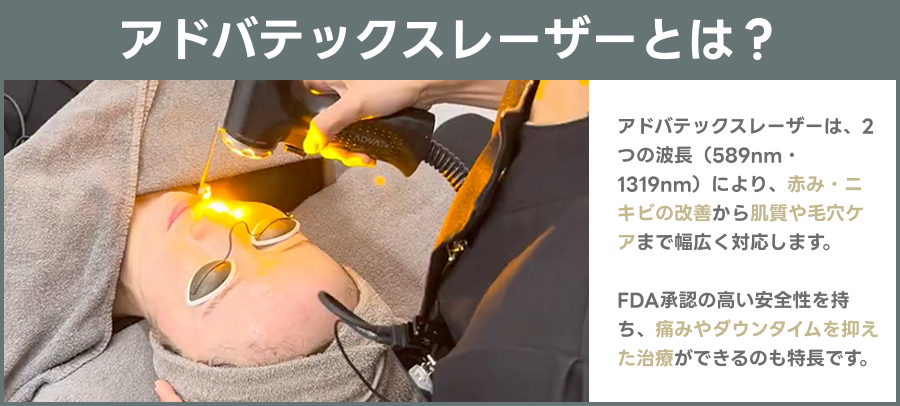
ADVATx-LASER (ADVATx) is a Danish laser treatment device equipped with two wavelengths, 589 nm and 1319 nm, in a single device. It has obtained U.S. FDA 510(k) clearance and the EU CE mark, and is indicated for a broad range of skin concerns, including facial redness, rosacea, acne, pores, excessive sebum production, and fine lines. Its flexibility in using different wavelengths according to symptoms can be considered the device’s greatest strength.
For an overview of the device and how it acts on redness and vascular concerns, please see the following article.
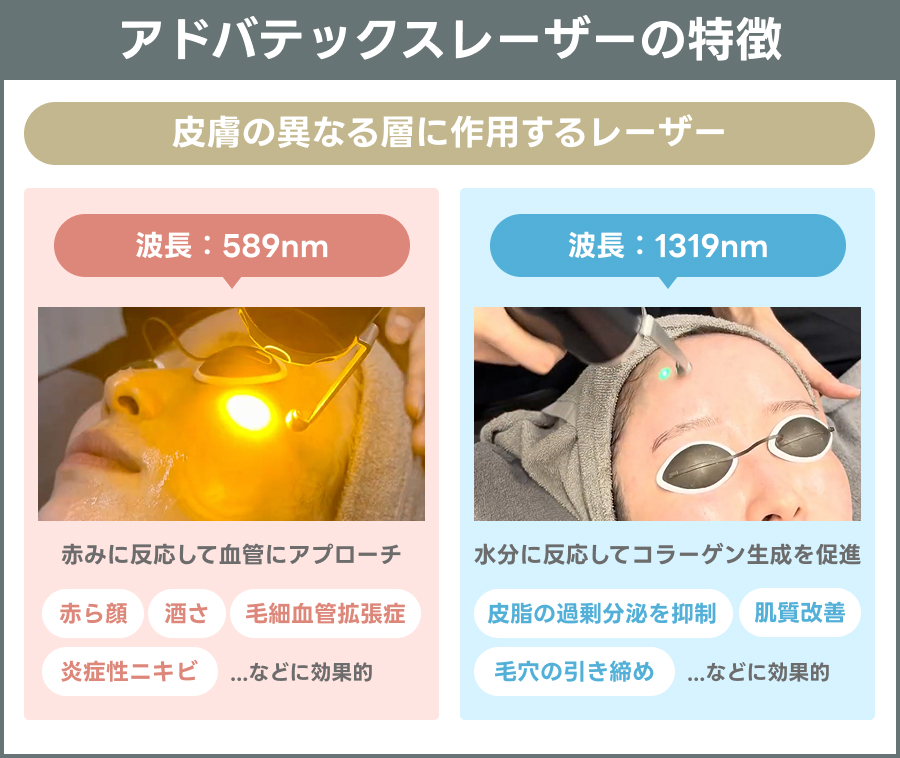
Understanding the respective roles of the two wavelengths is essential to understanding the characteristics of ADVATx-LASER. The 589 nm wavelength reaches relatively shallow layers and reacts with capillaries that cause redness and with porphyrins produced by acne-causing bacteria. It may be easier to understand this as the wavelength that acts on redness and acne accompanied by inflammation.
The 1319 nm wavelength, on the other hand, reaches somewhat deeper layers of the skin. Because it acts on tissues containing a large amount of water—specifically, the sebaceous glands and collagen layer—it is directly connected to concerns involving sebum and firmness. By combining the two or using them separately according to symptoms, it is possible to approach both the surface and deeper layers at the same time, which is difficult with a single-wavelength device.
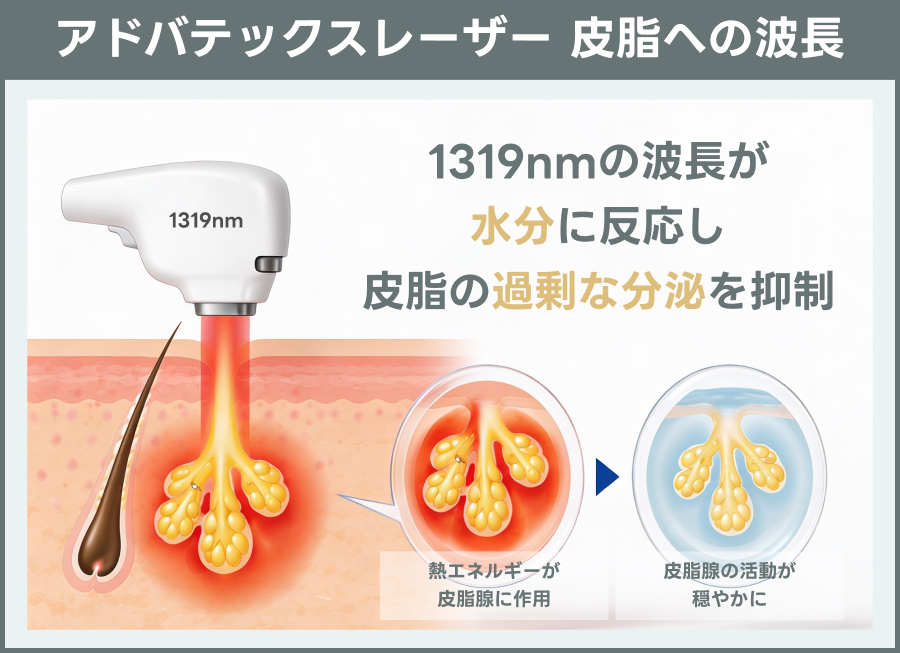
The 1319 nm wavelength is key for people concerned about sebum. Sebaceous glands are tissues that contain a large amount of water, and 1319 nm is selectively absorbed by that water. When the light reaches the water, it is converted into thermal energy, gently raising the temperature of the sebaceous glands and gradually suppressing excessive activity.
It is important to understand that this approach to sebum is fundamentally different from the idea of wiping away surface oil. Skincare and blotting paper address sebum that has already appeared, whereas 1319 nm acts directly on the sebaceous glands—the factories that produce sebum.
Thinking of it as placing a hand on the faucet rather than dealing with the outlet may make the difference in approach easier to visualize. Because this treatment reduces the amount of sebum itself, it can more readily reach the underlying cause of recurring concerns.
The effects of ADVATx-LASER on sebum are supported by two technologies: wavelength selectivity and the irradiation method. These are the 1319 nm wavelength, which specifically targets sebaceous glands, and the soft-pulsing method, which helps reduce the burden on the skin. Understanding this combination helps explain why it can be easy to notice changes despite involving little downtime.
A basic principle of lasers is that each wavelength has a specific “target” that readily absorbs it. The reason 1319 nm is selected is that this wavelength is highly absorbed by water. Sebaceous glands contain abundant water compared with other tissues, allowing the energy of 1319 nm to be efficiently concentrated and heat to be delivered to the sebaceous glands while limiting its effects on surrounding tissue.
Oral medications that suppress sebum production can affect hormonal balance and lipid metabolism throughout the body, so careful consideration of side effects is essential. In contrast, ADVATx-LASER is a localized treatment that acts only on the sebaceous glands in the irradiated area. For people who are reluctant to continue medication or who wish to avoid effects on the whole body, it may be one treatment option that broadens the range of choices. The selectivity to act only on targeted tissue is a value unique to laser treatment.
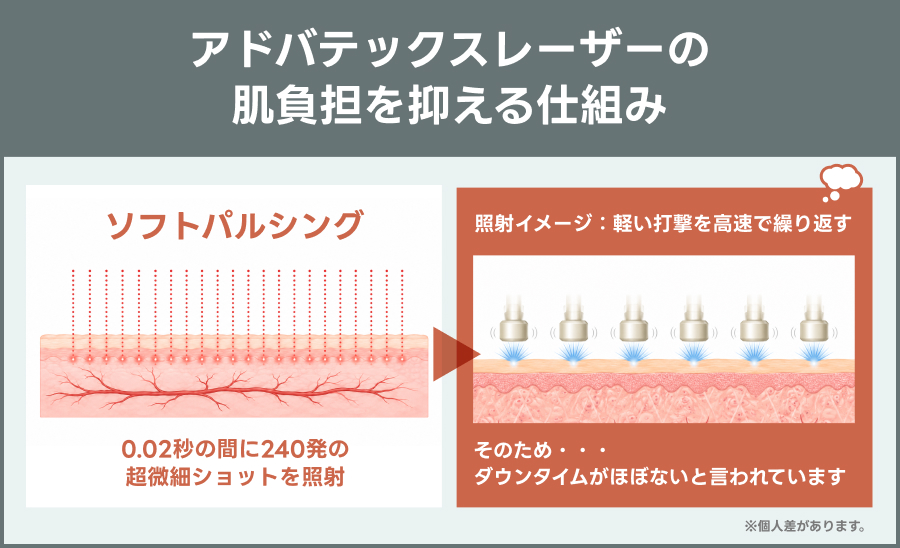
ADVATx-LASER uses “Quasi CW pulsing” and the patented “PulSync” technology, which divide the irradiation energy for one treatment into fine segments and emit them continuously. Known in Japan as the “soft-pulsing method,” it uses 240 rapid, fractionated pulses in 0.02 seconds. This design delivers sufficient heat to the sebaceous glands while minimizing the rise in temperature on the epidermal side. It is close to the image of gradually building up heat in small increments rather than applying a large amount of energy all at once.
A common misconception is to equate short downtime with weak effects. The two are not necessarily connected. The necessary heat reaches tissue at the targeted depth without leaving strong stimulation on the skin’s surface. The precision of this heat control is part of the reason ADVATx-LASER can combine limited downtime with changes that are easy to notice. Its design, which makes it easier to undergo repeated sessions, is a significant advantage in sebum treatment, where ongoing treatment is generally assumed.
Controlling sebum affects more than shine alone. It can also influence pores, acne, skin texture, and how well makeup lasts. From here, we organize the changes that are commonly noticed with ADVATx-LASER according to specific concerns.
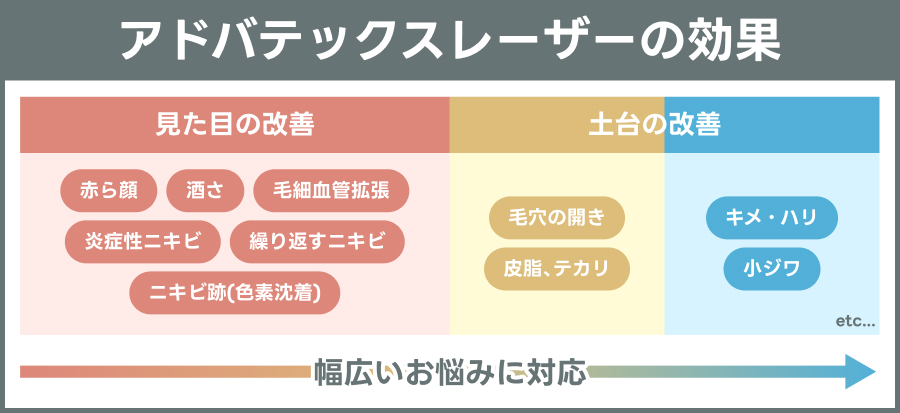
With each successive session, excessive sebum production in areas prone to oiliness, such as the T-zone and center of the cheeks, gradually becomes calmer. Everyday inconveniences such as a sticky face by evening or makeup creasing even after changing primer may feel fundamentally alleviated by reducing the amount of sebum itself.
One point worth noting is that excessive sebum may be selectively calmed without easily depriving the skin of the moisture it needs. Care that removes too much sebum can instead create a vicious cycle that encourages further production. An approach that balances sebaceous gland activity from within may help break that cycle.
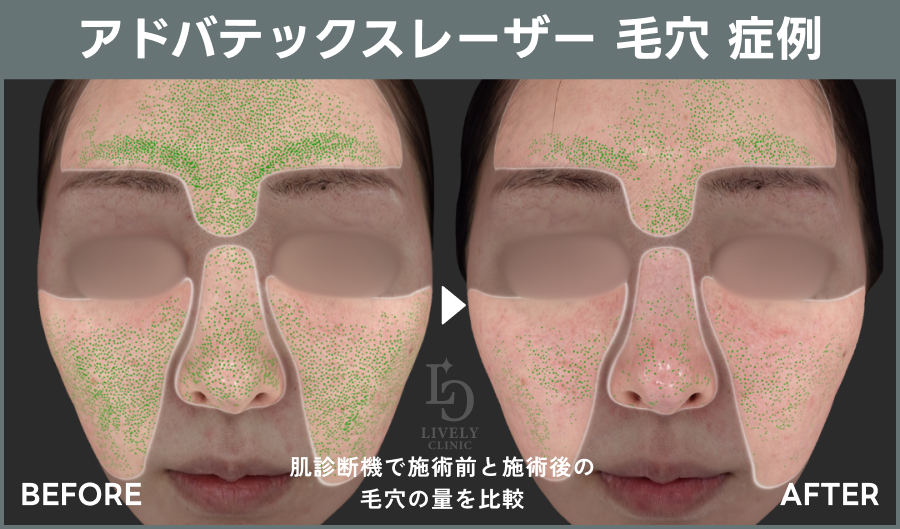
There are several types of noticeable pores, including pores enlarged by sebum and pores elongated vertically due to sagging. Along with suppressing sebum production, ADVATx-LASER also acts at 1319 nm to promote collagen production in the dermal layer.
In other words, it can approach both enlargement caused by sebum and enlargement caused by reduced firmness at the same time. Pore care can become a roundabout process if the cause is misidentified, but the ability to address multiple types with one device may be a reassuring characteristic for people who have been troubled by pores for a long time.
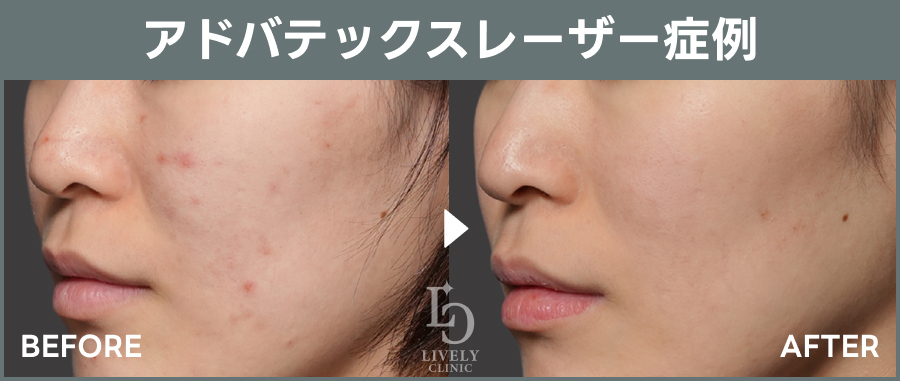
Acne is mainly caused by excessive sebum production and the proliferation of acne-causing bacteria inside the pores. ADVATx-LASER reacts at 589 nm with porphyrins produced by acne-causing bacteria to reduce inflammation, while 1319 nm suppresses the amount of sebum itself. In this way, it can address both upstream and downstream causes at the same time.
It can help create a skin environment less prone to new acne while also acting on the redness of existing acne scars. For people troubled by a cycle in which acne heals only to return, the idea of improving the foundation rather than providing only symptomatic treatment may be an option worth considering.
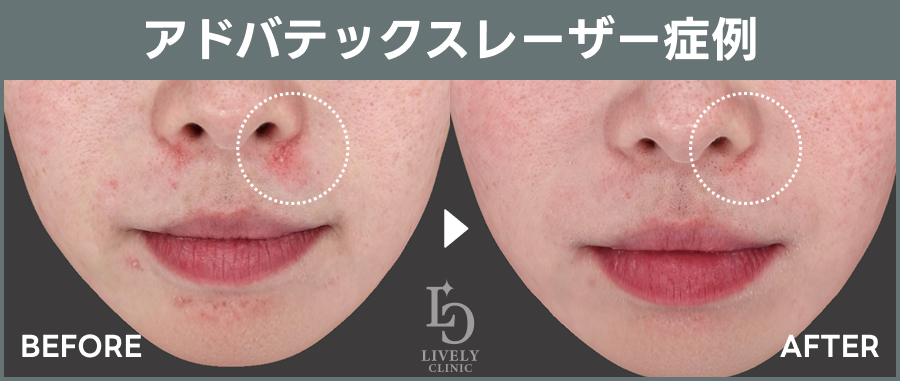
As sebum production settles and pores tighten, unevenness on the skin’s surface becomes less noticeable. As a result, foundation adheres more closely and makeup gradually becomes less likely to break down.
The effects of treatment do not end in front of the mirror. The everyday benefits—such as needing fewer touch-ups and feeling more confident about how your skin looks in the evening—are among the reasons many people choose to continue treatment. The sense that the quality of the skin itself is changing is difficult to achieve through surface-level care alone.
Options for addressing sebum include oral and topical medications, Peeling, suction-based treatments, and other lasers. Organizing the differences between them can make it easier to choose a treatment suited to your concerns.
Oral medications such as isotretinoin can strongly suppress sebum production, but careful attention to systemic side effects, including teratogenicity, is essential. Topical medications are convenient, but their ability to fundamentally suppress sebaceous gland activity is necessarily limited.
Although ADVATx-LASER does not have the same strong suppressive effect as oral medication, it carries a lower risk of side effects and is a treatment that may be easier to choose for people who find it difficult to continue medication or who are considering pregnancy. The point of distinction in choosing between treatments is where to place the balance between strength of suppression and safety.
Chemical Peeling and HydraFacial are treatments that physically or chemically remove keratin plugs and oxidized sebum that have already accumulated in the pores. They are suited to people who want to clear what is currently clogging their pores.
In contrast, ADVATx-LASER takes an approach that suppresses the amount of sebum produced itself, making it suitable for people who want to break the cycle of recurring problems over the long term. In clinical practice, combination treatment is also selected in which the roles are divided—for example, using Peeling to condition the pores and ADVATx-LASER to control sebum levels.
Several laser options are available for acne and pores, including Genesis, Fractional Laser, and Pico Laser (Pico Toning / Pico Fractional). From the perspective of directly approaching the sebaceous glands, ADVATx-LASER, which uses the water-absorbing 1319 nm wavelength, is particularly suited to this area.
In addition, it can act on redness and porphyrins at the same time, offering the advantage of addressing concerns involving sebum, acne, and redness with a single device rather than switching between multiple devices. Its design may suit people who want multifaceted care while limiting the burden of clinic visits and costs.
The short downtime of ADVATx-LASER is a major appeal. Even so, the way you spend the period after treatment can also affect the final results. We summarize the precautions to understand before receiving treatment.
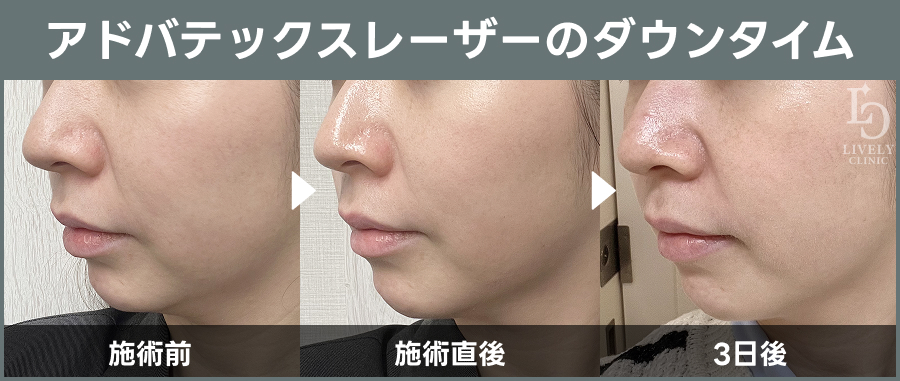
During irradiation, the sensation is comparable to skin being stimulated under strong sunlight, and most cases do not require anesthesia. Even among people who have avoided lasers due to concerns about pain, it is not uncommon to hear that the treatment was much gentler than expected.
Mild redness or warmth may appear immediately after treatment, but these usually settle within a few hours. Makeup can be applied from the day of treatment, so many people come in after work. The limited impact on daily life can provide practical support for busy people who wish to continue treatment.
For approximately one week after treatment, the skin may be somewhat more sensitive to ultraviolet light. Using sunscreen and cleansing and moisturizing gently while avoiding strong friction are essential for maximizing the results.
Keep bathing and strenuous exercise moderate only on the day of treatment; from the following day, normal activities are generally fine. Although it is easy to overlook, maintaining the effects on sebum also requires strengthening the skin barrier through daily skincare alongside treatment. Treatment is only the foundation, and how well that foundation is protected in daily life can affect the final appearance.
The effects on sebum are not completed in a single session; the changes become more noticeable as multiple sessions are performed according to a plan. Understanding in advance when you may begin to notice changes, approximately how many sessions you may receive, and how often you may visit can make it easier to create a realistic treatment plan.
People vary in how they perceive changes in sebum levels. Some people may notice calmer shine and a smoother skin texture after just one or two sessions.
On the other hand, many people do not feel that their skin quality itself has changed until after the fourth or fifth session. Even if dramatic changes do not appear after the first session, this does not mean the treatment is ineffective; it is more appropriate to view this as part of the process in which sebaceous gland activity gradually becomes more balanced. Taking time to observe the progress without rushing can ultimately improve satisfaction.
To fully bring out the effects on sebum, pores, and acne, continuing for approximately five sessions is generally recommended as an initial milestone. When acne is in an active phase, another option is to perform intensive irradiation during the initial period and adjust the number of sessions after the condition settles.
After completing five sessions, it is common to transition to maintenance sessions to preserve the condition. The number of sessions needed varies depending on skin type and the severity of concerns, so we recommend designing an individualized plan in consultation with a physician rather than relying only on a uniform guideline.
The general guideline for treatment intervals is once every 3–4 weeks. Irradiating the skin in line with the period during which sebaceous gland activity becomes balanced and skin turnover progresses can make it easier for the effects to build over time.
If the interval is too long, changes may be harder to notice, while intervals that are too short may increase the burden on the skin. Depending on the condition of the acne, it may also be possible to shorten the interval only during the initial period. The ideal schedule should preferably be determined while checking the condition of the skin during a consultation.
Skin concerns involving sebum often cannot be adequately addressed through surface-level care alone. In some cases, choosing a treatment that acts directly on the sebaceous glands can significantly change the situation. ADVATx-LASER precisely approaches the sebaceous glands using the 1319 nm wavelength while involving little downtime and being easy to continue, making it one rational option for addressing sebum.
At LIVELY CLINIC, we have accumulated experience treating sebum, pores, and acne with ADVATx-LASER. We create individualized plans, including wavelength and output adjustments according to the condition of the skin and recommendations for combining it with other treatments.
If you want to finally put concerns caused by sebum behind you or learn how many sessions and what treatment plan may suit you, please discuss your current skin condition during a consultation at LIVELY CLINIC. Our experienced physicians will recommend a plan suited to your skin.
※Implementation Clinics: Osaka Clinic, Hamamatsucho Clinic
*Limited to first-time clients only
※Implementation Clinics: Osaka Clinic, Hamamatsucho Clinic
※Implementation Clinics: Osaka Clinic, Hamamatsucho Clinic