What Is the Difference Between InMode and Radiofrequency Devices (Volnewmer, Origio, and Morpheus8)? An Explanation of Their Effects, Benefits, and Drawbacks

Language:
Language:



BLOG
When you look at reviews, comments such as “My chin looks more defined” and “It was an expensive purchase” appear side by side on the same page. When opinions about the same device differ so widely, the reason is likely less about variations in performance and more about whether the cause of sagging matched the areas InMode is designed to address.
This article explains the substance and mechanisms behind negative opinions about InMode, as well as downtime and other radiofrequency devices. You should be able to make a much more specific judgment about whether it is suitable for you.
Please note that MiniFX and Forma, which are used with InMode, are unapproved medical devices that have not received approval under Japan’s Pharmaceuticals and Medical Devices Act. At LIVELY CLINIC, the devices are introduced and used under the individual responsibility and supervision of a physician after their efficacy and safety have been confirmed.
Unlike approved medical devices in Japan, procedures using unapproved devices imported privately are not covered by public relief systems such as the Relief System for Adverse Drug Reaction and other health damage. If you are considering treatment, be sure to consult a physician before making a decision.






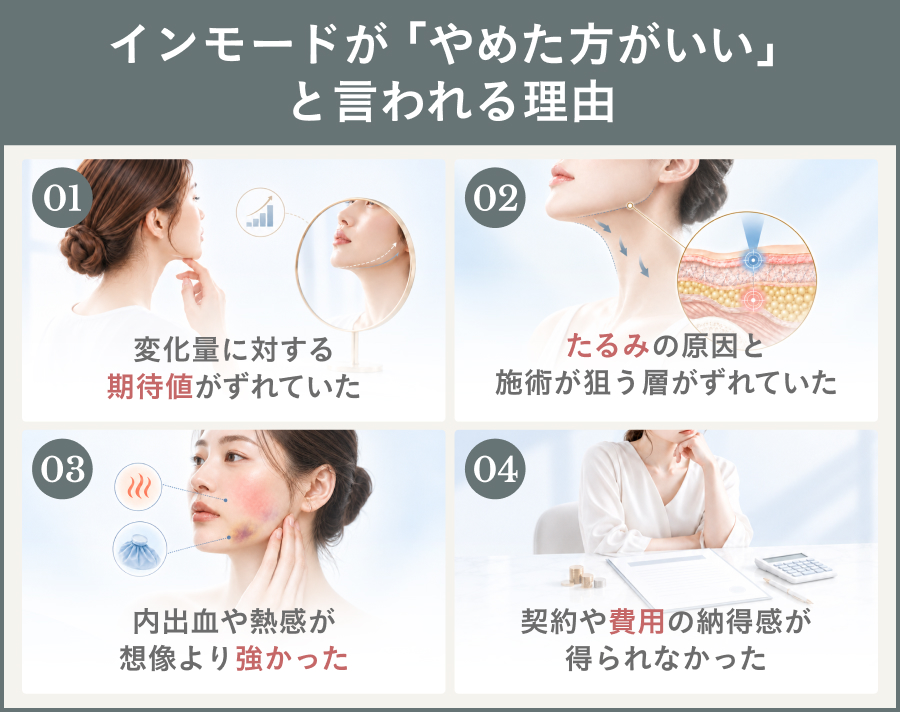
When negative comments are examined, they generally fall into four patterns.
Because the appropriate response differs depending on the cause, identifying which pattern is closest to your situation in advance should help you decide more quickly whether to undergo treatment. We explain each one in detail.
The most common issue is probably the gap between the result people imagined and the actual degree of change. InMode is designed to heat the dermis while maintaining a temperature of around 40–43°C, promoting collagen contraction and new collagen production. Its mechanism differs from procedures that coagulate tissue at a single point with heat, and the changes build gradually over several weeks.
A common misjudgment is using the appearance immediately after treatment as the benchmark. After irradiation, the contour may look more defined because swelling improves and heat causes immediate contraction of collagen fibers. However, this immediate tightening is not the type that lasts, and some people stop attending appointments after feeling that their face has returned to its previous state one week later. It also appears that the treatment is sometimes described as having “no effect” because it is mistakenly believed to produce a dramatic change after a single session.
Facial heaviness does not always have a single cause. Multiple factors can overlap and distort the contours, including reduced dermal elasticity, increased or sagging subcutaneous fat, laxity in the retaining ligaments or the fascial layer known as the SMAS, and even age-related bone atrophy. Of these, InMode directly addresses only the first two. Even when used by someone whose main cause is laxity in deeper supporting tissues, the results are likely to remain limited.
It can be difficult to determine on your own whether fat or skin is the primary cause. If the face appears larger for reasons other than fat, InMode alone may not provide the expected results, so patients are advised to consult a physician before treatment and confirm the method suited to them. Simply putting into words whether your concern is thickness, laxity, or the position of your contours can improve the precision of your consultation.
MiniFX delivers radiofrequency while suctioning the skin, so bruising may occur under the chin or on the cheeks. The official LIVELY CLINIC page also explains that InMode involves heat and a certain degree of pain, as well as a risk of bruising. The extent varies depending on individual constitution and the treatment area, and it may be an unexpected burden for someone who has plans to be in public the following day.
The same applies to the sensation of heat. Rather than pain, it is closer to a gradual warmth. Although it is generally not unbearable, it may feel uncomfortable if you are sensitive to heat. The output can be adjusted, so the quality of the experience is likely to differ depending on whether you can mention your discomfort during the procedure.
Whether the cost feels worthwhile is another factor that affects evaluations. Because InMode is an elective treatment, it is not covered by insurance, and the full cost is paid by the patient. As a general guide, the typical cost is around 2–5万円 per session for the entire face, and approximately 1–3万円 for partial treatments such as the cheeks or jawline.
The total cost after multiplying by the number of sessions required is easily overlooked. A typical treatment plan consists of 3–5 sessions, once every 3–4 weeks, followed by maintenance once every 3–6 months. If you begin treatment based only on the listed price for a single session, you may feel partway through that the total cost is higher than expected.
In addition, the initial consultation fee, follow-up consultation fee, anesthesia fee, gel fee, and other charges may be set separately. A course is less expensive per session than pay-as-you-go treatment, but the handling of discontinuation varies depending on the contract. What is included in the listed price? What additional costs apply? What happens if you cancel? Simply confirming these three points at the first visit should considerably reduce regret related to cost.
InMode combines two types of handpieces: Forma and MiniFX. Understanding which layer each one addresses should make it easier to determine in advance whether they match your concerns. Let’s take a closer look.


Forma delivers radiofrequency across the dermal layer and heats it while maintaining a temperature of 40–43°C with a temperature sensor. The mechanism is expected to improve fine lines and loss of firmness by causing collagen fibers to contract and promoting new collagen production over the following several weeks. Because the treatment is delivered while controlling the temperature, it is easier to limit the risk of burns; however, it is not a procedure that lifts the tissue in a single treatment.
The standard approach is generally to have the first three sessions once every 2–4 weeks, followed by maintenance once every 3–6 months. Because collagen matures over 3–6 months after thermal stimulation, it has been pointed out that treatment intervals that are too short may not only make it difficult to assess the results properly but may also increase the burden on the skin.

MiniFX suctions the skin and lifts the tissue, then uses RF to heat it to 40–43°C and expand the fat cells before delivering high-voltage pulses of approximately 2,000 V (2 kV) in nanosecond intervals (based on the manufacturer’s materials). The heating RF and the high-voltage pulses delivered afterward have separate roles. The affected fat cells undergo apoptosis, or natural cell death, and are eliminated over several weeks to approximately two months. According to the manufacturer’s materials, the treatment acts on fat layers up to a depth of approximately 2.5 cm, so it may be particularly easy to notice changes when fat is the main cause of a double chin.
It is also important to understand that the risk of bruising arises because suction is involved. Since the effects and the burden result from the same mechanism, reducing the suction strength may reduce the burden while potentially making the effect on fat gentler. How much should downtime or results be prioritized? This balance is an issue that should be discussed during the medical examination.
The important point is the upper limit of the depth reached. Radiofrequency heat acts on the dermis through the subcutaneous fat layer, but it is not designed to target the fascial layer beneath them. When the cheeks have clearly descended or the shadow around the mouth is caused by the underlying bone structure, it is unrealistic to try to resolve the issue with InMode alone.
Opposite evaluations of the same device often reflect this difference in the underlying conditions. Rather than following average reviews, it is more useful to determine which layer is causing your concern.
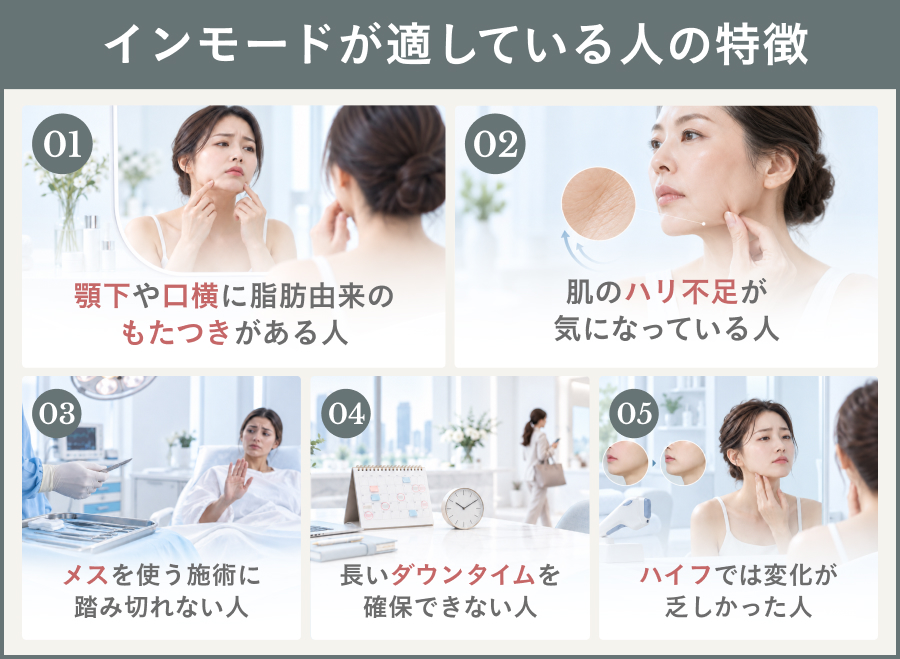
Let’s also confirm what kind of response may be obtained when the indications are appropriate. If several of the following apply to you, it is certainly worth considering.
Let’s explain each one in detail.

InMode is most likely to be a good match for people with fat-related fullness under the chin or beside the mouth. MiniFX is structured to lift the fat layer with suction before delivering energy, making it easier to deliver energy to areas with enough thickness to pinch.
If you notice that “the roundness of my face remains even after losing weight” or “the fullness under my chin does not change even when I correct my posture,” fat is likely to be involved. Because the appropriate approach differs from that for jaw width caused by the underlying bone structure, this distinction should be confirmed during a medical examination.
Forma addresses skin texture. It works by promoting new collagen production in response to changes such as fine lines, enlarged pores, and reduced elasticity when the skin is touched.
Reducing fat alone may leave excess skin, while tightening alone may not change the contours. The approach of combining Forma and MiniFX is particularly suitable when these two concerns coexist. Understanding it as a way to address areas that cannot be reached by either treatment alone should make its role easier to understand.
Unlike Full body liposuction or surgical lift procedures, InMode does not involve making an incision in the skin. In most cases, anesthesia is not required, and you can return home immediately after treatment.
Because no scalpel or injection needle is used, another characteristic is the reduced risk of damaging muscles, blood vessels, or nerves. This is also why InMode is often considered by people who are new to cosmetic medicine and do not want to start with a major procedure.
You cannot take time off work, do not want your family to know, or cannot clear your schedule. When you want to improve your facial contours while facing these restrictions, whether you can continue treatment without taking time off is just as important a condition as the results.
Although bruising from InMode tends to occur under the chin, it is often mild enough to conceal with makeup. The high likelihood of being able to return to your normal routine from the following day is a practical advantage for people who do not want to put their lives on hold.
People who tried HIFU but felt that the results were limited may also benefit from considering InMode. One possibility is that the change was limited because laxity in the fascial layer was not the main cause.
When the causative layer differs, the treatment that can reach it also changes. A previous experience of limited results does not necessarily represent a failure; it can also be viewed as information that helps narrow down the appropriate treatment through a process of elimination. Conversely, if HIFU produced a clear change, it may be more rational to build the treatment plan around HIFU.
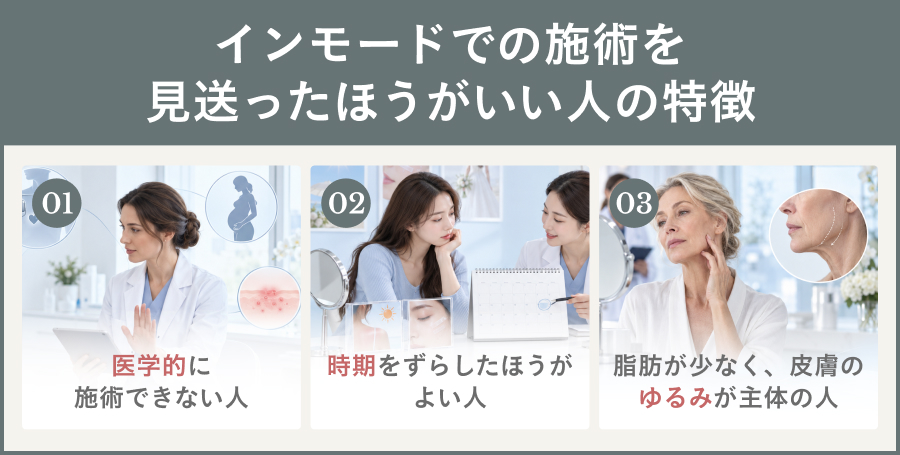
“You should avoid it” can also refer to situations where there are clear safety-related reasons, rather than simply a matter of personal preference.
Let’s look at each in detail.
People who are pregnant or breastfeeding, those with implanted electronic devices such as a cardiac pacemaker or defibrillator, and those with metal implanted in the treatment area are not candidates for treatments using radiofrequency. The same applies to people with severe skin disease or significant inflammation or infection in the treatment area.
Some medical institutions also list serious heart disease and bleeding disorders, including blood-clotting disorders. Be sure to disclose during the medical interview whether you have implanted metal or a pacemaker, any history of skin disease, and any medications you are currently taking. Depending on the nature of an underlying condition, confirmation with your primary physician may be required first.
Even when treatment is within the appropriate range, satisfaction may decrease if the timing is not right. Immediately after intense sun exposure, the skin barrier function is reduced, increasing the risk of inflammation and hyperpigmentation. After other cosmetic treatments, it is also safer to wait until the skin has recovered.
If you have an important event such as a wedding or photo shoot within two weeks, it is wiser to postpone treatment because of the possibility of bruising. Working backward from the event, it is easier to plan if the final session is completed at least one month beforehand.
A commonly overlooked situation involves people who naturally have little subcutaneous fat and whose sagging is mainly caused by loose skin. Repeatedly undergoing treatments aimed at reducing fat can make the cheeks look sunken and create a tired appearance.
Some accounts saying that their skin became saggy after InMode may reflect this imbalance in treatment allocation rather than natural age-related changes. Should fat be reduced, or should only the skin texture be improved? This is precisely the point that should be carefully assessed during the consultation.
During treatment, you may feel a suction sensation and gradually spreading warmth. Although many people do not report severe pain, it is worth understanding in advance what you may experience.
Temporary redness or flushing, mild swelling, and bruising caused by suction are possible reactions after treatment. Redness is a mild inflammatory response, swelling and bruising are related to MiniFX suction, and the sensation of heat is caused by RF heating. The causes differ by symptom. The areas most likely to show these reactions are the thin, highly mobile skin under the chin and on the cheeks.
Explanations commonly state that these reactions disappear in approximately 2–3 days or within several days to one week, and are mild enough to conceal with makeup. If you bruise easily or take blood-thinning medication, tell the clinic at your first visit. There may be room to adjust the suction pressure.
Instructions for the day of treatment vary by medical institution, and some clinics allow bathing from the same day. The common principle is to avoid activities that significantly alter blood flow. Drinking alcohol, strenuous exercise, saunas, and long hot baths can prolong redness and swelling. Makeup is often permitted immediately after treatment.
If you are unsure, it is safest to limit bathing on the day of treatment to a shower and resume your usual routine from the following day while observing the condition of your skin. The skin is more prone to dryness and the effects of ultraviolet rays after treatment, so continue moisturizing and using sunscreen. Final instructions vary by clinic, so prioritize the guidance provided before treatment.
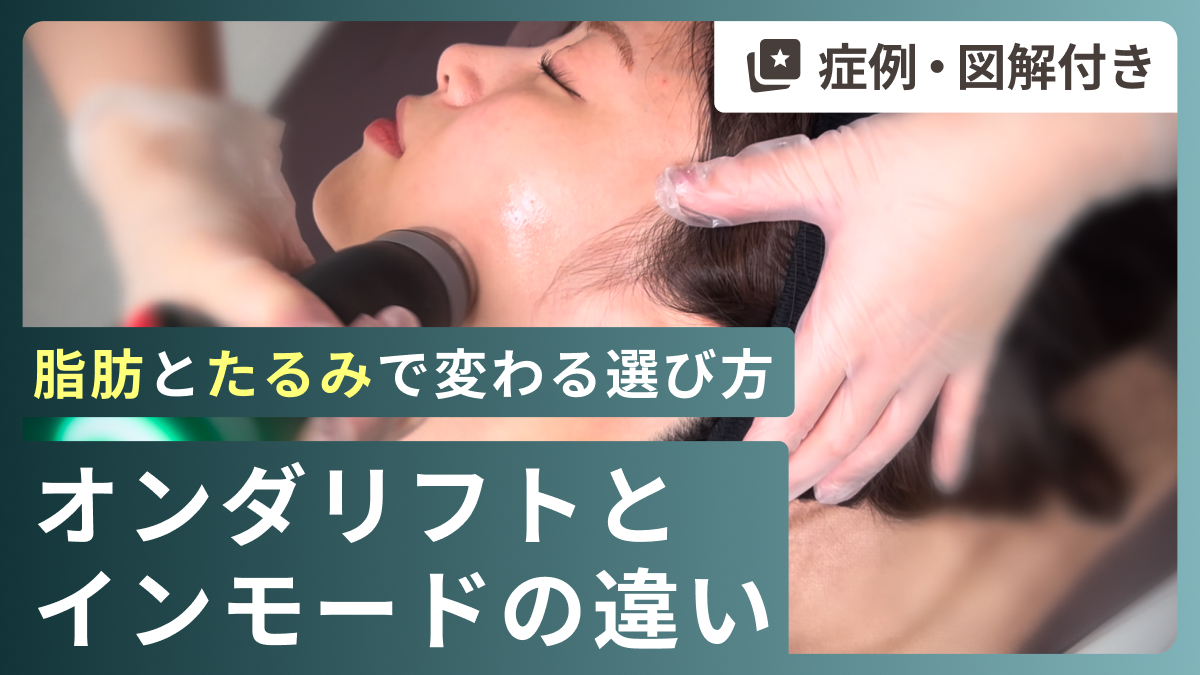
Even procedures grouped together as non-surgical facial contouring treatments differ in the layer they reach and the type of energy they use. We explain the differences between them.

HIFU focuses high-intensity focused ultrasound at a single point and instantaneously raises the temperature to 65–75°C, creating a zone of thermal coagulation. This differs from InMode, which heats the dermis across an area at 40–43°C. Therefore, InMode is suitable for people seeking a facial slimming effect because it strongly approaches the fat layer, while HIFU is suited to people seeking overall lifting because it more strongly acts on the fascia and dermis.
The question of which is superior has little meaning. The layer that should be targeted differs depending on whether your concern is a shadow under the cheekbone or fullness under the chin. The fact that combined treatment is often proposed is also likely because the areas addressed by the two treatments do not overlap.
Thread lift physically lifts tissue and provides a direct solution for excess skin. However, it involves burdens such as swelling and a pulling sensation around the insertion sites, and the length of downtime is not comparable with that of InMode.
Fat-Dissolving Injection acts on fat with medication. Although its aim is similar to that of MiniFX, the way swelling develops and the number of sessions required differ. Whether to reduce fat and then tighten the skin, or lift the tissue and then improve its texture, is a sequence that can be planned properly through a medical examination. Comparing treatment names individually makes it difficult to arrive at the optimal combination.
The first visit begins with a consultation and medical examination. The physician confirms the areas of concern, medical history, medications currently being taken, and previous treatments, then determines whether greater emphasis should be placed on fat or skin. If irradiation proceeds before the treatment plan is clear, the mismatch described at the beginning is more likely to occur.
Next, the treatment area is measured and the face is washed. A dedicated gel is applied before irradiation begins. Many medical institutions perform MiniFX first, followed by Forma, combining an approach to the fat layer with tightening of the dermis. The treatment time varies depending on the area. Treatment of the entire face may take approximately 45 minutes to 1 hour, while treatment of a limited area such as under the chin may sometimes be completed in about 30 minutes. Anesthesia is not normally used, and you can return home immediately after treatment. If you are concerned about pain, some clinics use anesthetic cream.
After irradiation, the condition of the skin is checked, instructions for aftercare are provided, and the visit ends. The basic schedule is to have the first three sessions once every 2–4 weeks, and changes should become easier to see in the mirror from around the third session. Keeping photographs taken from the same angle and under the same lighting as the first visit can help you compare the changes objectively.
We have organized questions that are commonly asked while people are considering treatment.
Immediately after treatment, the contours may look more defined as swelling subsides. However, changes involving new collagen production appear approximately 2 weeks to 1 month later, so it is too early to judge the results after one session. The reason multiple sessions are recommended is also related to the way the changes appear.
The standard approach is to have the first three sessions once every 2–4 weeks, followed by maintenance once every 3–6 months. The number of sessions required varies depending on the severity of the concern and the amount of fat, so confirm the assessment at your initial consultation.
As a general rule, avoid them on the day of treatment. Increased blood flow can intensify redness and swelling and may also cause bruising to spread. The same applies to saunas and strenuous exercise; wait until the following day or later, once the skin has settled. If you are unsure, the safest approach is to confirm with the clinic where you received treatment.
There is no age-based restriction in itself. However, minors are required to obtain parental consent. In addition, contour concerns in people in their 20s are often caused by fat or swelling, so the approach to indications differs from that for age groups in which skin laxity is the main cause. It is necessary to carefully plan what should be reduced and what should be preserved.
Improvement in swelling and immediate tightening caused by heat can be felt from the day of treatment. Changes associated with new collagen production develop over approximately 2 weeks to 1 month, while the elimination of fat progresses over several weeks to approximately two months. Considering the timing of evaluation separately for each type of change can help you avoid becoming anxious midway through the process.
While InMode can address both fat and skin quality, it is less able to reach sagging in deeper tissues, and changes take time to appear. Many comments saying “you should avoid it” may have resulted from undergoing treatment without understanding these characteristics. Conversely, when the assessment of the cause and expectations are aligned, InMode can be an option for improving facial contours while limiting downtime.
What is truly necessary when considering treatment is not a comparison of device names but identifying the cause. Is it fat, skin, or supporting tissue? If the main cause is fat, InMode may be appropriate; if the main cause is laxity in supporting tissues, HIFU or Thread lift may be more suitable. Once this distinction is made, the options become narrower.
At LIVELY CLINIC, we adjust irradiation according to the patient’s bone structure and fat distribution. We also offer devices that reach different layers, including ONDA Lift, which uses microwaves, and Morpheus8, which combines ultra-fine needles with RF. Is InMode suitable for you, or would another treatment be more appropriate? This is exactly when you are still unsure that we recommend discussing your options in a consultation.
※Implementation Clinics: Osaka Clinic, Hamamatsucho Clinic, Funabashi Clinic
※First-Time Only
※Implementation Clinics: Osaka Clinic, Hamamatsucho Clinic, Funabashi Clinic
※Implementation Clinics: Osaka Clinic, Hamamatsucho Clinic, Funabashi Clinic