What Is InMode FX? An Explanation of Its Benefits and Drawbacks

Language:
Language:



BLOG

InMode is an advanced aesthetic device that has gained popularity, particularly in Korea, as a “non-surgical facial slimming treatment” that has attracted attention in aesthetic medicine in recent years. It is especially recognized for its effects in improving sagging and double chins and defining the facial contour.
Some people may be unfamiliar with the features of InMode and HIFU and how they differ.
Here, we provide a detailed explanation of the features and effects of InMode and HIFU, as well as the differences between them.






InMode is a popular treatment in Korea known as a “non-surgical facial slimming treatment.” However, InMode is not actually the name of a treatment. It refers to the name of a company that manufactures aesthetic medical devices or a multifunctional device made by InMode.
InMode is an Israeli medical device manufacturer that develops, manufactures, and sells devices used in aesthetic surgery, plastic surgery, and other fields.
Multifunctional devices made by InMode also carry the name “InMode.” These devices combine multiple functions in one unit, including functions such as Lumecca, Forma, and MiniFX.
When referring to InMode as a facial slimming treatment, this means two types of treatments: Forma and MiniFX. The Japanese treatment using these two functions is called InMode Lift.
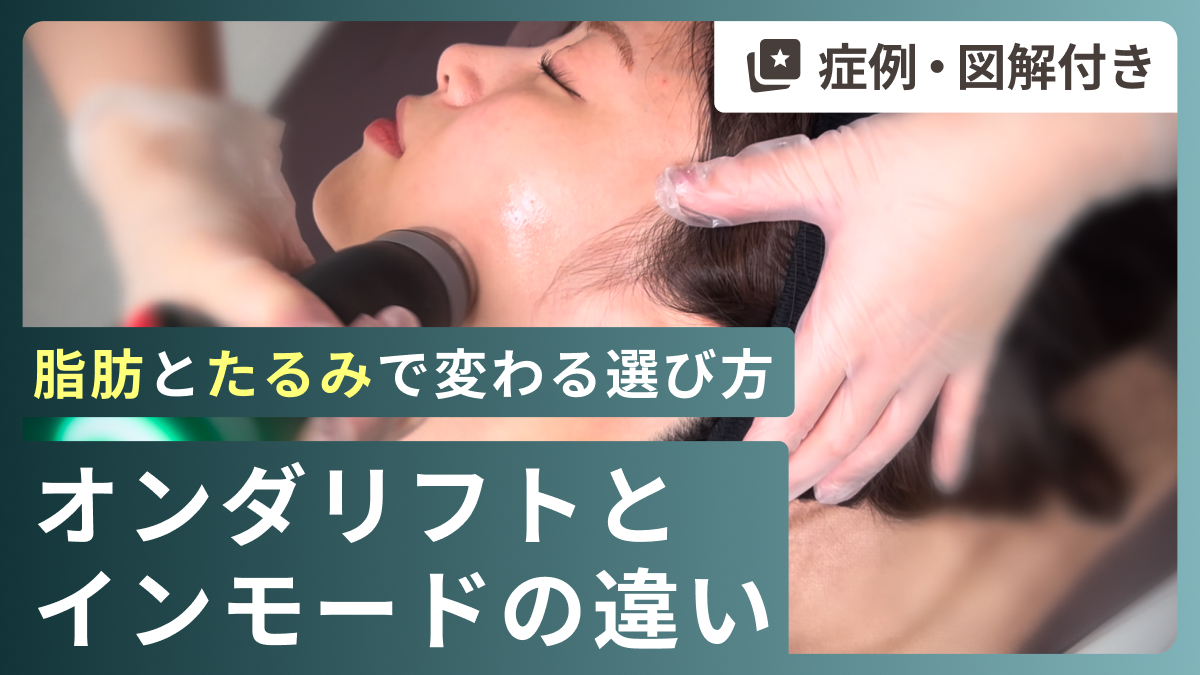
Both InMode and HIFU are popular as “non-surgical facial slimming treatments,” but they differ in the energy used and how they approach the tissue.
InMode uses RF energy (radiofrequency) while suctioning the skin, whereas HIFU uses high-intensity focused ultrasound to deliver ultrasound energy from the skin’s surface. These differences also affect how the results develop and which concerns each treatment is suited to.
InMode therefore provides a stronger approach to the fat layer and is suitable for people concerned about fat around the facial contour or seeking a facial slimming effect. HIFU, on the other hand, acts more strongly on the fascia and dermal layers, making it suitable for people seeking an overall lifting effect.
There are also differences in treatment pain and side effects. InMode involves heat and a certain degree of pain and carries a risk of bruising, whereas HIFU involves sharp pain but has a relatively low risk of bruising.

InMode Lift can be expected to provide facial slimming and lifting effects.
A treatment called “InMode Lifting” is also intended to provide similar effects, but this treatment originated in Korea. InMode Lift is based on InMode Lifting, with settings adjusted to be more suitable for Japanese patients. Differences include the irradiation method and energy level.
Let’s take a look at Forma and MiniFX, which are used during InMode Lift treatments.

Forma is one of InMode’s functions and mainly acts on the superficial layers of the skin. By delivering RF energy evenly, the following effects can be expected.
The RF energy used by Forma is delivered while controlling the skin temperature at approximately 40–43°C. This temperature range is considered optimal for collagen production, so a rejuvenating effect from within the skin may be expected.
Another benefit is that the treatment can be performed without damaging the skin, resulting in little downtime. It can be used not only on the face but also on delicate areas such as the neck and around the eyes, making it suitable for people who want to improve firmness throughout the face.

MiniFX is another primary function of InMode and mainly targets the fat layer. It is characterized by delivering RF energy while suctioning the skin, and the following effects can be expected.
A major feature of MiniFX is that suctioning the skin allows it to approach the fat layer efficiently. Compared with conventional RF devices, it can target fat cells located deeper within the tissue, making it effective for people concerned about fat around the facial contour or a double chin.
InMode V-Lifting (InMode Lifting) is a treatment that combines Forma and MiniFX to provide more comprehensive aesthetic effects. This combined approach can be expected to provide the following effects.
The synergistic effect of improving skin quality and caring for superficial sagging with Forma while targeting the fat layer with MiniFX provides comprehensive aesthetic effects from the surface to the deeper layers. It can be considered an ideal treatment especially for people concerned about both facial fat and sagging.
Another major feature is that InMode V-Lifting can be used not only on the face but also on body parts such as the upper arms, abdomen, thighs, and calves, allowing it to address sagging and fat throughout the body.
Let’s take a look at the benefits and drawbacks of treatments using Forma and MiniFX.
InMode can be performed without damaging the skin, and there is little to no downtime. Benefits include minimal strain on the body and little pain during treatment. InMode generates heat and acts on the cells, so you may feel a gentle warmth during the treatment. Although this varies from person to person, many people find the warmth comfortable.

Another benefit is that you may notice effects after just one treatment, despite the short treatment time.
One drawback of InMode is that bruising and swelling may occur. MiniFX in particular involves suctioning the skin, so bruising and swelling may develop after treatment. These usually improve within several days to 1 week, but it may be better to avoid treatment before an important event.
In addition, multiple treatments are recommended to maximize the effects. For people expecting dramatic effects from a single treatment, the need to visit the clinic several times may be a drawback.

InMode treatment is generally performed in the following stages.
1. Examination and consultation
2. Treatment planning and explanation
3. Treatment
Although the process may vary slightly by clinic, treatment generally proceeds as described above. Let’s review the basic steps.
First, a doctor performs an examination and consultation. You should clearly explain your current skin condition and concerns so the doctor can determine whether InMode is an appropriate treatment. At this stage, discuss the following points.
Based on this information, the doctor will explain whether InMode is appropriate and what advantages it may have compared with other treatments. If you have any questions or concerns, it is important to ask them thoroughly at this stage.
Based on the consultation, the doctor will create a specific treatment plan. A suitable treatment plan will be proposed according to your individual skin type, fat distribution, and severity of concerns. The treatment plan may include the following.
This is also an important time to receive an explanation of the treatment details, risks, and precautions. Before signing the consent form, be sure to confirm anything you do not understand.
The actual treatment proceeds as follows.
1. Cleansing and facial washing
2. Forma treatment
3. MiniFX treatment
4. Finishing care
5. Aftercare instructions
Treatment time varies depending on the area and extent, but treatment of the entire face generally takes approximately 30 minutes to 1 hour. You can return to your daily activities after treatment, and if bruising occurs, it can be covered with makeup.
Be sure to follow aftercare instructions carefully. In some cases, the doctor may provide additional instructions, so be sure to resolve any concerns or questions you have at this time.
InMode is a relatively safe treatment. However, as with other aesthetic medical treatments, there are several possible side effects and precautions. Knowing about them in advance can help you undergo treatment with peace of mind. We explain them in detail below.
During InMode treatment, you will feel heat from the RF energy. MiniFX in particular delivers RF while suctioning the skin, so it may cause temporary heat or pain. The suction function of MiniFX may also cause bruising or swelling after treatment, so caution is required.
Although rare, mild burns may occur if the temperature setting is too high or depending on the condition of the skin. As this is related to the doctor’s technique, choosing a clinic based on reviews and reputation may help minimize this risk.
Keep the treated area clean after treatment. Since the skin is particularly sensitive on the day of treatment, wash your face gently and keep it clean. However, avoid washing your face with hot water and use lukewarm water instead. Sun protection is also essential. Since the skin is sensitive after treatment, use sunscreen or other measures to protect it from direct sunlight.
Avoid alcohol, strenuous exercise, and saunas, and drink plenty of water. This can promote the elimination of waste products and help speed recovery.
The following people may not be able to receive InMode treatment.
When considering treatment, we recommend receiving a consultation with a qualified doctor or clinic in advance to discuss whether the treatment is appropriate for you.
InMode is recommended for the following people.

InMode is not covered by insurance, so the entire cost must be paid out of pocket. Costs therefore vary by clinic. When performed in Japan, InMode Lift may cost from the 40,000-yen range to nearly 100,000 yen, so caution is required.
LIVELY CLINIC offers InMode treatments in one of the lowest price ranges in Japan, supported by a high level of technical expertise so that patients can experience the benefits of InMode.
Forma and MiniFX each take approximately 15 minutes, while InMode Lift takes approximately 30 minutes.
Here are answers to frequently asked questions from patients about InMode.
You can wear makeup, wash your face, and take a shower from the day of treatment. However, clinics differ on whether bathing is permitted on the same day or from the following day. Please confirm with the clinic where you receive treatment.
You can exercise and drink alcohol from the day of treatment. However, avoid strenuous exercise and excessive alcohol consumption.
Avoid saunas and other activities that promote blood circulation for approximately 1 week.
You may notice effects after just one InMode treatment. However, to experience more substantial effects, we recommend continuing with several treatments.
We recommend receiving 3 to 8 treatments at intervals of 1 to 4 weeks. Once you begin to notice the effects, receiving treatment approximately once every 6 months can help maintain them for longer.
How you experience the effects also depends on your skin condition. Therefore, consult your doctor and receive treatment at a frequency and number of sessions suited to you.
The effects of InMode gradually appear over a period ranging from several days to several weeks. The effects of one treatment last up to approximately 6 months, although this varies from person to person. Since changes from InMode treatment occur gradually, continuing with treatment is recommended.
Unlike treatments such as InMode that gradually encourage change by acting on the cells, Full body liposuction involves making an incision in the skin and suctioning out fat, so you can notice a slimming effect immediately. However, Full body liposuction also carries risks such as scarring, infection, and extended downtime after treatment. Therefore, it is important to consider it after carefully assessing both its effects and risks.
Combining InMode with another treatment can enhance its effects. Treatments that may be combined with it include Thread lift, hyaluronic acid, and injectable skin boosters. Since the combination differs depending on your concerns, be sure to decide after consulting your doctor thoroughly.
InMode is a comprehensive aesthetic medical device that combines two functions, Forma and MiniFX. It is a treatment that can be expected to provide facial slimming and improvement in sagging without surgery. When considering InMode treatment, it is important to consult your doctor thoroughly during a consultation and create a treatment plan suited to your skin condition and concerns.
Although it is a relatively new aesthetic medical technology, it is chosen by many people because of its effects and safety. If you would like to achieve a natural-looking rejuvenating effect without surgery or define your facial contour, why not consider InMode?
※Implementation Clinics: Osaka Clinic, Hamamatsucho Clinic, Funabashi Clinic
※First-Time Only
※Implementation Clinics: Osaka Clinic, Hamamatsucho Clinic, Funabashi Clinic
※Implementation Clinics: Osaka Clinic, Hamamatsucho Clinic, Funabashi Clinic