


How Many Days Is the Downtime for XERF? What to Expect and How to Spend the First Week

Language:
Language:



BLOG

Sagging along the facial contours and fine lines become more noticeable with age. XERF, the latest aesthetic medical device from South Korea, is attracting attention as a groundbreaking solution to these concerns. It is being introduced at an increasing number of cosmetic clinics as a next-generation treatment that reduces the pain associated with conventional treatments for sagging while delivering reliable results.
In this article, we explain in detail—from a professional perspective—how XERF works, its effects, and how it differs from other treatments.



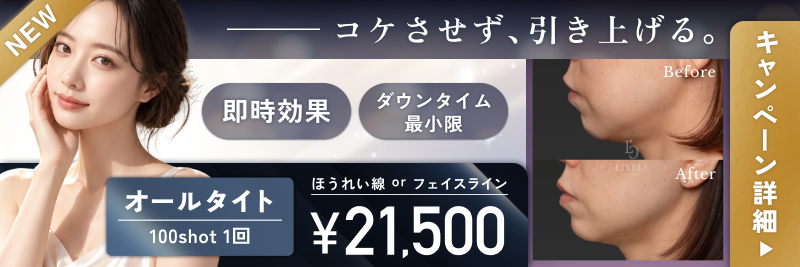






XERF is the latest radiofrequency (monopolar RF; hereafter RF) treatment device for sagging, developed in South Korea. Equipped with the world's first dual-frequency system, it achieves both reduced pain and high effectiveness, which have been difficult to combine with conventional RF treatment devices.
RF stands for Radio Frequency. By delivering high-frequency energy to the deeper layers of the skin, it promotes collagen production and produces skin tightening and lifting effects. One feature of XERF is that it can simultaneously emit two different frequencies—6.78 MHz and 2 MHz—enabling a three-dimensional approach from the superficial to the deep layers of the skin.
Full-scale introduction in Japan began around 2023, and the treatment has rapidly spread, particularly among major cosmetic clinics. It is positioned as an ideal treatment for sagging for people who are sensitive to pain or who cannot take downtime in their busy modern lives.
XERF’s innovative technology enables effective treatment that goes beyond the limitations of conventional RF treatments. The following three points are particularly important to understand.
We explain each point in detail below.
XERF’s greatest feature is that it is equipped with the world’s first system capable of simultaneously emitting dual frequencies of 6.78 MHz and 2 MHz. The 6.78 MHz high frequency acts from the dermis to the superficial fat layer and is effective for improving skin firmness and texture. Meanwhile, the 2 MHz low frequency reaches the deep fat layer and addresses deeper sagging.
This technology makes it possible to treat each person at an optimal depth according to their skin type and degree of sagging. It can efficiently deliver thermal energy to depths that conventional single-frequency RF devices could not reach.
XERF is equipped with three modes that can be selected according to the treatment area and purpose. Shallow mode (6.78 MHz) targets the dermis and is effective for improving skin firmness and texture.
Middle mode (6.78 MHz) delivers heat from the dermis to the superficial fat layer and is suitable for improving nasolabial folds and marionette lines.
Deep mode (6.78 MHz + 2 MHz) uses dual frequencies to cover a broad range from the dermis to the deep fat layer. It is effective for improving more severe sagging, such as sagging along the facial contours and a double chin. Combining these three modes enables customized treatment.
Pain during treatment is a concern for many people considering aesthetic medicine. XERF’s unique Wave Fit Pulse technology has successfully reduced the heat sensation and pain characteristic of RF treatments.
This technology optimizes the energy emission pattern and delivers the necessary amount of heat to the skin while avoiding a sudden rise in temperature. Working together with the cooling system, it makes it possible to concentrate heat only in the deeper layers while protecting the epidermis. As a result, treatment can be completed with a sensation described as “gently warm.”
XERF treatment can produce a wide range of effects, and it is particularly effective for people with concerns such as the following.
XERF alone can provide comprehensive anti-aging care. Let’s look at each effect.
XERF is effective for various wrinkles and types of sagging that become more noticeable with age, including nasolabial folds, marionette lines, and tear-trough lines. By promoting the production of collagen and elastin in the dermis, it improves skin elasticity. Gradual improvement can be expected, with deep wrinkles becoming shallower and fine wrinkles becoming less noticeable.
It has also been shown to have a certain degree of effect on expression lines, such as fine lines around the eyes and horizontal forehead lines. As more reliable improvement can be expected with multiple treatments, many people continue treatment once every 3 to 6 months. Skin firmness may be felt immediately after treatment, followed by further improvement over the next 1 to 3 months.
The true effects of XERF lie in the medium- to long-term changes that appear over 1 to 3 months after treatment. Thermal stimulation activates fibroblasts and promotes the production of new collagen and elastin. Through this process, the skin’s structure improves from within, and a sustained lifting effect may be achieved.
The effects generally peak after approximately 3 months and continue for around 6 months to 1 year thereafter. Regular treatment can help maintain the effects for longer. By activating collagen production capacity that has declined with age, the skin’s natural regenerative ability can be restored.
XERF can provide an effective approach for a double chin and sagging under the chin that become concerns with age. The 2 MHz low frequency reaches the deep fat layer, where a reduction in the size of fat cells may be expected.
Because it can reduce volume under the chin without surgery, it is also suitable for people concerned about downtime. With repeated treatments, a youthful, sharper facial contour can be restored.
It can be considered particularly suitable for people in their late 30s to 50s who are concerned about a mild to moderate double chin.
One of XERF’s representative effects is a smaller-face effect resulting from tightening the facial contours. Loosened contours caused by aging become sharper, helping restore what is commonly called a “V-line.”
By applying heat three-dimensionally from the deep to the superficial layers, a lifting effect across the entire face can be achieved. Many people feel tighter contours immediately after treatment and may feel that their facial contours look more defined when they look in the mirror. XERF is also popular as a last-minute treatment before an important event.
Another major appeal is that it may improve skin quality at the same time as treating sagging. Thermal stimulation from RF activates skin turnover. This helps refine skin texture and may also tighten pores.
Improved circulation helps reduce dullness and guide the skin toward a more luminous appearance. Improved firmness and radiance, as well as better makeup application, are also effects of the treatment. For those seeking comprehensive anti-aging care, XERF can be considered an ideal option.

There are various options for treating sagging, each with its own characteristics. Let’s take a closer look at the treatments most often compared with XERF.
HIFU is a treatment that applies heat pinpointedly to the SMAS layer using ultrasound. The greatest difference from XERF is how heat is applied. HIFU applies heat in “points,” whereas XERF heats the skin in a “plane.”
HIFU can be expected to provide a powerful lifting effect, but it is characterized by a distinctive pain that can feel as though it resonates with the bone. XERF, on the other hand, applies gentle heat over a broad area, so it causes less pain, although it may be inferior to HIFU in terms of immediacy. In terms of downtime, XERF is lighter, and makeup can be applied immediately after treatment.
Thermacool also uses RF, like XERF, but differs in the frequency and emission method used.
Thermacool uses a single frequency of 6.78 MHz to produce three-dimensional tightening vertically, horizontally, and in depth. As a result, a small amount of pain can be a drawback.
In contrast, XERF can deliver heat deeper through its dual-frequency system. In terms of pain, the latest Thermacool FLX has improved compared with earlier models, but XERF is still considered less painful.
Thermacool also tends to be more expensive.
Volnewmer is the latest treatment device for sagging that uses monopolar RF. Its distinctive feature is the ability to deliver heat evenly from the dermis to the subcutaneous tissue through its unique “volume-based RF” technology.
Like XERF, it uses RF, but the emission method and the way its effects appear differ. Volnewmer continuously applies heat to promote the immediate contraction and long-term regeneration of collagen. Unlike XERF’s dual-frequency system, it adjusts depth using a single frequency.
The level of pain is similar, but Volnewmer tends to require a slightly longer treatment time. Both can be considered noninvasive treatments with a high level of safety.
Oligio is also an RF treatment device known for causing little pain. Oligio uses a method of continuously emitting RF, characterized by a gently warming sensation. It reduces pain through an approach different from XERF’s Wave Fit Pulse technology.
In terms of effects, Oligio tends to have somewhat less immediate effects, and multiple treatments are often assumed. The price range is similar, although many clinics appear to set Oligio at a slightly lower price.
Density is a treatment device that uses high-intensity focused ultrasound. The major difference is that XERF uses RF, whereas Density uses ultrasound. Density aims to tighten the skin and improve its texture by delivering focused ultrasound finely to the dermis.
XERF is considered to have a stronger effect on sagging because it can reach deeper layers. Density, on the other hand, is characterized by being more specialized in improving skin smoothness and pores. Both treatments cause relatively little pain and have almost no downtime.
The process of actually receiving XERF treatment is as follows.
1. Consultation
2. Treatment preparation
3. Treatment and energy emission
4. Aftercare
We explain in detail what is involved and what precautions should be taken.
The first visit always begins with a consultation. In general, a doctor examines the condition of your skin and the degree of sagging, then proposes an appropriate treatment plan. The expected effects, number of treatments required, and fees are also explained in detail. Your medical history and current health status are checked to determine whether treatment is possible.
If you have concerns or questions, it is important to discuss them thoroughly at this stage. As many clinics offer free consultations, you may also wish to consult several clinics and compare your options.
On the day of treatment, your skin is first cleansed and washed. Please completely remove makeup, sunscreen, and other products so that your skin is bare. Many clinics also take photographs before treatment, which allows changes after treatment to be checked objectively.
A special gel is applied to the treatment area to prepare for the procedure. People who are sensitive to pain may also use a topical anesthetic cream at this stage.
The handpiece is applied to the skin as energy is delivered in sequence. Treatment takes approximately 30 to 40 minutes for the entire face and approximately 15 to 20 minutes for a partial treatment.
During treatment, you will generally feel warmth, and many people can undergo the procedure in a relaxed state. You can also talk with the doctor or nurse during treatment, and the output can be adjusted immediately if you feel pain.
After treatment, moisturizing care is provided and sunscreen is applied. Some clinics also offer aftercare such as a soothing mask or vitamin infusion. You can apply makeup immediately and return home, and you should be able to go about your normal activities from the day of treatment.
After receiving an explanation of post-treatment precautions, you will discuss your next appointment and complete the visit. After returning home, it is important to moisturize sufficiently and take thorough measures against ultraviolet rays.
XERF is a highly safe treatment, but people who fall into the following categories cannot undergo it.
Treatment is not permitted during pregnancy or breastfeeding because the effects on the fetus or breast milk are unknown. People who use a pacemaker or defibrillator, as well as those with a metal plate or implant in the face, cannot undergo treatment because of the risk of affecting the device or causing heat-related problems.
It is also advisable to avoid treatment if there is inflammation or a wound in the treatment area, or if you are prone to keloids or have photosensitivity. People with underlying conditions such as diabetes, heart disease, or epilepsy need to consult a doctor in advance. If you have recently undergone another aesthetic treatment, you may need to wait for a certain period of time.
If you are going to receive XERF treatment, you naturally want to maximize its effects. The following three points can help.
Let’s look at each point in detail.
The effects of XERF can be felt after a single treatment, but multiple treatments are recommended if you want more reliable results. The ideal treatment interval is once every 3 to 6 months. Considering the collagen production cycle, this interval is considered the most efficient.
Many people receive treatments at 3-month intervals from their first through third treatments, then continue maintenance treatment once every six months. Most people achieve satisfactory results after 3 to 5 treatments, after which they move to regular maintenance to maintain the effects.
XERF may produce additional effects when combined with other aesthetic treatments. It is considered particularly compatible with HIFU. This allows HIFU to provide powerful lifting while XERF is used to improve skin quality.
Combining XERF with Botox or hyaluronic acid injections is also considered effective. Botox can be used for expression lines, hyaluronic acid for volume loss, and XERF for sagging and improved skin quality. Combining treatments according to your concerns can provide comprehensive rejuvenation.
Daily skincare is also important for prolonging the effects of XERF treatment. In particular, moisturizing and protection from ultraviolet rays are essential. Because the skin’s metabolism is more active after treatment, providing high-quality moisturizing ingredients can support collagen production.
Using cosmetics containing anti-aging ingredients such as retinol and vitamin C derivatives may also be effective. Do not forget care from within: consciously consume nutrients required for collagen production, such as protein and vitamin C.

Downtime and side effects are important considerations when evaluating aesthetic medicine. Side effects in particular require careful consideration. Here, we explain the downtime and side effects that may generally occur in detail.
XERF has very little downtime and hardly affects daily life. You can return to your normal activities immediately after treatment, and makeup is permitted.
Reactions after treatment may include mild redness or swelling, but in many cases these settle within several hours or by the following day. Some people may experience heat or a stinging sensation, but this is also temporary and may be relieved by cooling the area. Bruising is rare, but even if it occurs, it will naturally disappear in approximately one week.
However, please note that downtime varies from person to person.
XERF is a highly safe treatment, but side effects have been reported, although they are rare. For example, temporary sensory changes or an unusual sensation may occur. This is caused by a temporary effect on the nerves and improves over several days to several weeks.
Depending on your skin type, your skin may temporarily become more dry, or sebum production may instead become more active. In extremely rare cases, there is also a risk of burns or hyperpigmentation, but these can be prevented through appropriate output settings and treatment technique.
We have compiled frequently asked questions about XERF treatment. If you are considering XERF treatment, please use this information as a reference.
Many people feel that their skin is tighter immediately after treatment, but the full effects appear after 1 to 3 months. The immediate feeling of tightness is caused by an immediate contraction response to heat. As collagen regeneration progresses afterward, lifting and skin-quality improvements will gradually appear.
Generally, the effects are considered to peak three months after treatment and continue for approximately 6 months to 1 year thereafter. Results vary from person to person, but there is a tendency for the effects to become easier to notice with each successive treatment.
XERF treatment is particularly suitable for people in their late 30s to 50s who are concerned about mild to moderate sagging. It is especially recommended for people with multiple concerns, such as insufficient skin firmness, fine lines, and enlarged pores. It is also suitable for people who are sensitive to pain or cannot take downtime.
On the other hand, it may not be sufficiently effective for severe sagging or deep wrinkles. For these concerns, more powerful treatments such as HIFU or Thread lift may be more suitable.
One of XERF’s major features is its low level of pain. Many people describe it as “gently warm,” and it is generally tolerable without anesthesia. This is because Wave Fit Pulse technology significantly reduces pain compared with conventional RF treatments.
A topical anesthetic cream can also be used for people who are particularly sensitive to pain. Most people, however, receive treatment comfortably without anesthesia.
XERF is a treatment that can be easily combined with other aesthetic treatments, but care is required when scheduling treatments on the same day. Botox and hyaluronic acid injections are recommended around two weeks before or after XERF treatment.
Light treatments such as vitamin infusion and iontophoresis can be performed on the same day as XERF. In fact, because the skin’s permeability is increased after XERF, it can be considered an ideal time to infuse cosmetic ingredients.
Unfortunately, people who are pregnant or breastfeeding cannot receive XERF treatment. Sufficient safety data have not been established regarding the effects of RF on the fetus or breast milk.
If you wish to receive treatment after breastfeeding, it is possible immediately after weaning. However, some clinics recommend waiting approximately three months after weaning, when hormone levels have stabilized.
XERF is attracting attention as a next-generation treatment for sagging that delivers reliable effects while reducing pain. Compared with conventional treatments, it causes less pain and has almost no downtime, making it an ideal treatment for busy modern people.
To maximize the effects, choosing a reliable clinic and receiving appropriate aftercare are essential. Thoroughly discussing your concerns during a consultation and developing a treatment plan suited to your skin condition and goals is the first step toward success. XERF can be a powerful tool for naturally helping you achieve your wish to remain beautiful as you age.
LIVELY CLINIC will introduce XERF at its Osaka branch, which will open on November 22, 2025. It is particularly recommended for people who have been interested in aesthetic medicine but were concerned about pain, and for those who want to improve their skin quality using the latest technology. If you are interested, please contact us.
※Implementation Clinics: Osaka Clinic, 札幌院
※Implementation Clinics: Osaka Clinic, 札幌院
※Implementation Clinics: Osaka Clinic, 札幌院
※Implementation Clinics: Osaka Clinic, 札幌院

