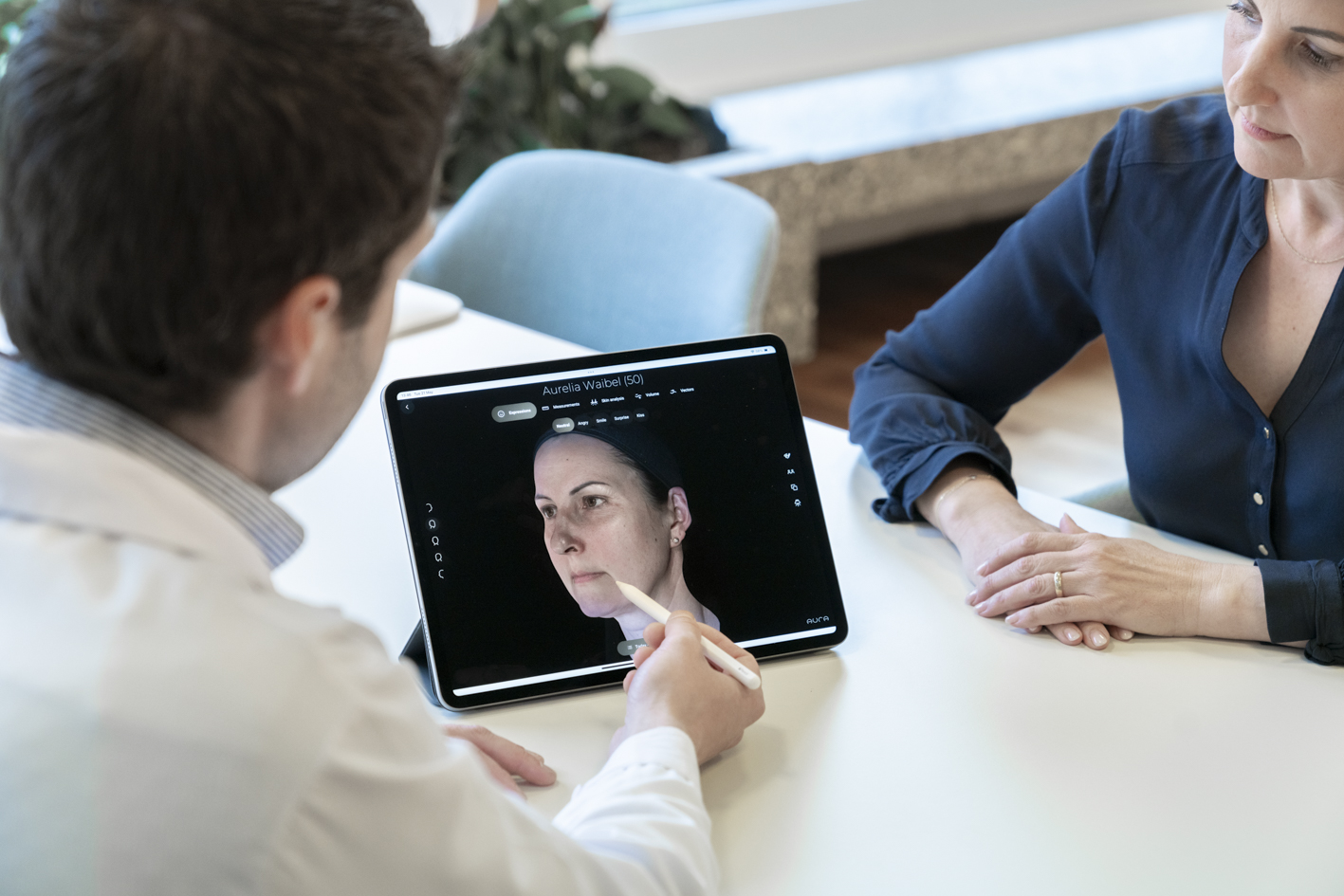
AURA can analyze facial contours, sagging, and volume changes in three dimensions—details that are often difficult to detect by simply looking in the mirror.
This allows you to gain a more accurate understanding of your facial condition. By objectively visualizing changes before and after treatment, AURA is ideal for those who want greater confidence and clarity throughout their aesthetic journey.
診療科目
AURA(Skin diagnostic machine)

Recommended for people who
- Those who want to clearly visualize treatment results with 3D imaging before and after treatment
- Those who want an objective assessment of the effects of lifting or facial contouring treatments
- Those who want to identify hidden skin concerns and potential future skin risks
- Those who want to find a treatment plan tailored to their individual needs

What Is the AURA Skin Analysis System?
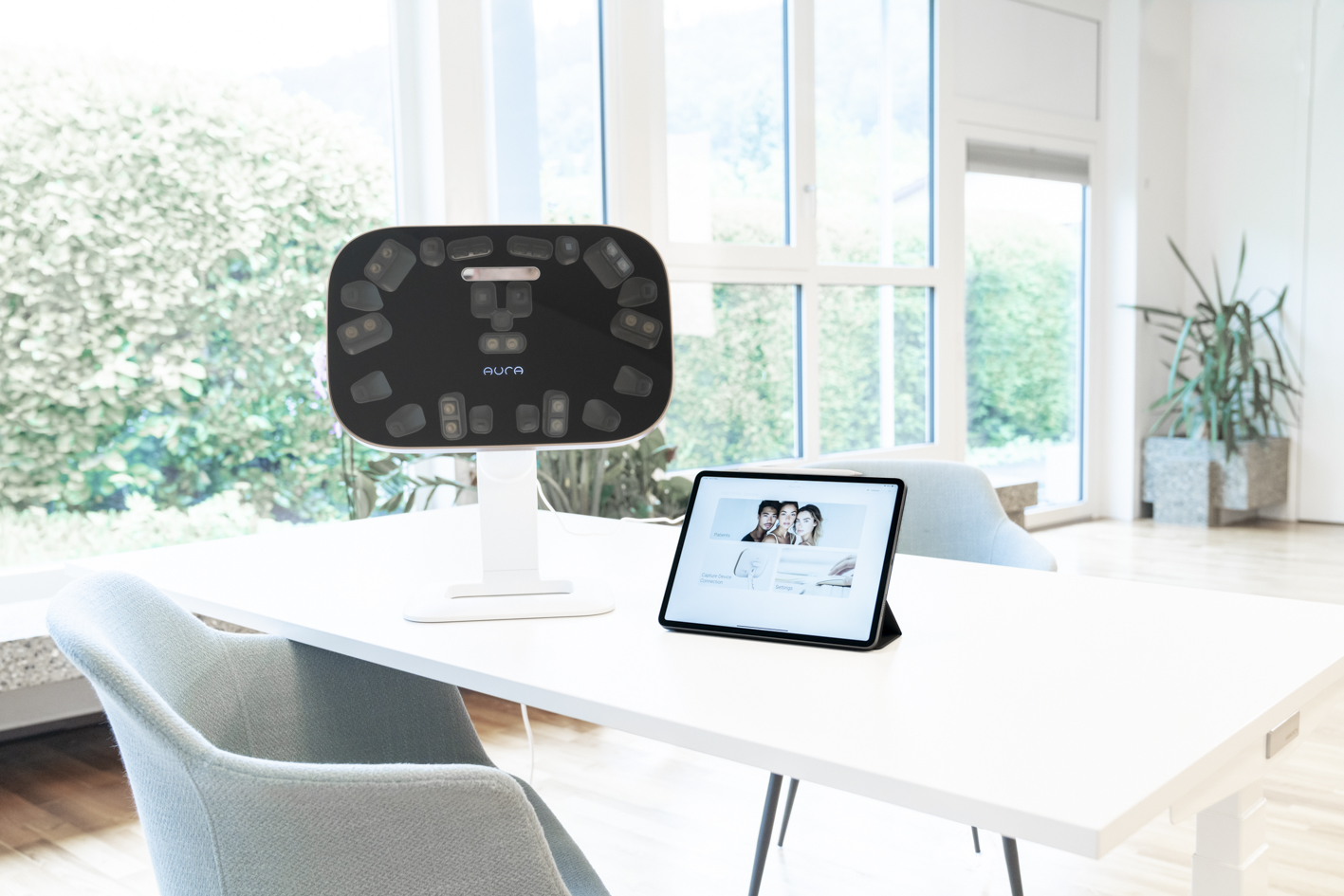
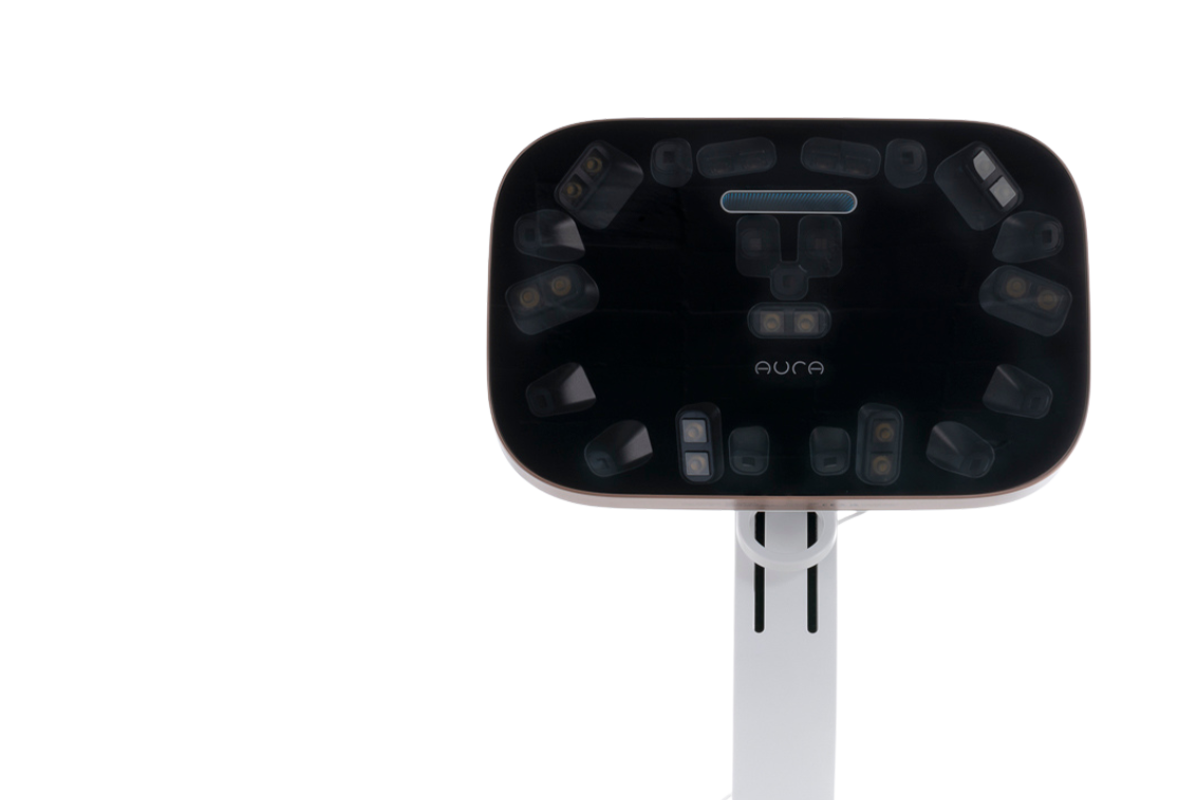
AURA is a 3D skin analysis system developed by Hexagon. Built on the same high-precision technology used in NASA Mars exploration missions and Formula 1 vehicle measurements, AURA provides a three-dimensional analysis of the face. By clearly visualizing skin conditions and facial contours, it helps practitioners recommend personalized aesthetic treatments tailored to each individual.
High-Precision Imaging
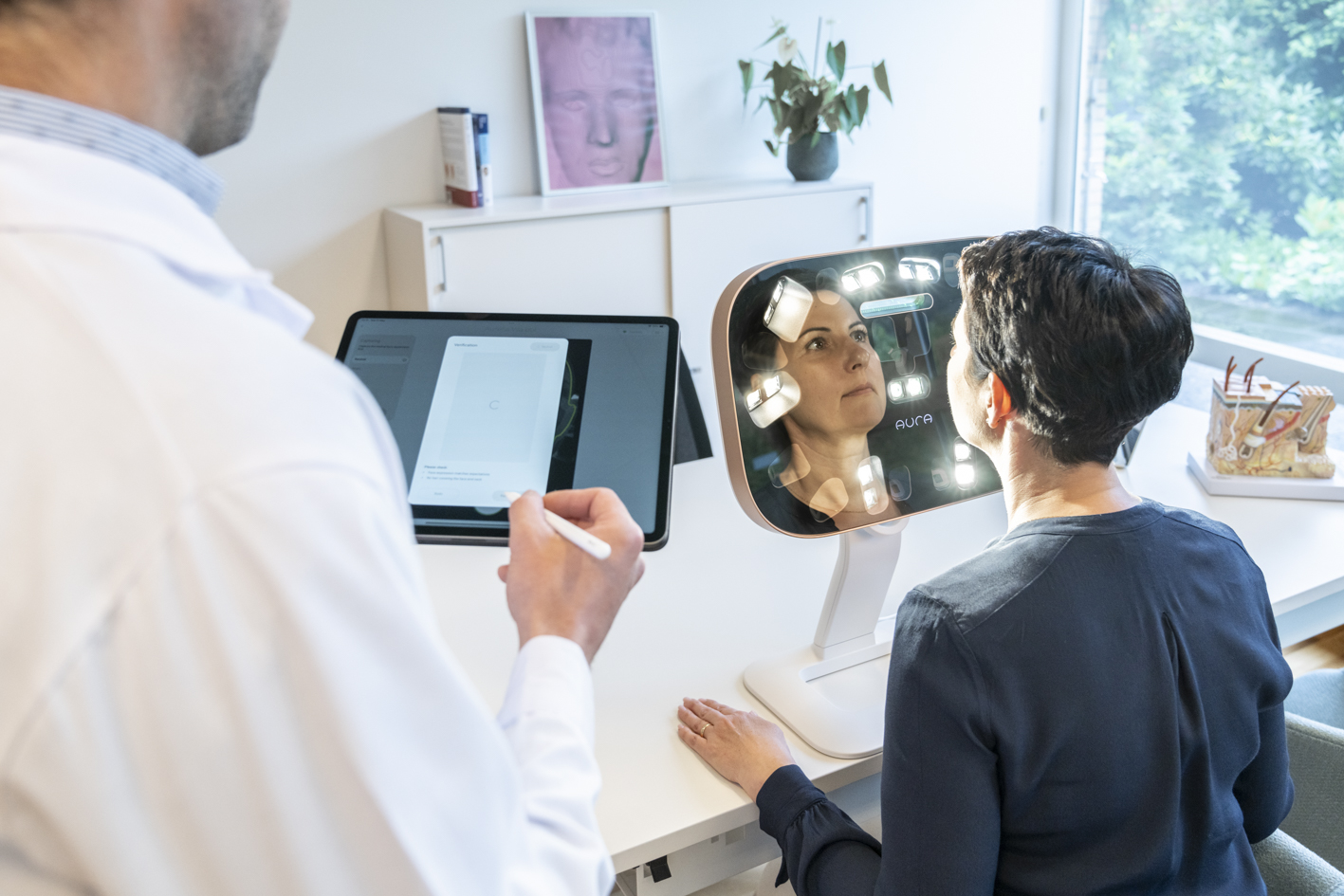
Equipped with 13 high-performance cameras and 18 lighting units, AURA scans the face and neck in a single capture that takes approximately 30 seconds.
By simultaneously capturing images from multiple angles, AURA generates highly accurate 3D images with precision down to 0.1 mm, making it easier to visualize skin conditions and changes in facial contours.
Visualizing Treatment Results
By comparing 3D images taken before and after treatment, AURA allows patients and practitioners to clearly assess volume changes from dermal filler treatments as well as lifting effects from skin-tightening procedures.
The system also visualizes the magnitude and direction of these changes, providing an objective way to evaluate treatment outcomes.
Comfortable and Hassle-Free Imaging
AURA uses a non-contact imaging process, making it a hygienic option for skin analysis.
Unlike conventional diagnostic devices, there is no need to secure or position your face against the machine. Images can be captured in a natural and relaxed state, providing a more comfortable experience.
How AURA Differs from Conventional Skin Analysis Systems
Traditional 2D skin analysis devices primarily focus on evaluating skin tone and pigmentation. In contrast, AURA excels at analyzing three-dimensional facial structures, including contours, sagging, and volume distribution.
By visualizing details that are difficult to assess with the naked eye, AURA provides objective data that supports more precise treatment planning and evaluation of treatment outcomes.
What AURA Can Analyze
-
Redness (Dilated Blood Vessels)
AURA analyzes facial redness and the condition of superficial blood vessels. By comparing images and data before and after treatment, improvements in redness can be assessed objectively.
This helps identify the underlying causes of persistent facial redness and can be useful for evaluating the effectiveness of laser treatments and skincare programs.
-
Pigmentation (Dark Spots)
AURA analyzes the extent and condition of pigmentation and dark spots. In addition to visible pigmentation, it can also visualize areas that may develop into visible pigmentation in the future, providing a more comprehensive understanding of your skin.
By identifying potential pigmentation concerns before they become noticeable, AURA can help guide future treatment plans and UV protection strategies.
-
Pores (Size and Density)
AURA analyzes pore size, quantity, and distribution. By providing a detailed assessment of pore conditions, it helps evaluate the effectiveness of skin-quality improvement treatments.
Understanding whether enlarged pores are caused by excess oil, aging, or skin laxity can make it easier to choose the most suitable treatment approach, such as chemical peels or radiofrequency treatments.
-
Volume Changes (Before-and-After Treatment Comparison)
AURA compares 3D data captured before and after treatment to analyze changes in facial volume and contours. It can visually demonstrate volume enhancement from dermal fillers as well as lifting effects from skin-tightening procedures.
By objectively showing where and how much change has occurred, AURA helps guide decisions regarding additional treatments and long-term treatment planning.
-
Skin Texture (Skin Quality and Surface Irregularities)
AURA captures skin texture, including skin smoothness and surface irregularities, in three dimensions. It can reveal subtle changes in skin quality that may be difficult to detect with the naked eye.
By tracking improvements from skin-rejuvenation treatments and laser procedures, AURA can help determine the most effective skincare and treatment strategies for your needs.
-
Wrinkles (Depth and Extent)
AURA analyzes the depth, length, and distribution of wrinkles. This allows for an objective evaluation of wrinkle severity and can support both treatment planning and assessment of treatment outcomes.
By monitoring changes after treatments such as Botox injections or radiofrequency procedures, AURA can help identify the most appropriate next steps for ongoing anti-aging care.
FAQ Frequently Asked Questions
- How long does the imaging and analysis process take?
- The imaging process itself is completed with a single capture and takes only a few seconds.
- Can I be photographed while wearing makeup?
- To obtain the most accurate skin data and ensure a precise analysis, we generally recommend having the images taken without makeup.
- How is AURA different from conventional skin analysis systems?
- Traditional 2D skin analysis devices primarily evaluate skin tone concerns such as pigmentation and redness using flat images. In contrast, AURA can analyze facial contours, skin texture, sagging, and volume changes in three dimensions with precision down to 0.1 mm, providing a more comprehensive assessment of facial structure and skin condition.