
【With Case Studies】Is Nordlys Ineffective? An Illustrated Guide to Why Results May Not Be Noticeable and How to Maximize Its Effects

Language:
Language:



BLOG
Nordlys is a light-based treatment device that has attracted attention for treating facial redness and dark spots. Many people may want to try it but hesitate after seeing the phrase “ineffective” in their search results. Some may also feel anxious after undergoing treatment without noticing any change.
In conclusion, there are clear reasons why Nordlys may be described as ineffective, and many of them can be avoided by accurately identifying the condition and receiving treatment appropriately.
In this article, we take an in-depth look, from the perspective of aesthetic medicine, at why results may not be noticeable, what effects can realistically be expected, and how to receive treatment to maximize its benefits.

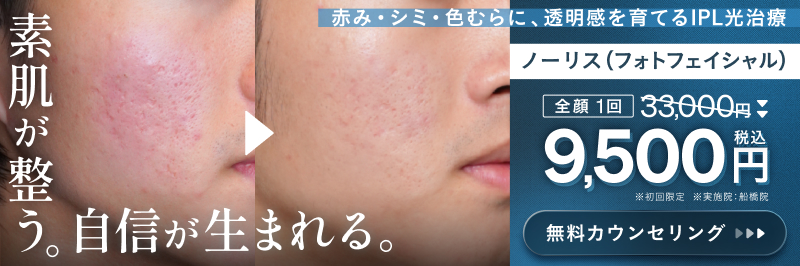







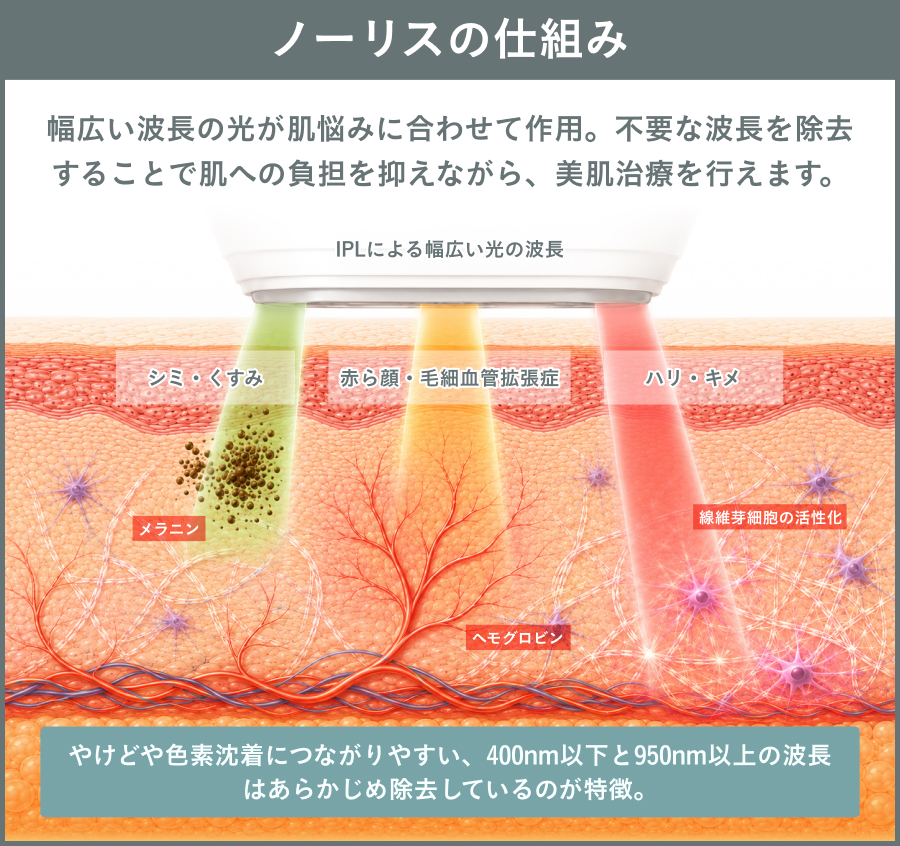
Nordlys is a next-generation light-based treatment device developed by Ellipse in Denmark and currently sold by Cynosure. It is based on IPL, which delivers a broad range of wavelengths of light at once, while incorporating the more advanced I2PL technology. A distinctive feature is its structure, in which a water filter inside the applicator removes wavelengths below 400 nm and above 950 nm in advance—wavelengths that are more likely to cause burns and post-inflammatory hyperpigmentation.
Another notable feature is that it does not require a cooling device. Cooling causes blood vessels to constrict, which had been one factor that weakened the effects of treatment for facial redness. Because Nordlys can irradiate the skin while the blood vessels remain dilated, it can be considered well suited to addressing redness.
As an IPL (Intense Pulsed Light) device, it is the only IPL light-based treatment device in Japan as of June 2026 to have obtained Japan’s first regulatory approval for three indications: pigmented skin conditions, vascular lesions, and long-term hair reduction. For more information about Nordlys, please also refer to the article below.
Nordlys itself is not without effects. Nevertheless, there are common reasons observed in clinical practice why a certain number of people say it is “ineffective.” In most cases, these reasons are related not to the device’s performance but to how the treatment was received or how the condition was assessed. Let’s look at them in order.
The most common pattern is concluding that the treatment did not work after receiving it only once. Although a relatively large number of people notice improved brightness after a single Nordlys treatment, it is designed to demonstrate its true value when repeated several times in line with the skin’s turnover cycle. Dark spots do not disappear immediately after light is applied. Instead, the melanin first rises to the surface and appears darker before eventually peeling away like a scab.
If treatment is stopped midway through this process, you may stop just before the point when the effects become most apparent. In general, considering approximately five treatments at 3- to 4-week intervals as one milestone makes it easier to track changes.
An often-overlooked possibility is that the condition causing concern falls outside Nordlys’ primary areas of strength. A typical example is melasma, which may actually worsen with intense light stimulation and require a different approach. Dark spots located deep in the skin, raised dark spots, deeply etched wrinkles, and significant sagging are also areas that are difficult to improve with light-based treatment alone.
Among people who have not noticed results are cases in which they were trying to treat a condition that was not suited to Nordlys in the first place. Accurately identifying the cause of the condition before treatment can significantly affect satisfaction.
Nordlys has multiple applicators and irradiation modes designed to be selected according to the condition. The results differ between a mild treatment to even out the overall tone of the face and a stronger treatment targeting facial redness or dark spots.
If an inexperienced practitioner uses the same weak settings for everyone, the stimulation may be mild, but the changes may also be limited. Conversely, increasing the output without assessing the skin can raise the risk of redness and post-inflammatory hyperpigmentation. Even with the same device, the results differ depending on who uses it and how the settings are selected. This is where the practitioner’s experience matters.
In some cases, the cause lies in aftercare rather than the treatment itself. After light-based treatment, the skin is more susceptible to UV exposure. Neglecting sunscreen or subjecting the skin to strong friction can cause dark spots that were beginning to fade to return or lead to new post-inflammatory hyperpigmentation.
It is not uncommon for insufficient daily care to be hidden behind the feeling that the results do not last. Treatment does not end when the session is over; viewing the way you care for your skin afterward as part of the treatment can help stabilize the results.
Here, we organize what Nordlys can achieve for each condition. Its ability to address multiple concerns at the same time is why Nordlys is considered a comprehensive skin treatment. Understanding what you can reasonably expect is the first step toward easing excessive anxiety.
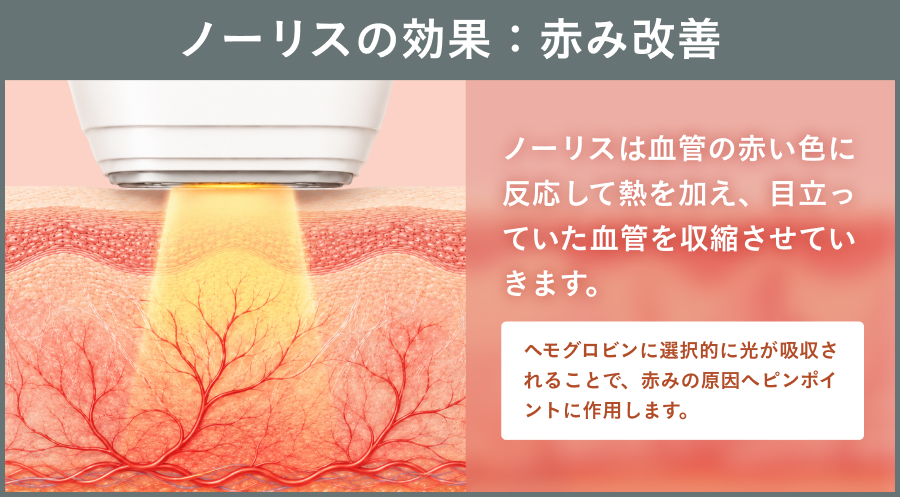
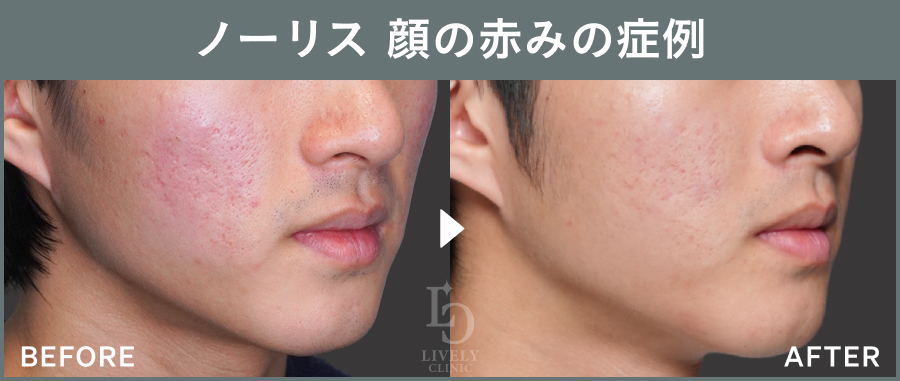
Facial redness is a condition in which the skin appears red because capillaries have dilated for some reason and are visible through the skin. Nordlys applies heat in response to the red color of the blood vessels, gradually constricting the vessels that had been prominent. Its cooling-free design is particularly beneficial here.
Some people notice a change after several treatments when the condition is mild. As long-standing redness around the cheeks and nose settles, people may need less heavy makeup, and the overall impression of the skin may change. Redness associated with rosacea is also a frequently discussed concern.
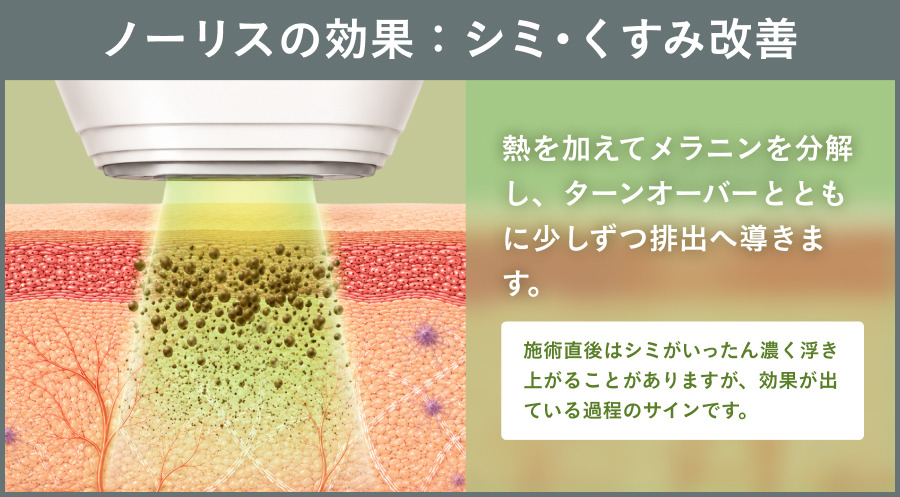
Some of the wavelengths included in I2PL respond to the black color of melanin, which causes dark spots. Heat breaks down the melanin and gradually helps eliminate it through the skin’s turnover process. Immediately after treatment, dark spots may temporarily become darker and more raised, but this is a sign of the process by which results are appearing, not a treatment failure.
Over several days, thin scabs peel away and the skin tone becomes more even. It is considered particularly well suited to skin with scattered fine freckles. You may also expect a change in which dullness is reduced and the complexion appears brighter.
The heat generated by Nordlys irradiation calms overactive sebaceous glands. When sebum production is reduced, pores become less noticeable and the skin environment becomes less prone to acne. In addition, some wavelengths react with porphyrins produced by acne-causing bacteria, exerting a bactericidal effect. If reddish acne scars remain, an improvement in their appearance may also be expected.
Acne, enlarged pores, and redness from acne scars may seem like separate concerns, but they are connected by the common underlying factors of sebum and inflammation. The ability to address them together is one of its strengths.
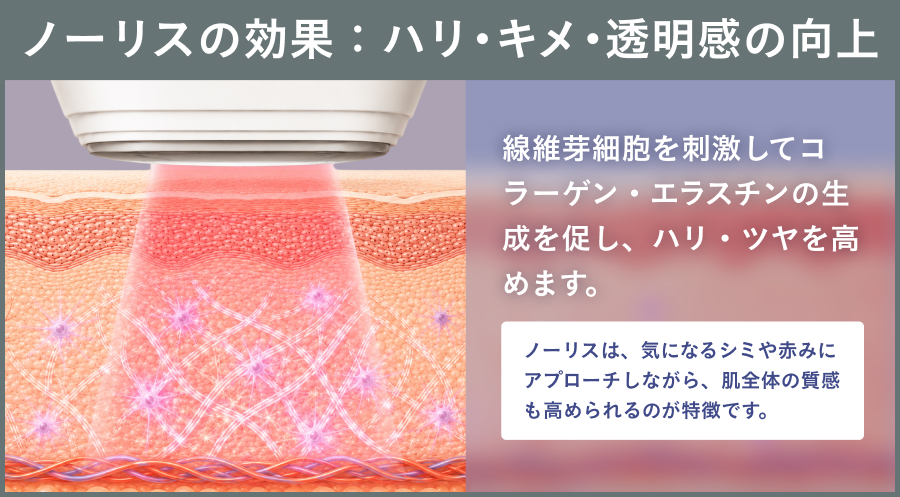
The heat generated by irradiation stimulates fibroblasts in the dermis. Fibroblasts produce collagen and elastin, components that decrease with age and UV exposure. When stimulated and activated, they may help improve the skin’s firmness, texture, and radiance.
In addition, the treatment can improve the overall texture of the skin while addressing specific concerns such as dark spots and redness. This dual benefit can be considered one reason Nordlys is chosen by people of a wide range of ages. It is also suitable for preventive care for people without any particular concern.
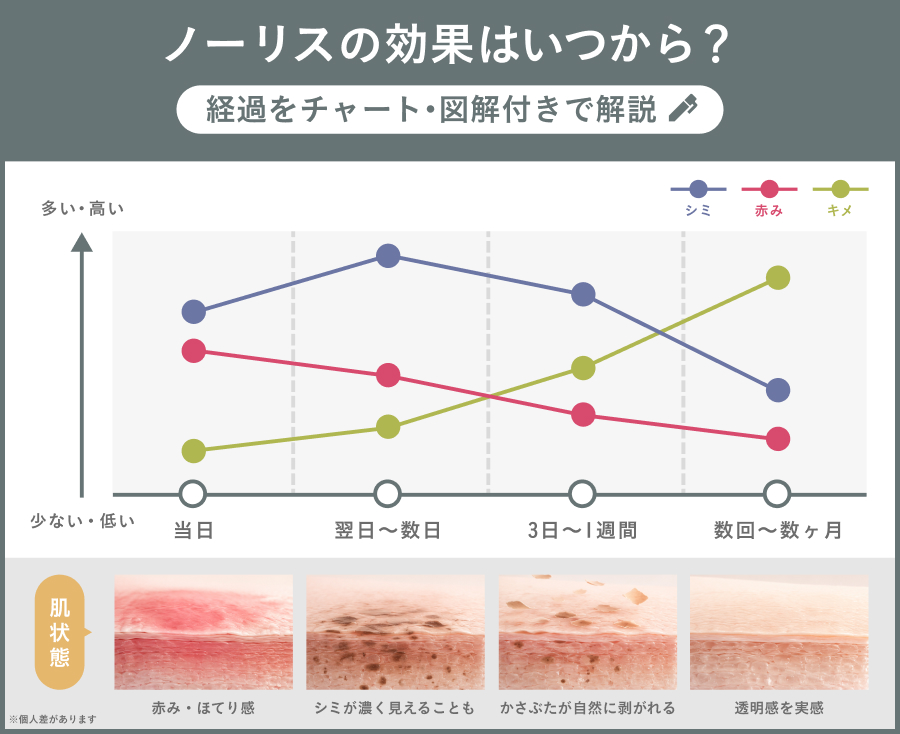
Many impressions that Nordlys is “ineffective” arise from misunderstandings about the speed of change. Knowing the timeline of light-based treatment can help you calmly get through the period when you may feel uncertain.
On the day of irradiation, you may experience mild redness or warmth, but no major change is visible yet. Instead, the dark spots may become darker and more raised from the following day over the next several days, which can surprise first-time patients. This is a sign that the melanin affected by heat is being pushed toward the skin’s surface, not a treatment failure. Knowing this can change how you interpret the process.
Approximately 3 days to 1 week after irradiation, the raised melanin forms fine scabs that peel away, revealing more even-toned skin underneath. In the case of facial redness, the main change is not peeling but a gradual reduction in redness with each successive treatment.
Several months after completing one course, improvements in radiance and skin texture gradually accumulate and become noticeable. Consider dark spot treatment as a process of lightening the spots layer by layer rather than making them disappear in a single session.
Even with the same treatment, satisfaction varies from person to person. Knowing in advance which category you are closer to can help prevent a mismatch in expectations. Nordlys is more likely to produce noticeable results for people with persistent redness around the cheeks or nose, scattered small dark spots or freckles, or recurring concerns about enlarged pores and acne.
It is also suitable for people who want to minimize downtime. Mild pain and redness, together with the convenience of being able to apply makeup and return home after treatment, make it easier to continue even with a busy daily routine. On the other hand, careful evaluation is needed for people whose main concern is melasma, those with dark spots located deep in the skin or raised dark spots, and those seeking improvement in deep wrinkles or significant sagging.
These concerns fall outside Nordlys’ primary areas of strength, so considering another treatment or a combination approach may be a more direct route. For peace of mind, honestly confirm during your pre-treatment consultation which category your concerns fall into.
Whether the device’s capabilities can be fully utilized depends largely on the patient’s preparation and consistency. Looking at why results may not have been noticeable can reveal the key points for maximizing its effects. Let’s consider them from three perspectives.
Nordlys is a treatment that requires consistency. Since the skin’s turnover cycle is approximately one month, repeating treatment at 3- to 4-week intervals is reasonable. Approaching 5 to 6 treatments as one course can make it easier to track changes in dark spots and redness step by step.
Many people continue treatment regularly as part of ongoing skin maintenance even after completing one course. Rather than trying to complete the process in a single session, approaching it with the mindset of gradually nurturing your skin may ultimately lead to greater satisfaction. It is important to build results patiently over time.
The optimal settings differ depending on whether your goal is to improve the overall tone of your face or target specific areas of redness or dark spots intensively. An experienced physician will carefully adjust the irradiation mode and output after assessing your skin type and condition. During your consultation, describe the concern that bothers you most specifically.
Rather than simply saying that you want your skin to look better overall, identifying the exact area and condition—such as a dark spot on the right cheek or redness around the nostrils—makes it easier for the practitioner to optimize the settings. The quality of communication with your physician can affect the outcome.
After irradiation, the skin is more sensitive to UV rays than usual. Letting your guard down at this stage can be a major pitfall that counteracts the results. Reapply sunscreen frequently, and consider using a hat or parasol when going outdoors. In addition, it is important to avoid rubbing the skin for a while after treatment and to moisturize it carefully.
When dark spots are temporarily raised, trying to remove them forcibly can instead lead to post-inflammatory hyperpigmentation. Waiting for them to shed naturally can help lead to a smoother-looking result.

Many people considering Nordlys also wonder how it compares with other light-based treatments and lasers. Let’s review the differences between representative devices.
Here, “light-based treatment” refers to conventional IPL that has been widely used. The greatest difference is that Nordlys incorporates I2PL, its more advanced form. Because unnecessary wavelengths are blocked in advance and the treatment can target the areas being treated, the SWT technology cuts unnecessary wavelengths and enables irradiation with less burden on the skin. Its design, which does not require a cooling device, is also a structural feature that can be advantageous when addressing facial redness.
In addition, the structure that allows irradiation without a cooling device while the blood vessels remain dilated enhances its effect on facial redness. The ability to provide treatment while reducing risks such as pain and post-inflammatory hyperpigmentation represents a major advance over conventional systems.
Photofacial is a trademark used for IPL treatment by Lumenis and is widely known as a synonym for IPL treatment. It uses the same light-based treatment mechanism, but Nordlys differs in that its water filter cuts unnecessary wavelengths and its cooling-free design helps further reduce the burden and risks.
Another difference is that Nordlys has obtained regulatory approval for three indications: pigmented skin conditions, vascular lesions, and long-term hair reduction. Rather than treating Photofacial as a single category, checking which device has approval for which indications can help you make a more informed choice.
Lumecca is a high-output IPL system developed by InMode. Although some people notice results for dark spots or redness in fewer sessions, it is important to note that it has not obtained regulatory approval in Japan.
Nordlys has a milder output, but it has obtained Japan’s first regulatory approval for three indications and can address comprehensive skin concerns with low downtime. The basic choice depends on whether you want to target a small number of dark, deeply rooted spots or improve multiple concerns at once.
For more information, please also see our article on the differences between Nordlys and Lumecca.
Here, we answer common questions repeatedly raised during consultations about the effects of Nordlys, from a clinical perspective.
Once every 3 to 4 weeks is a general guideline. Aligning treatment with the skin’s turnover cycle allows treatment to follow the rhythm of melanin elimination and skin recovery. If the interval is too short, the burden on the skin can accumulate, while intervals that are too long may make it difficult to build on the results.
The optimal interval varies depending on the condition of your skin, so for peace of mind, do not shorten or extend it on your own. Decide on the schedule in consultation with your physician. Maintaining a consistent treatment rhythm is a direct route to noticing changes.
Some people notice a change in skin tone after just one treatment, but if you are looking for a more substantial result, consider approximately five treatments as one milestone. This treatment builds results over multiple sessions. Even if the change after each session is modest, you are making steady progress when you look back over time.
If you have multiple concerns, such as dark spots, redness, and enlarged pores, you may need somewhat more treatments. The number of treatments needed to reach satisfaction varies depending on the severity of the condition, so it is a good idea to confirm an estimate during your initial consultation.
Many people describe the sensation as feeling like a light snap from a rubber band, but strong pain tends to be uncommon. In most cases, treatment can be received without anesthesia, and the level of discomfort is generally limited enough for you to apply makeup and return home afterward. Protective tape is also generally unnecessary.
The treated dark spots may appear darker for several days, but this is unlikely to significantly interfere with daily life. The short downtime is one of the main reasons busy people choose Nordlys.
Because melasma may worsen with intense light stimulation, careful judgment is required. Many cases involve both melasma and other types of dark spots, and it is dangerous to make a self-diagnosis based on appearance alone. First, have a physician check for melasma and assess the condition of your skin.
If melasma is the primary concern, an appropriate approach may involve oral medication or combining other treatments. For safety, decide on a treatment plan after consulting a specialist, including whether Nordlys is suitable for you.
The reasons Nordlys may be described as ineffective often include avoidable factors such as judging the treatment after only one session, a mismatch between the condition and the treatment’s indications, inappropriate settings, or insufficient aftercare. Conversely, when you determine whether it is suitable for your concerns and proceed with an appropriate number of treatments and proper care, Nordlys can provide a tangible response for concerns such as facial redness, dark spots, and enlarged pores.
The important points are to accurately understand your condition before treatment and share a treatment plan with an experienced physician. At LIVELY CLINIC, we carefully assess each patient’s skin condition and propose an irradiation plan tailored to their needs. Whether you are unsure if Nordlys is right for you or have not noticed results in the past, please feel free to consult us.
※Implementation Clinics: Funabashi Clinic
※Implementation Clinics: Funabashi Clinic