Nordlys vs. Lumecca: An Illustrated Guide to Their Differences|How to Choose Based on Results, Pain, and Number of Sessions

Language:
Language:



BLOG
When researching light-based treatments, many people inevitably encounter the question: “Which should I choose, Nordlys or Lumecca?” Although both are popular IPL devices known for addressing spots and facial redness, comparing reviews and clinic explanations often makes the decision even more difficult. While both belong to the same IPL family, their underlying development concepts are contrasting. Understanding these differences can help you determine which is better suited to your skin concerns.
This article organizes how to choose between them based not only on specifications, but also on practical factors such as results, pain, number of sessions, and cost.








Before comparing them, let’s confirm what the two devices have in common. If you skip this step, it becomes difficult to understand the true meaning of their differences. We will explain each point in detail.
Please note that Lumecca is an unapproved medical device in Japan. It does not guarantee results or efficacy.
IPL stands for “Intense Pulsed Light” and is widely known in Japan as photofacial treatment. While a laser concentrates a single wavelength on one point, IPL gently emits broad-spectrum light containing multiple wavelengths over an area.
This broad-spectrum light reacts simultaneously with multiple targets, including melanin, which causes spots, and hemoglobin, the pigment in blood that contributes to redness. This is why it can address several concerns at once, such as spots, freckles, facial redness, and dullness. Both Nordlys and Lumecca are devices based on the fundamental IPL principle of reacting with multiple colors across an area.
Many people may wonder, “If the mechanism is the same, won’t the results be the same regardless of which device I choose?” In practice, however, the results clearly differ from one device to another.
This is because the designs that determine the quality of the light differ by model. Specifically, the following factors vary:
The accumulation of these adjustments greatly influences the speed of results, the burden on the skin, and how the treatment feels.
Nordlys and Lumecca differ so greatly in the direction of these adjustments that their approaches can be described as almost opposite. This is why, despite both being IPL devices, their areas of strength and the skin types they suit differ. It is important to choose based on what is inside the device, rather than its name.
Simply looking at a specifications table does not reveal the full picture. Here, we will organize the differences around the three factors we focus on when selecting devices in clinical practice: design concept, wavelengths and output, and cost.
The fundamental difference lies in the concept behind their development. Nordlys was developed by Danish company Ellipse, now part of the Syneron Candela group, and can be described as a subtractive device. Unnecessary wavelengths that can contribute to burns are filtered out in advance using a water filter. By removing excess light in this way, the device is designed to reduce the burden on the skin even when using less energy.
Lumecca, on the other hand, is an additive device developed by Israel-based InMode. Using peak power—the intensity of its instantaneous output—as a key strength, it acts intensively on pigmentation and blood vessels, aiming to produce changes over a shorter period. Once you understand the basic contrast—Nordlys expands the safety margin by subtracting unnecessary elements, while Lumecca pursues speed by adding power—the comparisons that follow should become easier to understand.
The design concept is directly reflected in the specific specifications. Nordlys uses SWT (Selective Waveband Technology) to remove unnecessary wavelengths below 400 nm and above 950 nm, while emitting the effective 400–950 nm range for treatment. Another advantage is that, because it does not use a cooling mechanism, precise irradiation is easier to perform.
Lumecca is based on a broad 515–1200 nm wavelength range and is designed to strengthen wavelengths that are readily absorbed by melanin and hemoglobin. Its output is reportedly at a level exceeding 40 J/cm² at maximum, which is the source of its sense of speed. It also supports dual-pulse irradiation, in which short and long pulses are combined, allowing it to act on both pigmentation and blood vessels at the same time.
The choice is between narrowing the wavelength range to reduce the burden on the skin, or using a broad wavelength range and high output to produce a stronger effect. The contrast in specifications translates directly into differences in how the treatment feels.
Because both are cosmetic treatments, they are not covered by insurance and are provided as elective medical care paid entirely out of pocket. Prices vary because clinics can set them freely, but as a general market guide, one full-face Lumecca session is often estimated to cost approximately 20,000–30,000 yen. Because it uses high output and is expected to produce strong results, its price also tends to remain at a certain level.
Nordlys prices also vary by clinic, but it is likewise provided as elective medical care. One point not to overlook is that you should compare the total cost, rather than the price of a single session. Because Lumecca may be easier to feel results from in fewer sessions, the difference in total cost may narrow even if the price per session is higher. Compare the final total amount you will pay, including whether introductory prices or course fees are available.
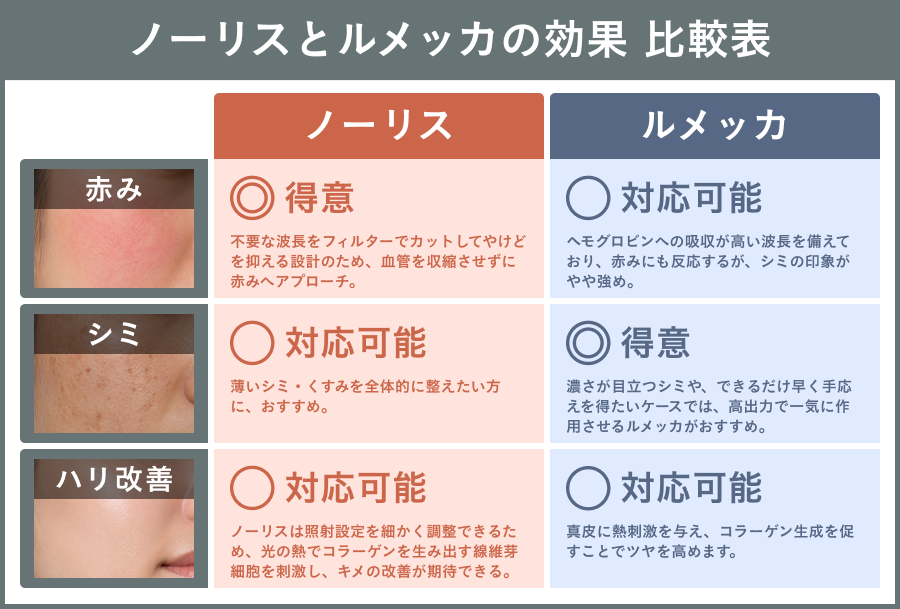
Now that we understand the characteristics of each device, let’s look at which one is more likely to perform well for different concerns. In consultations, the final recommendation is often determined by this compatibility.
Both devices react with melanin, and improvement in spots and freckles may be expected. The difference lies in the strength of their approach. Lumecca’s high output tends to be suitable for visibly dark spots or cases where you want to feel results as soon as possible. There are also reports of changes that previously took 4–5 sessions with conventional IPL being noticeable after 1–3 sessions. On the other hand, Nordlys, which is less invasive, tends to be selected when the goal is to improve dullness across the entire face and lighter spots while minimizing the burden on the skin. One point requiring attention is the presence of melasma. Because IPL may make melasma darker, it is essential to carefully determine the irradiation area when melasma is suspected. Do not proceed based on your own judgment; be sure to have it confirmed during a medical consultation.
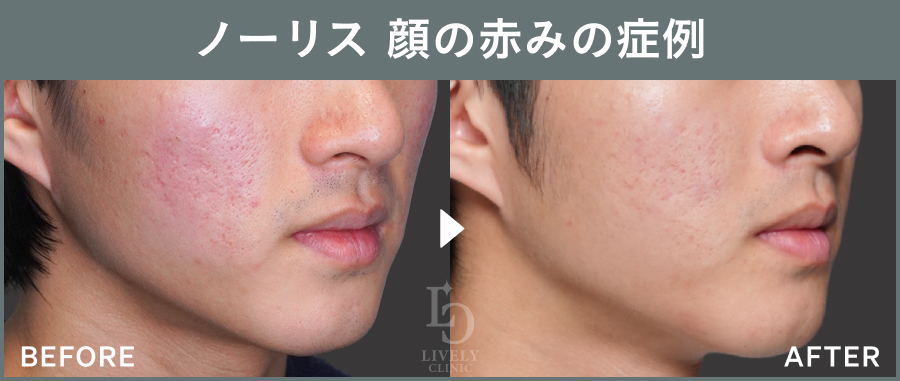
Treatment for redness is an area in which Nordlys is particularly effective. Conventional IPL generally includes a cooling mechanism that cools the treatment area to prevent burns. However, cooling can constrict blood vessels and weaken the effect on redness.
Nordlys does not rely on cooling. Instead, it is designed to reduce the risk of burns by filtering out unnecessary wavelengths, allowing it to approach redness without constricting the blood vessels. Compared with Vbeam, which is used to treat facial redness, its lower level of pain is also a reassuring feature for sensitive skin.
Of course, Lumecca also includes wavelengths that are highly absorbed by hemoglobin and may be expected to produce sufficient results for facial redness and telangiectasia. It may also be a strong candidate for those who want to improve redness across a wide area in a short period.
Both devices use the heat of light to stimulate fibroblasts, which produce collagen, potentially supporting improvements in enlarged pores, firmness, and skin texture as part of an anti-aging approach. Nordlys allows treatment settings to be adjusted in detail, making it easier to target multiple concerns separately, including pores, acne, and redness from acne scars.
Lumecca, by contrast, uses its high output when the goal is to improve overall skin tone and firmness in a short period. However, it is also important to understand that IPL may have difficulty reaching concerns such as deep crater-like acne scars or pigmentation deep within the dermis.
Improvements in pores and firmness should be regarded as secondary effects. Choosing the device according to your primary concern is the key to avoiding lower satisfaction.
Along with results, many people are concerned about pain and the burden of attending appointments. These are important factors that influence whether you can continue treatment. The difference in character between the two devices is also clear in this regard. Let’s take a closer look.
How pain is perceived is closely related to the output level. Nordlys is designed to use controlled energy and is generally described as producing stimulation comparable to a light snap from a rubber band, with little pain or downtime. After treatment, temporary redness or a sensation of warmth may occur, but in most cases it remains within a range that can be concealed with makeup.
Lumecca, by contrast, uses high output, so some people may feel somewhat stronger stimulation during irradiation. Areas where it reacts strongly with spots may temporarily become darker, and in some cases the area may form a thin scab that flakes off over several days to about one week. Viewing the difference as a trade-off between speed and a lighter treatment burden can make the decision much easier.
Both treatments have in common that results may increase as multiple sessions are performed. However, there is a difference in the typical number of sessions. Lumecca is said to make it easier to feel results after 1–3 sessions, making it suitable for a short-term approach. Nordlys, on the other hand, is intended to gradually improve the overall condition of the skin through continued treatment. Many people notice changes from the first session and refine the results as they continue.
However, the number of sessions required varies greatly depending on skin type and the severity of the concern. Consider the numbers introduced in this article as a guide only. It is more reliable to determine the actual number of sessions after a physician examines your skin. Because the number of sessions directly affects the total cost, checking this together with the price comparison can help prevent unexpected expenses later.
Let’s organize the points above as a guide for choosing between the devices. The important thing is not to choose based on the device name, but to match the device to your own concerns and priorities. We will look at the characteristics of people for whom each type may be suitable.
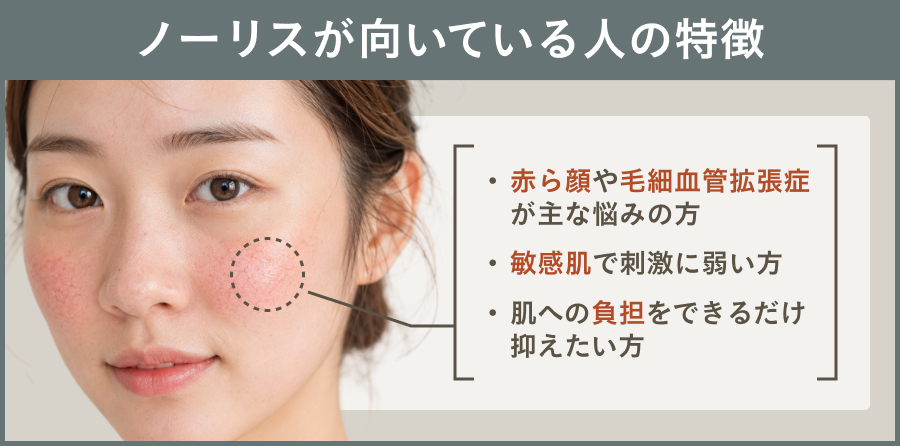
Nordlys may be well suited to people who want to minimize the burden on their skin as much as possible, those with sensitive skin who are prone to irritation, and those whose main concerns are facial redness or telangiectasia. Its design allows it to approach redness without relying on cooling, making it compatible with skin prone to cheek redness or flushing. Its low level of pain may also make it easier to continue treatment. It is also suitable for those who want to minimize downtime and return to their usual routine from the day after treatment.
Because it carefully improves the overall condition of the skin using less energy, it may also suit people who want to steadily improve their skin quality without rushing. It is also selected as an entry point for those who want to begin with a treatment that places less burden on the skin.
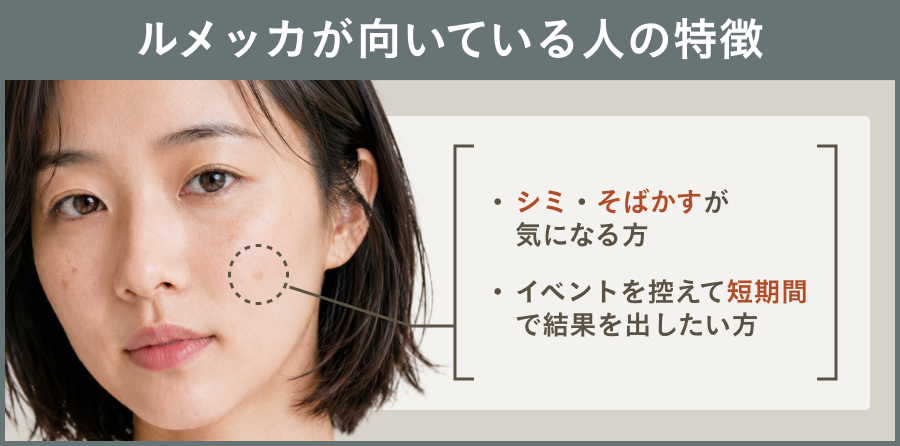
For those who want to address dark spots quickly or achieve results within a short period before an event such as a wedding or class reunion, Lumecca’s high output can be helpful. Because it allows intensive treatment in fewer sessions, it may also appeal to people who want to reduce the burden of clinic visits. Its high peak power acts firmly on melanin and capillaries, so it is not uncommon for people who previously found conventional IPL insufficient to feel noticeable results again.
However, stimulation and the recovery process after treatment are more likely to occur in proportion to the output, so you must be able to tolerate a certain amount of downtime. Its performance is particularly suited to those who prioritize the speed of results above all else.
Let’s organize the idea of choosing based on your concerns and priorities rather than the device name. There are two main decision-making factors. The first is whether your top priority is speed or safety and a lighter treatment burden. The second is whether your main concern is pigmentation—such as spots and freckles—or redness—such as facial redness and telangiectasia. Once you organize these two points in your own words, it will naturally become clear which factor should guide your decision.
There is one more fact you must not forget. More than the performance of the device itself, who performs the irradiation and with what settings can greatly influence the results. Even with the same device, results may vary depending on the accuracy of the skin diagnosis and how the output is adjusted. That is why choosing an environment where you can discuss your options until you are satisfied is just as important as choosing the device.
Here are some of the questions we frequently receive during consultations. These are all points that people often find difficult when considering treatment, so please read through them before signing up or making a reservation. Resolving your questions one by one can help you make a choice you feel comfortable with.
Depending on the timing and condition of your skin, using the treatments differently or combining them may be considered according to the objectives. For example, Nordlys may be used to improve redness, while Lumecca is used to target remaining dark spots. Combining their respective strengths may broaden the range of concerns that can potentially be addressed beyond what either device can reach alone.
However, using an incorrect interval or order of irradiation may instead place an unnecessary burden on the skin. Avoid making this decision on your own. It is safer to have a physician examine your skin and create a treatment plan.
Heavily tanned skin contains increased melanin, which raises the risk of burns and post-inflammatory hyperpigmentation. As a general rule, irradiation should be avoided immediately after tanning, or postponed until the skin has settled. In particular, those who spend a great deal of time outdoors or receive treatment during summer may feel more comfortable planning their treatment schedule around the season.
UV protection before and after treatment is essential not only for reducing risks but also for helping maintain the results you have worked to achieve. Make protection throughout the year a habit by using a parasol and sunscreen.
If it is difficult to notice results, several causes may be possible. Examples include deciding that the treatment is ineffective before completing enough sessions, treating melasma as though it were an ordinary spot, or using a device that is not well suited to the skin concern.
It is also important to understand that IPL may have difficulty reaching deep pigmentation or crater-like acne scars. Determining which concerns can and cannot be reached is another important point that affects satisfaction. The treatment can demonstrate its intended capabilities only when it is combined with an accurate skin diagnosis and selection of the device and number of sessions suited to the concern.
Nordlys and Lumecca should be selected based not on which is superior, but on their different characteristics. Nordlys broadens the safety margin by subtracting unnecessary elements, while Lumecca pursues speed by adding power. Understanding these differences and matching them with your skin concerns and priorities is the shortest path to making a choice you will not regret.
Specialist diagnosis is essential for distinguishing spots from melasma and identifying the cause of facial redness. At LIVELY CLINIC, we carefully examine your skin and recommend light-based treatment suited to your concerns and preferences. If you are unsure which treatment to choose, please consult us.
※Implementation Clinics: Funabashi Clinic
※Implementation Clinics: Funabashi Clinic